Maritime monitoring faces persistent challenges when sea fog rolls in, reducing visibility to mere meters and rendering conventional optical sensors useless. The maritime environment demands continuous surveillance for vessel traffic, illegal fishing, smuggling, or search-and-rescue operations, yet fog scatters visible light, creating a veil of white that blurs all distant objects. Traditional cameras fail to deliver actionable intelligence, while radar systems may detect metallic targets but cannot provide visual classification or identify small craft, floating debris, or personnel in the water. The backscatter from fog particles further degrades image contrast, turning any attempt at optical monitoring into a futile exercise. This operational blind spot compromises safety and security, as decision-makers lose situational awareness precisely when hazards escalate. A fog penetration imager offers a dedicated solution to restore reliable visual monitoring under these extreme conditions.
The fog penetration imager leverages laser range-gated imaging technology, a pulsed laser synchronized with an intensified gated camera to isolate reflected signals from a specific distance window. By firing a high-repetition-rate laser pulse and opening the camera’s electronic gate only when the reflected light from the target returns, the system effectively rejects the overwhelming backscatter from fog droplets between the imager and the subject. This gate-control mechanism, combined with an MCP image intensifier and precise timing modules, produces high-contrast images even through dense sea fog, rain, or haze. The active illumination ensures consistent performance in zero ambient light, while the narrow temporal window eliminates interference from particles closer than the target. Unlike passive thermal imagers that fail in fog due to atmospheric absorption, this optical approach directly penetrates fog’s scattering medium, achieving clear visual identification at distances exceeding conventional visibility limits.
In coastal patrol operations, the fog penetration imager mounts on vessels or shore-based surveillance towers to scan harbor entrances, shipping lanes, or offshore infrastructure. Operators observe real-time video feeds that cut through fog banks, revealing the hull numbers of inbound vessels, the presence of unauthorized speedboats, or persons overboard struggling in icy water. The system’s high resolution allows reading text markings on buoys or identifying small rigid-hull inflatables at ranges up to several kilometers under heavy fog conditions. When integrated with pan-tilt-zoom platforms, the imager tracks moving targets automatically, sending crisp imagery to command centers for threat assessment. Emergency responders use the device during night or fog to guide rescue helicopters to precise locations, reducing search time from hours to minutes.
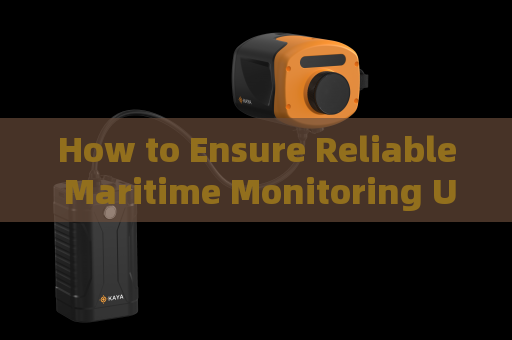
The technology’s resilience against varying fog density stems from adjustable gate widths and laser pulse repetition rates, which operators tune to match atmospheric conditions. For thin coastal mist, a wider gate captures more light for fast-moving targets; for thick sea fog, a narrower gate sharpens depth discrimination. The system also withstands salt spray and deck vibrations, with ruggedized housing for continuous marine deployment. In joint exercises between coast guards and navies, the fog penetration imager has proven indispensable for detecting semi-submersible vessels or small craft that radar misses due to low radar cross-section. By delivering persistent, reliable visual intelligence through fog, this imaging capability transforms maritime monitoring from a weather-dependent gamble into a dependable security asset.




