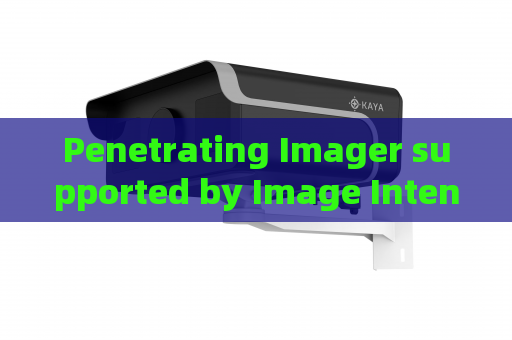
Nighttime covert vehicle surveillance presents a critical challenge: the observer must remain undetected while gathering intelligence on subjects inside a target vehicle. The primary risk is exposure—the moment a surveillance vehicle’s presence is compromised, the mission fails. Traditional night vision equipment, such as image intensifiers or thermal imagers, requires either close proximity or direct line-of-sight through the vehicle’s windows. However, standard optics suffer from severe limitations. Windows reflect external light sources, creating glare that masks interior activity. Even in total darkness, infrared illuminators can be detected by the subjects or by other surveillance countermeasures. The observer is forced to either move dangerously close, risking visual contact, or rely on indirect observation that yields incomplete or unusable imagery. This dilemma is the core pain point: how to see through a vehicle’s glass without revealing the observer’s position. A solution must operate from a safe distance, in complete darkness, and through the optical medium of the window itself—without emitting any detectable signature that alerts the target. The penetration imager addresses this exact scenario.
The penetration imager employs laser range-gated imaging technology (gated imaging) to overcome these risks. Unlike passive night vision that amplifies ambient light, or thermal imagers that detect heat differences, this system actively emits a high-repetition-rate pulsed laser. The key functional advantage is its ability to suppress backscatter from rain, fog, or dust, and most critically, to selectively capture light reflected from objects behind a glass surface. The system consists of a pulsed laser, an intensified gated camera with an MCP image intensifier, a timing module, and beam-shaping optics. By precisely timing the camera’s shutter opening to match the round-trip time of the laser pulse reflected from the target, the penetration imager rejects nearly all light scattered by the window glass itself. This enables high-contrast imaging of occupants, license plates, or objects inside the vehicle. The laser pulse is extremely short and narrow, making it virtually undetectable by the human eye or standard night vision goggles at operational distances. The system operates as an active imager, but its design minimizes the risk of exposure—the observer remains hidden behind tinted glass or in a concealed position hundreds of meters away.
In practical nighttime covert surveillance operations, the penetration imager is deployed from a stationary observation point, such as a parked van or a natural hide site, positioned at a range where the laser can resolve the target vehicle’s interior. The operator aligns the imaging lens with the vehicle’s window, adjusts focus, and initiates the gated imaging sequence. The system automatically synchronizes the laser pulse and camera shutter to the distance measured by an integrated rangefinder. The resulting image appears on the display with remarkable clarity: faces, clothing, hand movements, or small objects on the seat are visible, while the glass surface and external reflections are nearly eliminated. Because the penetration imager relies on optical transmission through glass, it works equally well through windshields, side windows, or rear glass of sedans, SUVs, or even armored vehicles with laminated glass. The system’s high-resolution capability allows identification of details such as a phone screen’s content or a subject’s facial features, all while the surveillance team remains completely undetected. This dramatically reduces the need for close-proximity stakeouts or risky approaches that could alert the target.
The operational advantage extends beyond simply seeing through glass. During nighttime surveillance, adverse weather like fog, mist, or light rain often degrades conventional optics. The penetration imager’s gated technology mitigates these effects by rejecting backscatter from atmospheric particles, maintaining a clear view of the vehicle interior even in moderate precipitation. Moreover, the system’s active laser illumination operates at a wavelength invisible to the naked eye, and the emitted light is collimated into a narrow beam—the probability of detection by the target’s electronic countermeasures or passive visual scan is extremely low. The penetration imager can be used in conjunction with near-infrared filters on the observation vehicle’s windows to further reduce any risk of light leakage. For law enforcement and intelligence operatives conducting long-duration surveillance, this combination of distance, clarity, and stealth transforms the mission’s success rate. The penetration imager thus directly solves the fundamental problem of exposure in nighttime covert vehicle surveillance, turning a high-risk operation into a safe, repeatable procedure.