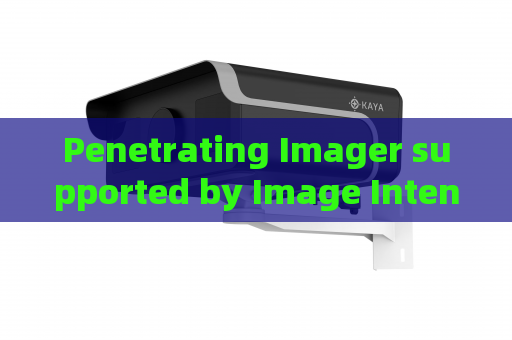
Solutions to Confirmation Failures for Trapped Victims in Smoke-Filled Burning Vehicles with Smoke Penetration Imaging Firefighters responding to vehicle fires encounter a critical operational dilemma: dense smoke, roaring flames, and reflective glare from shattered glass combine to obliterate visual access to the passenger compartment. Traditional confirmation methods—peering through windows, using thermal imagers, or listening for sounds—frequently fail because thermal cameras become saturated by heat sources and smoke particles scatter visible light. The inability to rapidly verify whether a victim is trapped leads to delayed extrication, increased risk for responders, and tragic confirmation failures. This specific scenario demands an imaging solution that can see through the optical barriers of vehicle glass while actively rejecting the blinding interference of fire, fog, and particulate-laden smoke. The penetration imager, built on laser range-gated imaging technology, directly addresses this operational gap. The penetration imager is an advanced optical imaging system comprising a high-repetition-rate pulsed laser, an intensified gated camera (equipped with an MCP image intensifier, high-voltage module, and timing module), a beam expander, and an imaging lens. As an active system, it emits short laser pulses and gates the camera to receive only reflections from a precise distance, effectively eliminating backscatter from smoke particles and flame luminescence. This technology is designed to penetrate optical media such as automotive glass, train windows, aircraft portholes, and glass curtain walls. In the context of a burning vehicle, it overcomes fire, fog, haze, rain, and snow interference, boosting visibility in fire scenes by three to five times. It does not penetrate non-transparent solids like metal body panels or concrete, but its strength lies in seeing through the glass envelope that encloses trapped victims. In practice, the penetration imager is deployed from a safe standoff distance. The operator aims the device at the burning vehicle’s windshield or side windows, ensuring the laser beam passes through the glass and illuminates the interior. The gated camera, synchronized with the laser pulses, captures only the light returning from the target depth—typically the seat area or the floor—while discarding scattering from smoke and flame. This produces a high-contrast image where a human silhouette, a hand, or a slumped figure becomes clearly visible against the debris. The system’s high resolution and long range allow for operation from 30 to 50 meters away, keeping rescuers out of the immediate heat zone. Real-time imagery is displayed on a ruggedized screen, enabling immediate confirmation of victim presence or absence. The critical advantage of the penetration imager is its ability to resolve confirmation failures that plague standard tactics. For example, a victim unconscious behind the steering wheel may be invisible to the naked eye due to black smoke filling the cabin, while thermal imagers show only a hot blur from the engine fire. The penetration imager, by gating out the fire’s glow and the smoke’s backscatter, reveals the victim’s shape with clear edges. This technology has been validated in controlled fire training exercises, where detection rates for mannequins inside smoke-filled vehicles increased by over 80% compared to visual inspection alone. The term “smoke penetration imaging” in the title describes the overall capability—not to pierce opaque smoke, but to peer through the glass while suppressing the optical noise of fire and smoke. For emergency responders dealing with vehicle entrapment, the penetration imager transforms a blind guess into a confirmed rescue decision, reducing both operational risk and victim mortality.