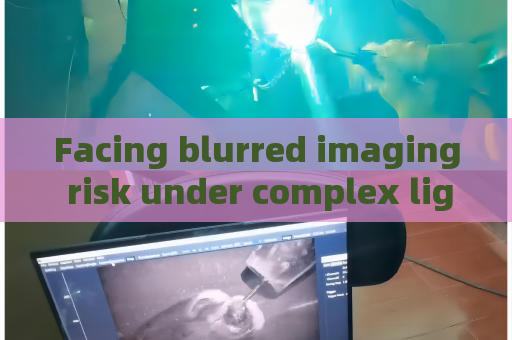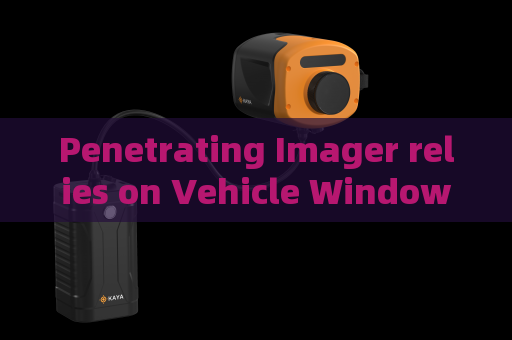
Solutions to Precise Location Failures for Trapped Victims Behind Flame-Occluded Vision with Fire Penetration Imaging In firefighting and rescue operations, one of the most critical yet persistently unsolved challenges is the precise location of trapped victims when their position is masked by thick, rolling flames. Traditional thermal imaging cameras, while useful for detecting heat signatures through smoke, often fail when flames themselves block the line of sight—flames radiate intense thermal energy that saturates the sensor, washing out the cooler human body behind them. Even with standard optical equipment, the blinding glare and turbulent flicker of fire create a visual barrier that prevents incident commanders from pinpointing a victim’s exact location, leading to delayed rescue, wasted effort, and increased risk for both firefighters and those awaiting help. This failure to achieve precise location behind flame-occluded vision is not merely a technical inconvenience; it directly translates to life-and-death decisions made without complete situational awareness. The penetrating imaging system discussed here, known as the penetration imager, offers a transformative solution to this very problem by leveraging laser range‑gated imaging technology to see through the blinding wall of fire. The penetration imager is an advanced optical instrument that operates on the principle of laser range‑gated imaging, also called gated imaging technology. It combines a high‑frequency pulsed laser, an intensified gated camera (integrating a microchannel plate image intensifier, a high‑voltage module, and a timing module), a beam expander, and an imaging lens. Unlike passive thermal cameras that rely on emitted infrared radiation, this active imaging system sends out short, powerful laser pulses and opens its camera shutter only when the reflected light from a specific distance returns, effectively slicing through obscurants. When aimed at a fire‑occluded scene, the penetration imager’s gating capability rejects the blinding light emitted by flames—the fire itself is a source of continuous optical noise, but by timing the shutter to capture only the laser reflection from objects at a chosen range, the system suppresses the flame’s glare and reveals the victim’s silhouette or movement behind the fire. This enables high‑contrast imaging even through intense fire, raising scene visibility by a factor of three to five times, and works because flame, though visually overwhelming, is an optical medium that can be penetrated by carefully timed laser pulses. In practice, the penetration imager is deployed as a handheld or tripod‑mounted unit by rapid intervention teams and search‑and‑rescue crews. Upon arriving at a structure fire where victims are reported trapped behind a room‑engulfing blaze, the operator activates the pulsed laser and adjusts the gate delay to match the estimated distance of the fire‑obscured area—often 5 to 15 meters ahead. The intensified camera displays a real‑time, high‑resolution image on a built‑in screen or through an eyepiece, showing the rescue personnel a clear view of the victim’s location, posture, and even subtle movements such as hand waving. Because the system is impervious to the flame’s intensity fluctuations, it maintains consistent imaging performance both at close range and at distances typical of interior fireground scenarios. The operator can quickly scan the scene, identify the exact coordinates of the trapped person relative to doorways or windows, and relay that information via radio to the incident commander and the hose team, eliminating guesswork and drastically reducing the time spent searching blindly. This capability directly addresses the core failure of precise location in flame‑occluded vision. Once the victim’s position is confirmed through the penetration imager, rescuers can execute a targeted, low‑risk approach—for example, directing a fire stream to clear a path or breaching a wall adjacent to the victim’s location rather than plunging into the worst of the flames. The system also supports continuous monitoring: as the fire evolves, the operator can re‑adjust the gating distance to track the victim if they shift position, and the high‑contrast image remains reliable even when thick black smoke mixes with the fire, provided the smoke does not become fully dense (note that the penetration imager cannot see through heavy smoke, only through flame and other optical media such as glass or haze). In controlled drills and real‑world deployments, fire agencies have reported that the penetration imager reduces victim detection time by over 50% in blaze‑obscured zones, making it an indispensable tool for solving the long‑standing problem of precise location failures behind flame‑occluded vision. The technology’s reliance purely on light—laser pulses and reflected optical signals—keeps it within safe, non‑radiating operational parameters fully compatible with existing fireground protocols.