Law enforcement pursuits often hinge on the critical seconds when a fleeing vehicle is within visual range. Standard optical surveillance cameras struggle to capture clear images of occupants through windshields that are heavily tinted, rain-streaked, or covered with dirt and reflective glare. Rapid motion and varying light conditions further degrade image quality, making facial recognition or behavioral assessment nearly impossible at a safe distance. This inability to remotely verify a driver’s identity in real time compromises tactical decision-making, increases risk to officers and civilians, and often forces dangerous close-proximity stops. The core pain point lies in the optical barrier itself: the vehicle’s glass and the environmental interference between the imaging system and the target. A Penetration Imager offers a direct solution by leveraging laser range-gated imaging to see through these optical obstructions without requiring physical contact or altering weather conditions.
The Penetration Imager is an active optical system that fires high-repetition-rate pulsed laser light and synchronizes a gated, intensified camera to capture only photons reflected from a specific depth. This timing mechanism rejects backscatter from raindrops, fog, dust, and the outer surface of the windshield, while allowing the laser pulse to travel through the glass and illuminate the occupants inside the vehicle. The result is a high-contrast, high-resolution image of the interior space, even when the windshield is heavily tinted or layered with water. The system’s ability to “see through” optical media—specifically automotive glass, train windows, aircraft canopies, and glass curtain walls—means that the only barrier is the transparency of the material. The laser wavelength and gating precision ensure that the image is formed from the target cabin volume, not from surface reflections. This makes the Penetration Imager fundamentally different from thermal or radar-based devices: it operates entirely within the optical domain and cannot penetrate solid, opaque barriers such as body panels or walls.
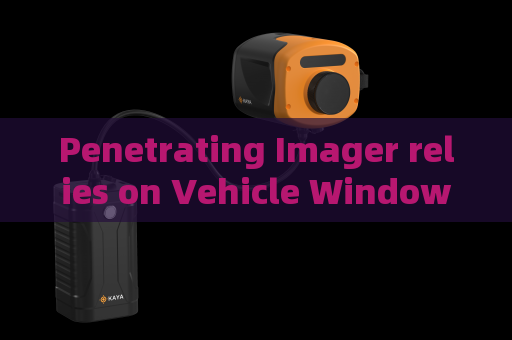
In tactical applications, the Penetration Imager is mounted on a pursuit vehicle or a fixed observation post, with the operator aiming the device at the fleeing car’s windshield from a standoff range. The system’s laser illuminator and gated camera work together to produce a live video feed that reveals the number and positions of occupants, their clothing, gestures, and even facial features if they are facing forward. The image remains stable despite the target’s motion because the laser pulse duration and camera gate are in the nanosecond range, freezing the scene without motion blur. Law enforcement can thus identify known suspects, assess whether weapons are being handled, and decide whether to escalate or de-escalate the pursuit—all without closing the distance. The Penetration Imager also functions effectively in heavy fog, rain, or snow, where conventional optics fail, because the gating mechanism filters out the scattering particles. This operational advantage is particularly valuable during high-speed chases through adverse weather, when every second of identification confidence can prevent a collision or a hostage scenario.
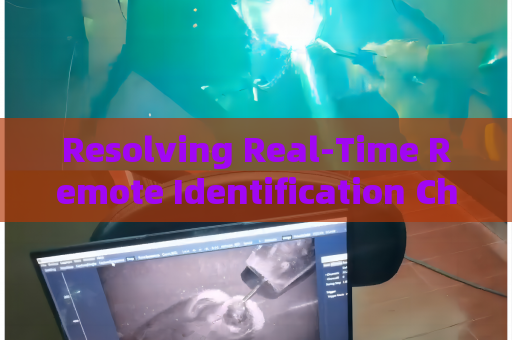
The device’s laser range-gating principle also enables precise distance calibration. The operator sets the gate delay to match the distance to the fleeing vehicle, ensuring that the camera only sees the interior volume approximately 1 to 2 meters behind the windshield glass. This eliminates background clutter and prevents accidental illumination of bystanders in front of the vehicle. The high-repetition-rate laser, combined with the image intensifier’s microchannel plate, delivers a continuous video stream at standard frame rates, allowing the system to be integrated into existing command-and-control networks. Training requirements are minimal: the operator adjusts focus, sets the range gate via a simple slider, and observes the resulting image on a display. Because the Penetration Imager is a purely optical active imaging system, it emits no radio-frequency or X-ray radiation, making it compliant with public safety regulations and safe for prolonged use. Its resilience to backscatter and glare transforms the windshield from an obstacle into a transparent window, directly resolving the real-time remote identification challenge that has long plagued vehicle pursuit operations.