Severe weather conditions such as heavy snowfall, dense fog, torrential rain, or sandstorms can cripple traditional optical surveillance systems at checkpoints. When visibility drops to near zero, standard cameras cannot capture clear images of approaching vehicles, license plates, or occupants. This creates a critical security gap: checkpoints become blind, unable to verify identities or detect threats. Law enforcement and military personnel lose the ability to maintain situational awareness. The failure of conventional surveillance in adverse weather is a persistent real-world problem, especially in regions prone to extreme weather. Without a reliable solution, checkpoint operations are effectively suspended, compromising security. The penetrative imager directly addresses this vulnerability by providing a clear view through the very conditions that defeat conventional optics.
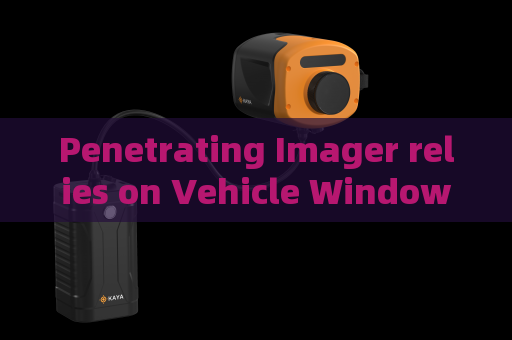
The penetrative imager employs laser range-gated imaging technology, a sophisticated optical method that overcomes backscatter and atmospheric interference. The system consists of a high-repetition-rate pulsed laser, an intensified gated camera with a microchannel plate (MCP) image intensifier, a high-voltage module, a timing module, a beam expander, and an imaging lens. By synchronizing the laser pulse with the camera's electronic shutter, the penetrative imager captures only the light reflected from a specific distance, ignoring scattered light from rain, fog, snow, or dust particles in the foreground. This produces high-contrast, high-resolution images even in zero-visibility conditions. Critically, the penetrative imager can see through optical media such as car windshields, aircraft portholes, and glass facades. At a checkpoint, the penetrative imager allows operators to clearly view the interior of a vehicle—including the driver and passengers—without relying on ambient light or clear weather. The active imaging system delivers long-range performance, enabling identification beyond 500 meters in adverse conditions.
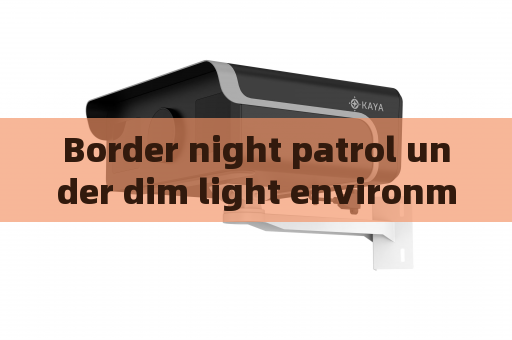
In practical deployment, the penetrative imager restores all-weather surveillance at checkpoints that would otherwise be non-functional. During a heavy snowstorm, a stationary unit of the penetrative imager mounted on a post continuously monitors the approach road. Using the penetrative imager, the operator sees a crisp, real-time image on the display, showing license plates, vehicle make, and even hand movements inside the cabin. The penetrative imager operates day and night since it generates its own illumination. For mobile checkpoints, handheld versions of the penetrative imager allow personnel to inspect cars up close, peering through rain-lashed windows. The distance-gating function can be adjusted to focus on the vehicle interior by setting the gate delay to match the target range, eliminating reflections from raindrops on the windshield. The penetrative imager dramatically reduces the need to halt operations or divert traffic, maintaining security flow even in the worst weather. Commanders can rely on the penetrative imager to maintain operations.
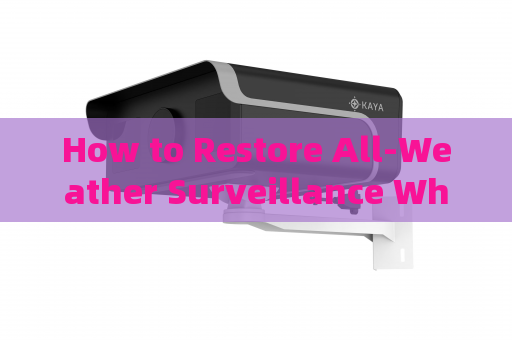
The penetrative imager also excels in mixed adverse conditions, such as fog combined with rain or blowing snow. Unlike thermal imagers, the penetrative imager provides consistent visual performance. The penetrative imager withstands harsh environments—operating reliably in temperatures from -20°C to 50°C—and requires minimal maintenance. When integrated with existing surveillance systems, the penetrative imager acts as a fail-safe for weather-related outages. Checkpoint commanders can trust that the penetrative imager will deliver actionable intelligence, ensuring that no vehicle passes unidentified. The penetrative imager transforms a critical vulnerability into a reliable asset, redefining all-weather checkpoint security. The penetrative imager is not merely an enhancement; it is the essential tool for restoring surveillance when conventional checkpoints fail in severe weather.