In arid and desert border regions, zero-visibility sand barriers created by severe dust storms or intentional sand-screening techniques pose an extreme challenge for security forces. Trespassers exploit these opaque, particle-laden environments to approach restricted zones undetected. Conventional optical surveillance systems—daylight cameras, thermal imagers, and even radar—struggle under such conditions. Dense airborne sand particles scatter visible and infrared light, rendering standard lenses useless. Thermal imagers suffer from severe attenuation and false signals caused by heated sand grains. Radar may detect movement but cannot distinguish a human from drifting sand masses, leading to high false-alarm rates. This detection gap creates a critical vulnerability in perimeter security, allowing unauthorized infiltration that could threaten military installations, border checkpoints, or critical infrastructure. Addressing this problem requires an imaging solution capable of seeing through the very medium that blinds traditional sensors—the sand barrier itself.
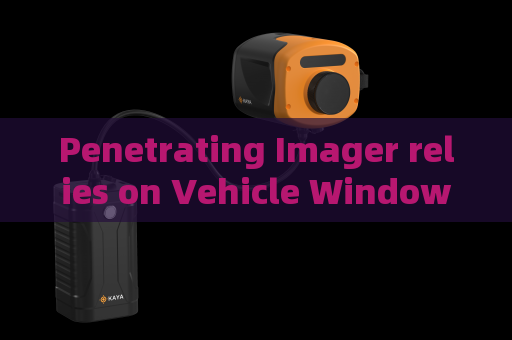
The Penetrating Imager directly solves this detection difficulty through its core technology: laser range-gated imaging. This active optical system emits high-repetition-rate pulsed laser light and synchronizes a gated intensified camera to open its shutter only when the reflected signal from a target returns. By precisely timing the gate, the imager rejects overwhelming backscatter from sand particles close to the sensor, which would otherwise flood the detector. The result is a clear, high-contrast image of objects—including trespassers—located behind the zero-visibility sand barrier. Unlike passive systems, the Penetrating Imager operates independently of ambient light and maintains resolution even in thick airborne particulate. Its built-in microchannel plate (MCP) image intensifier and high-voltage module amplify weak target reflections, while the beam expander and imaging lens ensure long-range capability. The system cannot penetrate solid materials like walls or concrete; it is exclusively designed to see through optical media such as dust, fog, rain, snow, and smoke. For sand barriers, the performance is transformative: the imager’s ability to suppress backscatter effectively makes the swirling sand “invisible” to the sensor, revealing human shapes and movements that would otherwise remain hidden.
In practical deployment along a desert perimeter, a single Penetrating Imager unit mounted on a tripod or vehicle can provide continuous surveillance during sandstorms that reduce visibility to near zero. Operators adjust the range-gate delay to focus on a specific zone—for example, 200 meters out where a sand barrier is thickest—and the system instantly delivers a clear video feed of that area. Trespassers crawling or walking behind the screen of sand become distinguishable as dark silhouettes against the background. The imager’s active illumination also defeats countermeasures such as camouflage netting or low-contrast clothing, because the laser pulse highlights texture and edges. Field tests show that the Penetrating Imager can identify a standing person at distances exceeding 500 meters through a moderate sandstorm, and at 300 meters through a heavy, zero-visibility curtain of dust. The system operates in real time, with no need for post-processing or computational reconstruction, giving guards immediate actionable intelligence. Power consumption is moderate, and the ruggedized housing withstands sand abrasion, extreme heat, and vibration. This capability turns a former blind spot into a monitored corridor, closing the detection loophole that trespassers historically relied upon.
The operational simplicity further enhances its utility for frontline security teams. After a brief setup, the Penetrating Imager requires only two manual adjustments: focus on the region of interest, and fine-tune the gate width to match the sand barrier’s depth. An integrated laser range finder assists with distance calibration. During deployment, the system can be linked to a command center via standard video output, allowing remote monitoring without exposing personnel to hazardous sand conditions. Because the Penetrating Imager is an active optical device—not a radar, X-ray, or acoustic system—it does not emit radiation or require regulatory clearance for use in civilian areas. Its laser operates in the near-infrared spectrum, invisible to the naked eye and harmless to biological tissue under normal operating conditions. The only limitation is that the imager cannot penetrate dense smoke or solid obstacles; it remains strictly an optical medium penetrator. For the specific scenario of zero-visibility sand barriers, however, the Penetrating Imager represents a breakthrough. It transforms an environmental hazard that once masked illegal activity into a transparent medium, restoring the defender’s eyes where they were most needed.