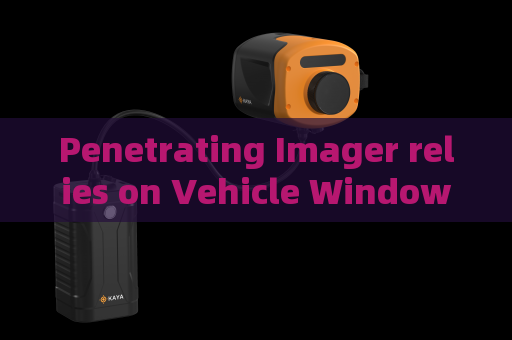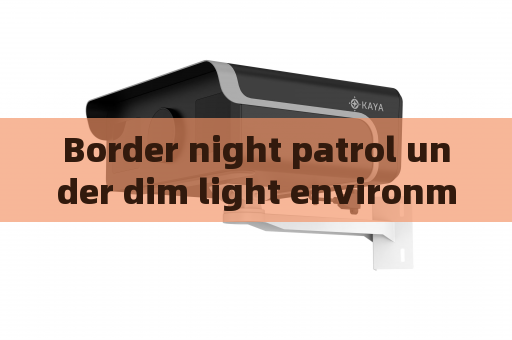
Comprehensive Performance of the Penetration Imager in Zero-Light Imaging, High-Glare, and All-Weather Tactical Environments In tactical reconnaissance scenarios, law enforcement and military personnel often face extreme visual challenges when attempting to observe subjects inside vehicles or behind glass barriers during nighttime operations. Zero-light conditions render standard optical devices useless, while high-glare situations—such as oncoming headlights, searchlights, or reflective surfaces—cause blinding flares that wash out details entirely. All-weather conditions, including heavy rain, fog, snow, or even fire-generated smoke, further degrade image quality through backscatter and atmospheric scattering. The core problem is that conventional night vision or thermal imagers cannot reliably penetrate automotive glass or aircraft windows under these combined stressors, forcing operators to close distance and risk exposure, or to rely on uncertain intelligence. This gap in situational awareness directly compromises mission safety and decision-making speed in high-stakes tactical environments. The Penetration Imager directly addresses this operational pain point through its patented laser range-gated imaging technology. Unlike passive systems, this active imager emits high-repetition-rate pulsed laser light synchronized with a gated intensified camera (incorporating an MCP image intensifier, high-voltage module, and timing circuitry). By precisely controlling the time window—allowing only photons reflected from a specific target distance to reach the sensor—the system effectively eliminates backscatter from fog, rain, snow, or fire-generated haze. This gating mechanism also rejects blinding glare by shuttering the sensor during the intense flash of headlights or searchlights, capturing only the returning laser pulse from the target. The Penetration Imager is specifically engineered to see through optical media such as automotive windshields, high-speed train windows, aircraft portholes, and glass curtain walls, delivering high-contrast, high-resolution imagery even in complete darkness or under direct high-glare light sources. Its active illumination ensures consistent performance regardless of ambient light levels, making it a dedicated tool for zero-light and all-weather glass penetration. Field deployment has demonstrated that the Penetration Imager transforms tactical observation capabilities. An operator positioned at a standoff distance of several hundred meters can clearly identify the number of occupants, their hand positions, and any visible weapons or objects inside a vehicle, even when the suspect’s headlights are blindingly bright and rain is sheeting across the windshield. The system’s range-gated operation means that only the intended target plane is illuminated, so optical interference from floating particles, steam, or light fog is effectively neutralized. In fire-ground scenarios, the Penetration Imager boosts visibility through flames and smoke by a factor of three to five, though it cannot penetrate dense, non-optical smoke. The integration of a beam expander and imaging lens allows the operator to adjust field of view and resolution dynamically, matching the tactical need from wide-area surveillance to precise identification. All controls are intuitive, with a single operator managing the laser source, camera gain, and range gate width from a handheld or tripod-mounted unit, enabling rapid target acquisition without complex calibration. The Penetration Imager’s all-weather zero-light and high-glare performance is not a theoretical advantage but a proven tactical multiplier. During covert vehicle intercepts or sensitive site overwatch, the system eliminates the guesswork that plagues traditional optics. Commanders receive real-time, actionable intelligence through the imager’s video output, allowing informed decisions on entry points, threat levels, and suspect behavior—all without exposing personnel to the kill zone. The device’s resistance to countermeasures is equally critical; because it operates in the optical domain and uses precisely timed pulses, it cannot be detected or jammed by common electronic warfare means that affect RF-based sensors. For any mission requiring through-glass penetration in the most demanding lighting and weather conditions, the Penetration Imager stands as the definitive solution, bridging the gap between operator safety and mission success.