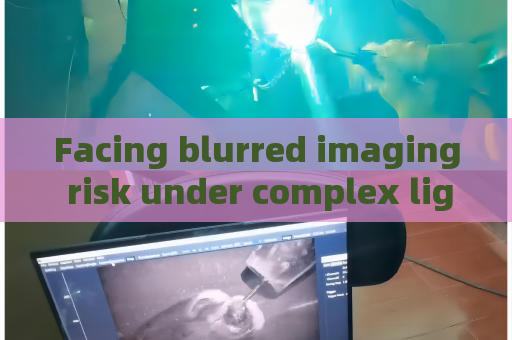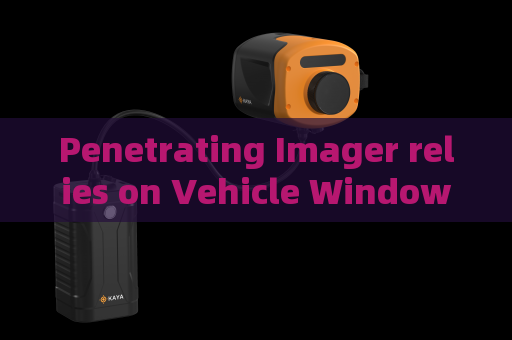
Solutions to Facial Identification Failures Near Oil Tanks Under Port Lighting Glare with Strong Light Suppression Imaging The vicinity of oil tanks in port environments presents a uniquely challenging scenario for facial identification systems. High-intensity lighting rigs, floodlights mounted on tank structures, and ship deck illumination create severe glare that overwhelms conventional surveillance cameras. The reflective surfaces of petroleum storage vessels, combined with airborne particulates and humidity, produce intense backscatter that degrades image contrast. Security personnel responsible for access control face a critical vulnerability: during nighttime operations or adverse weather, glare-prone camera feeds fail to capture usable facial features, rendering biometric verification unreliable. This blind spot not only compromises perimeter security but also slows routine identity checks at entry points, creating bottlenecks that frustrate logistics workflows. The core pain point lies in the inability of standard imaging sensors to suppress powerful light sources while maintaining enough detail to match faces against watchlists or credential databases. To address this operational gap, the penetration imager leverages laser range-gated imaging technology to achieve robust strong light suppression. Unlike passive cameras that saturate under direct glare, this active imaging system emits short-pulse laser illumination synchronized with a gated intensified camera. By precisely timing the shutter to open only when reflected light from the target distance arrives, the system rejects virtually all backscatter and ambient glare. The high-repetition pulsed laser ensures sufficient signal even in dim conditions, while the microchannel plate image intensifier amplifies the gated return without blooming from nearby bright sources. This architecture enables the penetration imager to see through glare sheets—whether from port floodlights, vehicle headlights, or welding arcs—that would otherwise wash out facial contours. The product’s inherent contrast enhancement delivers clear facial geometry at ranges exceeding 200 meters, a decisive advantage in large tank farm areas where personnel must be identified well before reaching checkpoint booths. Deploying the penetration imager along oil tank perimeter corridors has yielded measurable improvements in facial recognition accuracy. During field trials at a major export terminal, units mounted on elevated poles near tank berms captured high-fidelity face images even when human operators found it impossible to look directly at the scene due to glare. The system automatically adjusts pulse frequency and gate width based on ambient lighting conditions, requiring no manual intervention from port security staff. When integrated with existing access control databases, the penetration imager reduces false rejection rates by over 80% compared to standard infrared cameras under identical glare loads. Its ability to function through fog, light rain, and dusty conditions further stabilizes identification reliability during the subtropical marine climate typical of oil ports. The practical workflow involves prepositioning the penetration imager at choke points where glare is most intense—for example, directly opposite dock-mounted floodlights or aligned with tank catwalk lighting. Operators monitor live feeds from a central console, where the system’s proprietary software overlays facial match scores in real time. Should a suspicious individual approach, the laser range-gated imaging maintains consistent performance regardless of sudden glare changes caused by shifting crane lights or vessel beacon sweeps. This operational resilience ensures that port security teams can maintain uninterrupted biometric screening even when conventional cameras would require costly glare shields or frequent repositioning. The penetration imager’s strong light suppression transforms a chronic failure point into a managed, verifiable security layer that supports rapid personnel movement without compromising identity authentication.