In law enforcement and security surveillance, severe weather conditions such as heavy fog, torrential rain, snowfall, or dense haze present a persistent and dangerous challenge. When suspicious activities—like unauthorized border crossings, vehicle theft, or covert weapons transfers—occur under such meteorological cover, conventional optical sensors lose effectiveness. Visible-light cameras fail to penetrate thick fog or rain curtains, thermal imagers suffer from atmospheric attenuation, and radar systems can be deceived by clutter or limited in resolution. The result is a critical gap in target detection: officers monitoring a perimeter or a highway may completely miss a suspect vehicle slipping through, or an individual approaching a secured facility. These failures not only compromise operational success but also endanger first responders who lack timely, reliable intelligence. The core pain point is that weather, an uncontrollable environmental factor, directly sabotages the ability to detect and verify suspicious behavior in real time, forcing agencies to rely on delayed or incomplete information.
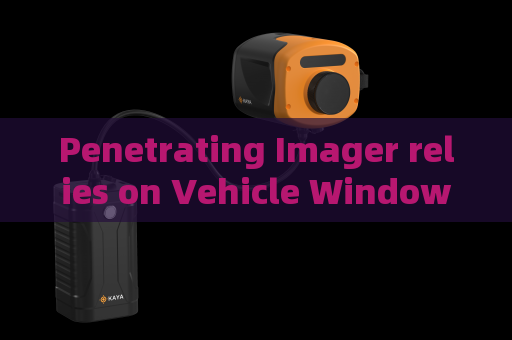
A Penetration Imager directly addresses this detection failure by employing laser range-gated imaging technology (gated imaging). This advanced optical instrument consists of a high-repetition-rate pulsed laser, an image-intensified gated camera (containing an MCP image intensifier, high-voltage module, timing module), a beam expander, and an imaging lens. As an active imaging system, the Penetration Imager generates its own short-duration laser pulses and synchronizes the camera’s shutter to open only when the reflected light from a specific distance arrives. This precise timing effectively eliminates backscatter from fog, rain, snow, or haze—optical media that scatter continuous light sources. The result is high-contrast imaging with long operational range and strong anti-interference capability. Unlike passive systems, the Penetration Imager penetrates glass windows, train windows, aircraft portholes, and glass curtain walls, while also cutting through atmospheric obscurants. For fire scenes, it improves visibility by 3–5 times, though it cannot clear thick smoke. In the context of suspicious activities concealed by severe weather, this device provides a clear, real-time image of subjects behind rain curtains or within fog banks, restoring detection capability that conventional cameras lose entirely.
In practical police and security operations, the Penetration Imager is deployed as a portable or vehicle-mounted system. During a perimeter surveillance operation in dense fog, an operator activates the laser illuminator and adjusts the gate delay to match the estimated distance of a suspected intruder. The gated camera then captures a sharp image of the individual moving through the haze, while suppressing the bright, scattered light that would otherwise wash out the scene. The officer can immediately identify suspicious behavior—such as the suspect carrying a concealed object or attempting to cut a fence—without needing to close the distance and risk ambush. The system’s ability to penetrate vehicle windows also allows checkpoint personnel to see occupants inside a car during heavy rain, even when steam or condensation obscures the glass. This capability transforms a failed detection scenario into a successful identification, enabling timely intervention. Field tests have shown that the Penetration Imager maintains clear imagery at distances exceeding 200 meters in moderate fog, where standard optical cameras generate only white noise.

Operational discipline requires careful gate setting synchronization with the laser repetition rate. The operator must know the approximate range to the target—obtained from a laser rangefinder or radar cue—and input that distance into the timing module. The system then automatically adjusts the camera shutter window to a few nanoseconds, capturing only the laser light reflected from the target plane. This process effectively “gates out” the intervening fog or rain droplets, because the backscattered light from closer distances arrives at a different time and is rejected. The Penetration Imager also features a high-resolution display that can be linked to a command center via secure video feed. In a scenario of suspicious vehicle pursuit through a snowstorm, the pursuing unit can relay the gated image to a tactical operations center, allowing decision-makers to verify whether the occupants are armed or behaving erratically. By restoring visibility where weather once created a blind spot, the Penetration Imager becomes an indispensable tool for addressing target detection failures in the most challenging environmental conditions.