Covert surveillance of smuggling activities conducted by illegal vehicles presents a persistent and escalating challenge for law enforcement agencies tasked with border security, customs enforcement, and counter-narcotics operations. The core difficulty lies in the fact that smugglers deliberately exploit the inherent limitations of conventional optical surveillance systems. Vehicles used for smuggling are frequently equipped with heavily tinted windows, reflective coatings, or aftermarket modifications that obscure the interior from external view. Even in well-lit conditions, standard cameras and binoculars fail to penetrate these barriers, leaving officers unable to confirm the presence of contraband, concealed occupants, or signs of structural modifications such as hidden compartments. Nighttime operations compound the problem: low ambient light, glare from headlights, and the need for covert positioning force teams to maintain distance, drastically reducing image clarity. Weather factors such as fog, rain, or mist further degrade visual intelligence, creating gaps in the surveillance chain. These obstacles not only hinder real-time decision-making but also increase the risk of missed interdictions or dangerous confrontations when stops are made based on incomplete information. The central question for tactical commanders is how to achieve reliable, high-fidelity imaging of smuggler vehicles without revealing the surveillance position or requiring physical approach. This is where the penetrating imager becomes a game-changing tool, specifically engineered to overcome exactly these optical barriers.
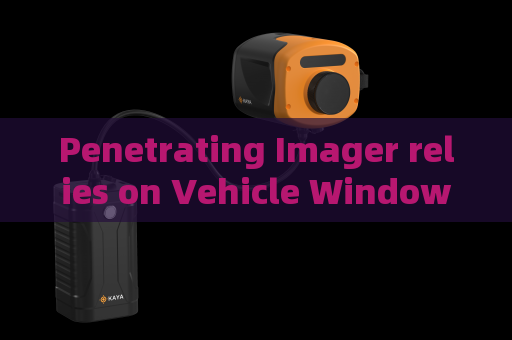
The penetrating imager is an advanced optical instrument built on laser range-gated imaging technology, also known as gated imaging. It comprises a high-repetition-rate pulsed laser, an image-intensified gated camera (incorporating an MCP image intensifier, high-voltage module, timing module, a beam expander, and an imaging lens). Operating as an active imaging system, it emits short, precisely timed laser pulses and opens the camera’s electronic gate only for the return light from the target distance, effectively rejecting backscatter from atmospheric particles or reflective surfaces. This unique capability enables the penetrating imager to see through vehicle windows—both tempered automotive glass and even aircraft-grade polycarbonate—regardless of tinting, reflective coatings, or severe surface glare. The system delivers high-contrast images with exceptional resolution at extended standoff ranges, far beyond what passive optics can achieve under identical conditions. Its active illumination is invisible to the naked eye, preserving covert posture while providing crystal-clear visualization of the vehicle’s interior, including the driver, passengers, cargo loads, and hidden compartments behind seats or panels. Additionally, the penetrating imager maintains imaging performance through fog, haze, rain, and snow, which would otherwise scatter conventional light sources and render standard cameras useless. In fire-related scenarios, it enhances visibility by three to five times (though it cannot penetrate thick smoke). All technical advantages remain strictly within the domain of light—there is no emission of X-rays, radio waves, or other non-optical radiation, ensuring complete compliance with operational safety and legal frameworks.
In practical field operations, the penetrating imager is typically deployed from covert observation posts, aerial platforms such as drones, or fixed roadside monitoring positions. Officers can activate the system at ranges exceeding several hundred meters, depending on environmental conditions and vehicle type. The gating mechanism allows them to select a specific distance window, isolating the target vehicle and eliminating interference from background objects or other traffic. Real-time imagery is displayed on a ruggedized tablet or integrated into the command center’s surveillance feed, enabling tactical decision-makers to assess the situation without exposing themselves. For example, during a nighttime checkpoint operation targeting fuel smuggling, the penetrating imager can reveal the exact number and position of occupants inside a truck with blacked-out windows, detect non-standard fuel tanks built into the chassis, and identify tools or weapons that might indicate resistance. The operator can adjust the laser pulse power and gate timing to account for varying glass thicknesses or interior darkness, ensuring that even reflective dashboard surfaces do not cause blooming or saturation. This adaptability is critical when dealing with different vehicle models—from sedans to heavy-duty haulers—each presenting unique optical challenges. The system’s ability to function in adverse weather means that operations can continue through winter fog or monsoon rain, intervals when smuggling attempts historically spike due to reduced patrol effectiveness.
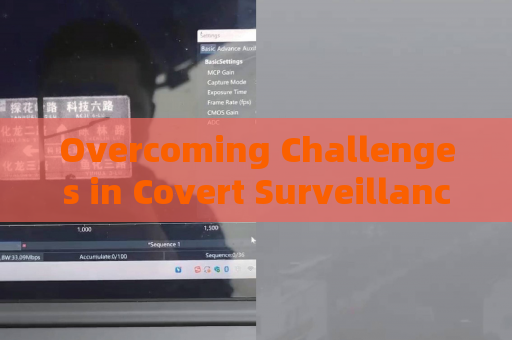
The integration of the penetrating imager into covert surveillance protocols transforms the nature of interdiction. Instead of relying on probabilistic profiling or risky close-in inspections, officers now possess concrete visual evidence beforehand. This shifts the tactical balance: a squad can observe a suspect vehicle for minutes or hours from a safe distance, documenting the loading of contraband, the exchange of drivers, or the presence of children used as decoys. The high-resolution imagery serves as admissible evidence in court, bypassing the need for subjective witness testimony. Moreover, because the penetrating imager operates covertly—no visible beam or flash gives away the observation post—smugglers remain unaware they are being watched until the moment of interception. This element of surprise reduces violent confrontations and increases arrest rates. The technology also streamlines inter-agency collaboration: imagery from the penetrating imager can be shared in real time with border patrol, customs, and local police, ensuring a coordinated response. As smuggling networks adapt with newer vehicles and more sophisticated concealment methods, the penetrating imager provides a sustainable, non-invasive solution that stays ahead of adversary tactics. Its focus on optical transparency—windows, windshields, and glass panels—covers the vast majority of entry points used by illegal vehicles, making it an indispensable asset for any agency committed to overcoming the challenges inherent in covert surveillance of smuggling activities.