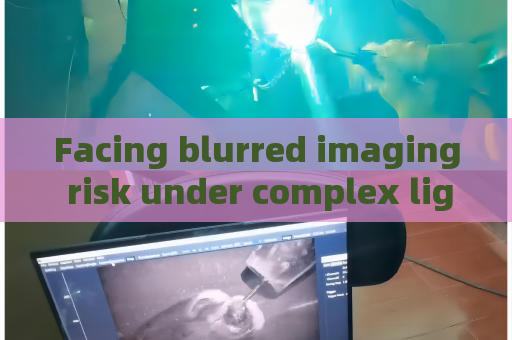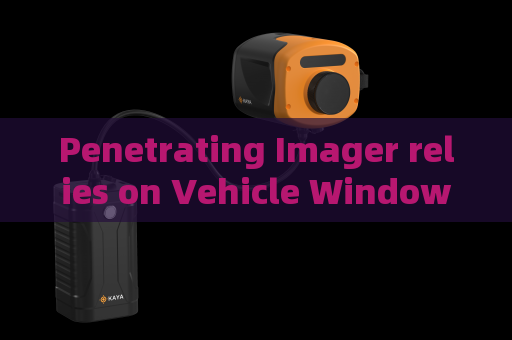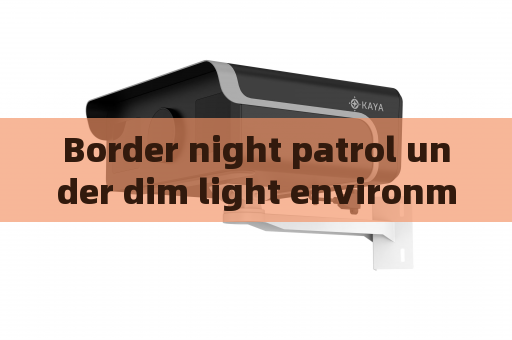
The problem of driver identification in nighttime traffic stops is a persistent challenge for law enforcement personnel. When a vehicle approaches a checkpoint or is pulled over, the headlights are often left on, creating an intense glare that overwhelms standard optical systems. This blinding light not only causes temporary visual impairment for officers but also renders conventional cameras useless, as they overexpose and lose all detail in the driver’s face. Even with tinted or reflective windshield glass, the combination of high-intensity headlight beams and the optical barrier of the glass makes it nearly impossible to capture a clear facial image for identification. Officers must rely on verbal interaction or risky physical approaches, increasing the danger to both parties. Existing imaging tools, such as thermal imagers, cannot see through glass, while standard night vision devices are equally susceptible to washout from strong light sources. This gap in capability directly impacts operational safety and efficiency during vehicle stops, particularly in high-risk scenarios like DUI enforcement or wanted-person checks. The Penetration Imager, an advanced active optical imaging system based on laser range-gated imaging technology, directly addresses this limitation through its strong light suppression imaging capability. By employing a high-repetition-rate pulsed laser and an intensified gated camera equipped with a microchannel plate (MCP) image intensifier, the device synchronizes laser pulses with the camera’s shutter window. This precise gating allows the system to reject light from sources outside the target distance range—such as vehicle headlights—while amplifying only the reflected laser signal from the driver’s face within a narrow depth of field. The result is a high-contrast image that penetrates windshield glass and effectively suppresses the blinding glare of headlights. Unlike passive technologies, the Penetration Imager operates as an active imager, using its own controlled illumination to overcome backscatter and ambient light interference. The system’s beam expander and imaging lens work together to deliver high resolution at distances suitable for tactical operations, ensuring that even in the presence of direct headlight beams, the driver’s facial features are rendered clearly and without distortion. In practical law enforcement applications, the Penetration Imager can be deployed from a patrol vehicle or used as a handheld unit by officers positioned at a safe standoff distance. During a routine stop or high-risk approach, the operator simply aims the device at the target vehicle’s windshield. The system automatically adjusts laser pulse timing and gate width based on range estimates, requiring minimal manual intervention. The captured image is displayed in real time on a built-in screen or transmitted to a command center, allowing officers to positively identify the driver—such as matching against a wanted database or verifying license compliance—without ever stepping into the headlight beam. This capability significantly reduces the need for verbal commands or flashlight sweeps that could escalate tension. In scenarios where the vehicle’s headlights are deliberately aimed to blind officers, the Penetration Imager’s strong light suppression maintains imaging performance, providing a tactical advantage. Further operational refinement comes from the device’s ability to penetrate not only standard automotive glass but also laminated or coated windshields, which are common in modern vehicles. The laser range-gating technique minimizes the effect of multi-layer reflections and internal scattering, preserving detail even when the glass is dirty or frost-covered. The system’s high-resolution output enables recognition of facial characteristics, eye movement, and even objects held near the windshield—critical for early threat assessment. Additionally, the Penetration Imager is indifferent to ambient weather conditions; rain, fog, snow, or smoke introduce optical particle scattering, but the gating eliminates most of this interference, achieving visibility enhancement of 3–5 times in fire scenes (while noting that dense smoke remains an exception). For driver identification obstructed by headlights, the combination of glass penetration and strong light suppression ensures that officers can safely and reliably confirm identity before making contact, ultimately preserving the element of surprise and reducing the risk of ambush. The Penetration Imager thus becomes an indispensable tool for modern traffic enforcement and perimeter security operations.