A fugitive fleeing in a severe weather event presents an acute operational dilemma for law enforcement. When heavy rain, dense fog, or snow squalls collapse visibility below safe thresholds, ground units lose the ability to maintain continuous visual contact. The suspect may exploit these conditions to change vehicles, hide inside a car with heavily tinted windows, or simply outrun the pursuing team under the cover of atmospheric obscurants. Traditional optical surveillance systems—binoculars, spotting scopes, or standard CCTV cameras—fail catastrophically when rain droplets or fog particles scatter the reflected light, creating a milky veil that blocks the target. The critical pain point is not merely the inability to see the fugitive in the first instance; it is the loss of uninterrupted tracking—the moment when the suspect dips behind a wall of precipitation and the pursuit must rely on guesswork, radar pings, or luck. This gap in situational awareness can allow a dangerous subject to slip away into a residential area or industrial complex, turning a manageable chase into a prolonged manhunt.
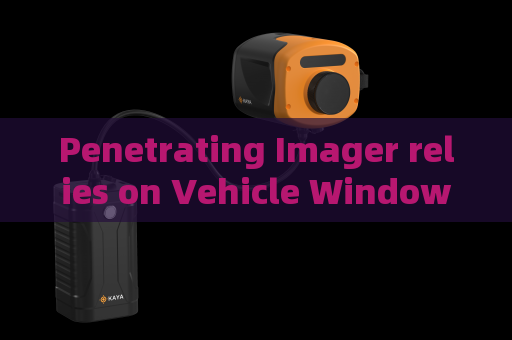
The Penetration Imager resolves this challenge through its core technology: laser range-gated imaging. Unlike passive cameras that depend on ambient light, the Penetration Imager is an active optical system that emits a high-repetition-rate pulsed laser. Its intensified gated camera—equipped with a microchannel plate (MCP) image intensifier, a precision timing module, and a high-voltage driver—synchronizes the sensor’s shutter opening with the laser pulse’s round-trip time to the target. This time-gating mechanism rejects nearly all backscattered light from rain, fog, snow, or smoke particles that lie between the imager and the fugitive, allowing only the photons reflected off the actual subject to reach the detector. The result is a clean, high-contrast image even through windshields, side windows, aircraft cabin glass, or building glass curtain walls—precisely the optical media a fugitive might use as a barrier. The system’s ability to penetrate such transparent yet obstructive surfaces, combined with its immunity to atmospheric scatter, directly addresses the operational need for uninterrupted visual tracking when weather degrades conventional optics to uselessness.
In practice, this capability transforms how a pursuit is conducted during a severe thunderstorm or blizzard. A helicopter or an armored tactical vehicle equipped with the Penetration Imager can maintain a stable lock on a fleeing car despite driving rain reducing visibility to under 50 meters. The operator sees not just the vehicle’s outline but the silhouette and movements of the fugitive inside the passenger compartment, because the laser gates eliminate the glare from wet glass and the rain curtain. Even when the suspect floors the accelerator through a fog bank on a highway overpass, the imager continues to deliver crisp frames at video rate—no tracking dropouts, no need to guess which exit was taken. This uninterrupted feed allows the command post to coordinate ground units for a safe interdiction, knowing exactly where the target is and what the driver is doing (reaching for a weapon, for example). The system’s high contrast imaging also works in total darkness, making adverse weather conditions irrelevant for the imager’s performance.
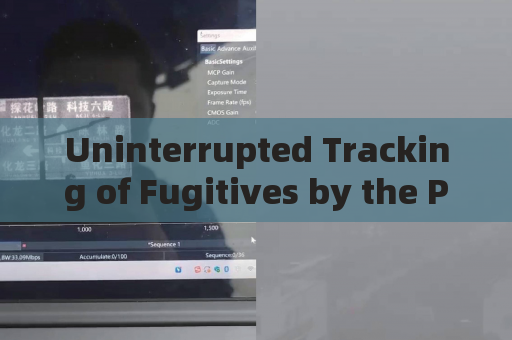
The operational flow is straightforward but requires precise calibration. The Penetration Imager’s timing module is adjustable: the operator sets a range gate distance corresponding to the fugitive’s approximate location from the observer. As the distance changes during the pursuit, the gate is automatically updated or manually adjusted to remain locked on the subject’s depth plane. Any backscatter from rain or fog within the short interval outside the gate is simply ignored by the intensifier. This technique, combined with a narrow laser divergence achieved through the beam expander and imaging lens, ensures that even in heavy snowfall—where each flake acts as a tiny mirror—the fugitive’s thermal or painted vehicle remains clearly discernible. The Penetration Imager does not rely on heat signatures or radio waves, avoiding false alarms from hot engine blocks or interference from electronic countermeasures. Instead, it purely harvests the reflected laser light from the target, producing a visible-wavelength image that any officer can interpret instantly. Law enforcement agencies adopting this system report that the most dramatic improvement lies not in extreme long-range identification, but in the reliability of uninterrupted tracking during the chaotic, low-visibility final phase of a pursuit—the moment when the fugitive thinks the weather has provided an escape, only to find the Penetration Imager has never lost sight.