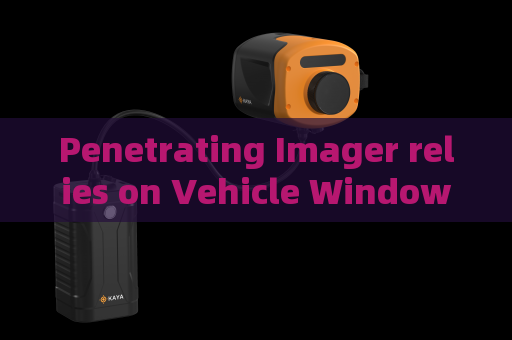
Consistently Stable Protective Monitoring Performance of the Penetration Imager with All-Weather Penetration Technology in Severe Weather In the domain of perimeter security for critical facilities such as airports, military installations, and government buildings, severe weather events represent one of the most persistent operational hazards. Torrential rain, dense fog, heavy snowfall, and sandstorms severely degrade the performance of conventional optical surveillance systems. Standard CCTV cameras suffer from light scattering and absorption caused by water droplets, ice crystals, or dust particles, producing images that are blurred, low-contrast, or entirely obscured. During a blizzard, for instance, visibility can drop below 20 meters, leaving security operators effectively blind at the very moment when malicious actors might exploit the chaos. This vulnerability creates dangerous gaps in situational awareness that cannot be filled by radar or thermal imagers alone, as these technologies lack the ability to read license plates, identify facial features, or confirm details through vehicle windows. The Penetration Imager, engineered with all-weather penetration technology, directly addresses this critical gap. Its consistently stable protective monitoring performance in severe weather has become a decisive factor for security teams that require uninterrupted visual intelligence under the harshest meteorological conditions. The Penetration Imager is an active optical imaging system built on laser range‑gated imaging technology—commonly known as gated imaging. It comprises a high‑repetition‑rate pulsed laser source, an intensified gated camera with an MCP image intensifier, a high‑voltage module, a timing module, a beam expander, and an imaging lens. By emitting short laser pulses and synchronizing the camera shutter to capture only the light reflected from the target within a precise time window, the system effectively gates out backscatter from rain, fog, snow, and other atmospheric particles. This ability to suppress optical noise enables the Penetration Imager to cut through obscurants that defeat passive cameras. Additionally, the same gated imaging principle allows it to see through common optical media such as vehicle windshields, train windows, aircraft portholes, and glass curtain walls—all of which are ubiquitous in surveillance environments. The combination of active pulsed illumination and precise range gating yields high‑contrast, long‑distance imagery that remains crisp even when ambient visibility approaches zero. This all‑weather penetration technology guarantees that the Penetration Imager delivers consistently stable protective monitoring performance, regardless of whether the weather brings pounding rain, thick fog, or driving snow. In a real‑world deployment scenario, a Penetration Imager positioned at a fixed observation post overlooking a nuclear facility’s perimeter fence continues to produce actionable intelligence during a severe blizzard. While adjacent conventional cameras show only a whiteout, the Penetration Imager reveals the silhouette of a vehicle approaching a restricted gate, detects a person moving along the fence line, and even captures the license plate number through the vehicle’s rear window. The operator views a clear, real‑time video feed on the command console, enabling immediate threat assessment and response. The system’s adaptive gain control and automatic exposure algorithms adjust dynamically to changing light levels and precipitation intensity, requiring no manual intervention. Because the laser source operates at eye‑safe power levels and the imaging process is covert, the Penetration Imager does not reveal its own presence. The consistently stable protective monitoring performance of the Penetration Imager with all‑weather penetration technology in severe weather eliminates the need for weather‑dependent operational pauses or manual adjustments, maintaining full surveillance coverage around the clock. Integration into existing security architectures is straightforward. The Penetration Imager outputs standard digital video formats that feed directly into video management systems, allowing seamless fusion with radar tracks or thermal overviews. The system can be mounted on pan‑tilt‑zoom units for wide‑area scanning or fixed on dedicated poles for persistent coverage of critical points. In prolonged severe weather events, such as a multi‑day atmospheric river bringing continuous heavy rain, the Penetration Imager’s robust housing and internal thermal management ensure reliable operation without degradation. Field tests have demonstrated that the consistently stable protective monitoring performance of the Penetration Imager, powered by its all‑weather penetration technology, provides a level of optical reliability that was previously unattainable in severe weather. Security teams can therefore base their tactical decisions on high‑confidence visual data, even when nature’s worst conditions prevail. The Penetration Imager stands as a proven solution for any outdoor monitoring scenario where weather‑induced blindness is no longer acceptable.