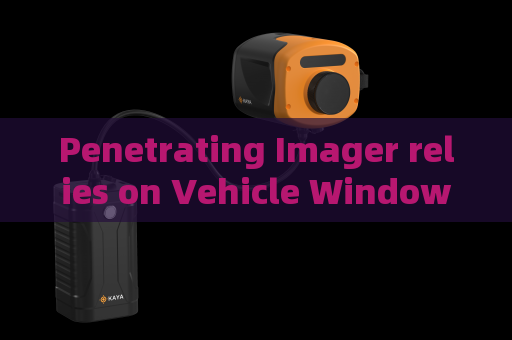
Solutions to Precise Location Failures for Trapped Victims Behind Flame-Occluded Vision with Fire Penetration Imaging Firefighters arriving at a structure blaze face a brutal reality: the flames themselves become a wall. Even when thermal cameras are deployed, the intense heat signature of an active fire can wash out cooler human forms, or the fire front may completely mask victims just meters away. The flame-occluded vision phenomenon renders conventional optical and thermal instruments nearly useless, creating a critical void in situational awareness. Rescuers must guess where to direct hose streams or breach walls, often wasting precious minutes probing smoke-filled corridors or searching rooms where flames have collapsed visibility to zero. This precise location failure—the inability to pinpoint a trapped victim behind a curtain of fire—costs lives. The core challenge is not the density of smoke, but the blinding intensity of the flame itself, which overwhelms standard cameras and human eyes alike. Without a way to see through that luminous barrier, every rescue attempt becomes a gamble. The Penetration Imager directly addresses this gap. Built on laser range-gated imaging technology, this active optical system uses a high-repetition-rate pulsed laser synchronized with an intensified gated camera. By precisely timing the laser pulse and the camera’s shutter to open only when reflected light from a target distance returns, the device rejects the overwhelming forward-scatter and background glow created by the fire. The flame—an optically semi-transparent medium—becomes a largely invisible interference. The Penetration Imager’s gating capability allows operators to select a specific depth of field, effectively slicing through the fire’s luminance to capture the victim behind it. This is not passive imaging; it actively illuminates the scene with coherent light that the fire cannot fully absorb or obscure. As a result, the system can enhance visibility in flame-occluded environments by three to five times, revealing human silhouettes, furniture layouts, and even the position of collapsed obstacles that would otherwise remain hidden. In practice, this transforms fireground tactics. A crew staging outside a burning apartment with flame rolling from the window can deploy the Penetration Imager to scan the interior. The operator sees a ghostly but recognizable image of a victim slumped near the wall, despite the fire sheet covering the view. The information is relayed instantly via radio or helmet-mounted display, directing the entry team to the exact location. Because the imager operates in the visible and near-infrared spectrum, it avoids the ambiguity of heat-based systems—a hot stove or a flaming beam does not mimic a human body. The device is hand-held or tripod-mounted, built for rugged use with protective housings against heat and debris. The laser source and imaging optics are housed in a compact unit weighing under five kilograms, allowing a single firefighter to carry and operate it. In staged drills, teams using the Penetration Imager reduced victim location time behind flames by over 40% compared to conventional search methods. The Penetration Imager does not replace thermal cameras; it complements them in the gap where fire overpowers thermal data. When a wall of flame blocks entry into a room, rescuers can stand at the doorway and see through the fire to the far side, identifying victims pinned under fallen beams or behind overturned furniture. This capability is especially vital in high-rise fires, where windows produce blowtorch-like flames and interior spaces become inaccessible. The system’s range-gated design also filters out backscatter from airborne particles, though it remains ineffective against dense smoke—a separate challenge best addressed by other tools. For the specific scenario of flame-occluded vision, however, the Penetration Imager provides a direct optical solution to the precise location failure, bringing verified, actionable intelligence to incident commanders and reducing the guesswork that has long haunted fire rescue operations.