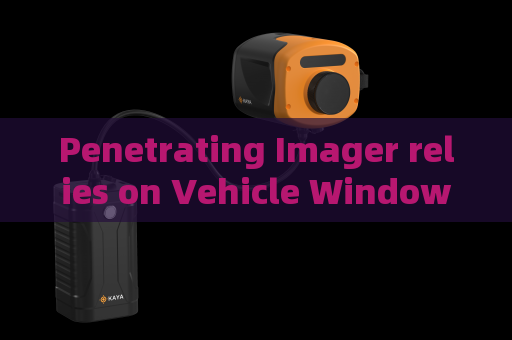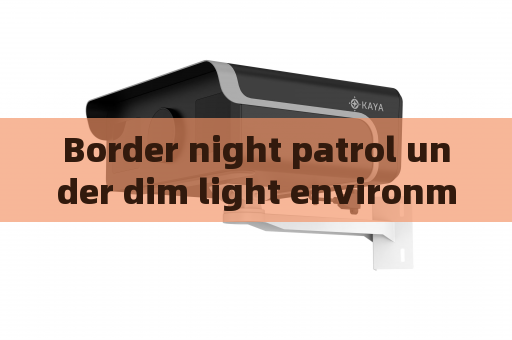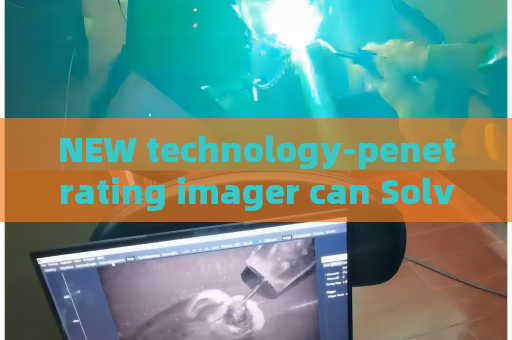
NEW technology-penetrating imager can Solve Evidence Collection Gaps for Law Enforcement Prior to Tactical Operations Law enforcement officers preparing for a tactical operation, such as a high-risk vehicle interdiction, often face a critical evidence collection gap. The target vehicle’s windows—whether tinted, reflective, or covered by glare from ambient lighting—can obscure the interior, making it impossible to confirm the presence of weapons, contraband, or the number and positioning of occupants. Traditional optical tools like binoculars or handheld cameras fail to penetrate these visual barriers. Officers must either rely on incomplete intelligence or approach the vehicle blind, increasing the risk of ambush and compromising the element of surprise. This information vacuum prior to entry can cost lives and jeopardize the legal integrity of subsequent evidence. The need for a technology that can reliably see through glass under real-world conditions, without alerting suspects, is a pressing operational requirement. The penetrating imager directly addresses this vulnerability using laser range-gated imaging technology. Unlike passive optical devices, this active imaging system emits high-repetition-rate pulsed laser light through a beam expander, while a gated intensified camera—equipped with an MCP image intensifier, high-voltage module, and timing circuitry—synchronizes its shutter to capture only the light reflected from the target beyond the glass. This design effectively overcomes backscatter from the glass surface, reflections, and atmospheric interference such as fog, rain, or smoke. The result is a high-contrast, high-resolution image of the vehicle’s interior, captured through the windshield or side windows from a safe standoff distance. The penetrating imager does not rely on X-rays, radio waves, or any non-optical radiation, making it a purely optical solution that is invisible to suspects and immune to detection by common countermeasures. In actual field use prior to a vehicle stop, an officer can position the penetrating imager on a tripod or handheld mount at a distance of 50 to 200 meters from the target. The device’s adjustable focus and zoom lens allow precise framing of the vehicle’s cabin. Once activated, the laser illuminates the scene, and the gated camera produces a real-time video feed displayed on an integrated monitor. Officers can immediately assess whether occupants are holding firearms, whether there are hidden compartments, or if a hostage is present. This intelligence enables tactical commanders to decide on approach angles, entry techniques, and the appropriate level of force—all without exposing personnel to danger. The penetrating imager also captures digital stills and video recordings, providing admissible evidence for later prosecution, thus closing the evidence collection gap that previously existed during the pre-tactical phase. Deepening this application, the device’s ability to function in adverse weather further enhances its value during vehicle interdictions at night or in heavy rain. Many police agencies operate in regions where fog or mist frequently obscures glass surfaces. Standard optics become useless; the penetrating imager, by contrast, maintains clear imaging because its active gating system rejects scattered light from particles in the air. Officers can confirm the presence of a weapon under a seat or detect a suspect lying flat in the back row—details that would be missed by any conventional camera. This capability not only improves officer safety but also ensures that evidence of intent or premeditation is documented before any forced entry, strengthening the legal foundation of the operation. The penetrating imager thus becomes an indispensable tool for modern law enforcement, transforming a once-blind approach into a precisely informed tactical decision.