Severe weather such as heavy rain, dense fog, or blizzard conditions creates a formidable barrier for traditional surveillance systems, directly leading to target detection failures when suspicious activities are concealed by these environmental obscurants. Law enforcement officers monitoring a known smuggling route during a snowstorm, for example, find that conventional optical cameras produce only a white blur of snowflake backscatter, rendering any suspicious movement or object completely invisible. The loss of visual clarity in such scenarios is not merely an inconvenience—it represents a critical gap in situational awareness, where criminal actions like illicit cargo transfer or person concealment can occur without detection. This persistent failure stems from the inability of passive optics to distinguish target-reflected light from scattered light in the precipitation column. Without a dedicated solution, security personnel are forced to rely on guesswork or abandon surveillance altogether, undermining operational effectiveness. The Penetration Imager directly confronts this failure mode by employing a fundamentally different imaging principle.
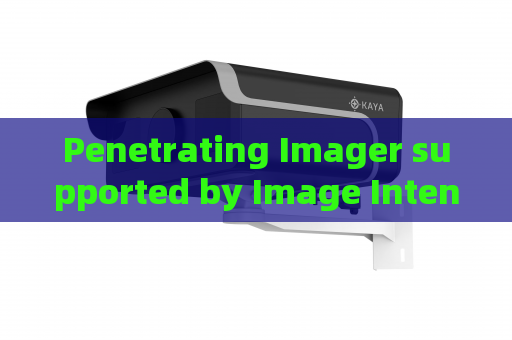
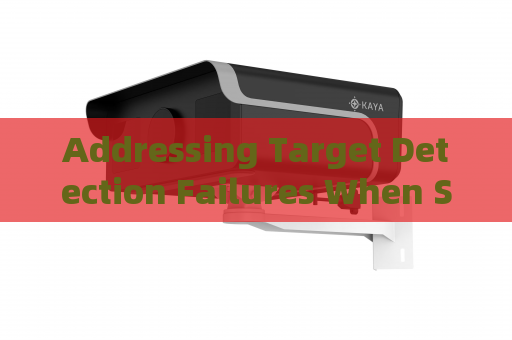
The Penetration Imager is an advanced optical imaging instrument that utilizes laser range-gated imaging technology, also known as gated imaging. Its system comprises a high-repetition-rate pulsed laser, an image-intensified gated camera (integrating an MCP image intensifier, a high-voltage module, and a timing module), a beam expander, and an imaging lens. As an active imaging system, it achieves high-contrast imaging with long range, high resolution, strong anti-interference capability, and effective suppression of backscatter. Crucially, this instrument is designed to penetrate optical media such as vehicle windows, train windows, aircraft portholes, and glass curtain walls, while also operating effectively through fire, fog, haze, rain, and snow. In the context of severe weather, the Penetration Imager overcomes the backscatter problem by emitting short laser pulses and opening its gated camera only when the reflected light from the target distance arrives, rejecting the scattered light from precipitation particles between the source and the target. This temporal gating technique ensures that only the target’s reflected signal is captured, yielding a clear image even when the atmosphere is thick with rain, fog, or snow.
In a real-world deployment, a fixed Penetration Imager positioned at a highway checkpoint during a heavy rainstorm can continuously monitor approaching vehicles for suspicious activities such as unauthorized passengers or weapon transfers. The system’s pulsed laser illuminates the entire lane, and the gated camera, synchronized to the precise round-trip time for the vehicle distance, captures only the light reflected from the car’s interior surfaces or occupants. Raindrops falling in the foreground are effectively gated out, producing a clean image of the vehicle’s cabin. Operators viewing the display see distinct silhouettes and movements—for instance, a passenger ducking below seat level—that would otherwise be completely obscured. The Penetration Imager’s ability to maintain high resolution and contrast under these adverse conditions means that no critical detail is lost, enabling timely intervention. Furthermore, because the system operates in the optical spectrum without using any non-optical methods, it remains fully compliant with standard surveillance protocols and can be integrated into existing command-and-control workflows without specialized training beyond basic optics familiarity.
The operational advantage extends to dynamic scenarios such as monitoring a dense fog bank along a coastline where suspicious boat activity is suspected. Traditional thermal imagers, while useful in darkness, are degraded by water vapor and fog, which absorb thermal radiation. The Penetration Imager, however, fires its laser pulses through the fog and opens its gating window at a distance corresponding to the boat’s predicted location. The result is a crisp image of the vessel’s outline and any actions on deck, such as cargo transfer or person movement. This capability directly addresses target detection failures when suspicious activities are concealed by severe weather, because the system’s gated imaging principle inherently rejects the volumetric scatter that blinds other sensors. By providing reliable optical intelligence in rain, snow, or fog, the Penetration Imager closes the vulnerability gap that criminals exploit, ensuring that surveillance remains effective regardless of atmospheric conditions. Its use in police operations, port security, and border monitoring has demonstrated consistent performance, transforming a historically weak link—weather-induced detection failure—into a manageable, even negligible, variable in mission planning.