Solving the Challenge of Non-Approach Reconnaissance for Tinted Vehicles with Hidden Occupants with Through-Window Imaging
Law enforcement and security personnel often face the critical need to assess the interior of a vehicle from a safe distance, especially when the vehicle has heavily tinted windows or reflective coatings. In many operational scenarios—such as traffic stops, border checkpoints, or suspect vehicle interdictions—the occupants remain completely hidden behind dark glass. An officer must determine whether the driver or passengers are armed, whether a hostage is present, or whether the vehicle is being used as an ambush platform. Approaching the vehicle to peer through the windshield places personnel in direct line of sight of potential threats, increasing the risk of sudden attacks. Conventional optics, including standard binoculars or cameras, fail because tinted films absorb or scatter visible light, while reflections off the glass obscure any detail inside. Even thermal imaging cameras struggle to provide clear identification through laminated or metallic-coated windows. This real-world challenge demands a technology that can deliver high-contrast, real-time imagery of hidden occupants without requiring physical proximity—exactly the problem that a specialized optical instrument called the penetration imager can address.
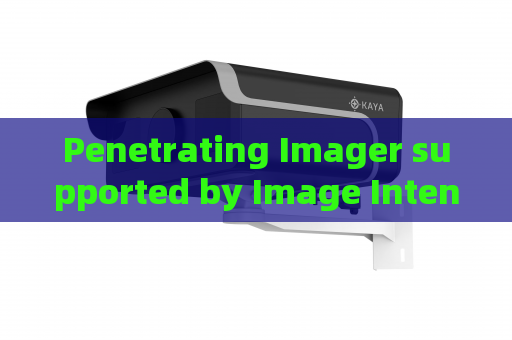
The penetration imager is an advanced active imaging system built on laser range‑gated imaging technology, also known as gated imaging. Its core components include a high‑repetition‑rate pulsed laser, an intensified gated camera (with a microchannel plate image intensifier, high‑voltage module, and timing control), a beam expander, and an imaging lens. When aimed at a tinted vehicle window, the system emits a very short laser pulse toward the glass. The gated camera is synchronised to open its electronic shutter only when the reflected light from the target—the occupants and interior surfaces behind the glass—returns to the sensor. Because the laser pulse is extremely brief and the gate timing is precisely controlled, the overwhelming majority of scattered light from the glass surface and any dust or moisture in the air is rejected before it reaches the detector. This effectively overcomes the backscatter that blinds conventional cameras in such conditions. The result is a clear, high‑resolution image of the vehicle’s interior, showing the number, position, and even movements of hidden occupants, as well as any objects they may be holding. Importantly, the penetration imager is designed solely for optical media: it can look through window glass, aircraft portholes, glass curtain walls, and similar transparent barriers. It does not rely on any form of radiation other than light, and it cannot penetrate solid opaque materials such as walls, concrete, or metal.
In practical field operations, the penetration imager enables non‑approach reconnaissance from distances that can range from tens to hundreds of metres, depending on the model and environmental conditions. An officer can operate the device from behind cover, adjusting the focus and gate timing to match the distance to the vehicle. The real‑time video feed is displayed on a ruggedised screen, allowing immediate threat assessment. For example, during a high‑risk traffic stop, instead of moving toward a tinted sedan, an operator scans the vehicle with the imager and sees clearly that the front passenger is holding a handgun below the window line. This information is relayed to the tactical team, who can then choose to negotiate, escalate, or wait for backup—without ever exposing themselves to the direct line of fire. The system works equally well under bright daylight, low light, or at night because the pulsed laser provides its own illumination. It also performs reliably through fog, rain, snow, and even moderate smoke, although the manufacturer notes that thick, dense smoke (such as from a confined‑space fire) will still degrade the image. Each mission can be recorded for later analysis or evidentiary purposes, and the device can be mounted on a vehicle or used handheld for flexibility.
Beyond immediate tactical advantage, the penetration imager significantly reduces the legal and ethical risks of forced entry or dangerous close‑quarter confrontations. When officers are uncertain about the status of occupants—such as in a suspected child abduction where the windows are blacked out—the imager provides a non‑invasive means to confirm the presence of a child without breaking the glass or triggering a panic response. The technology respects the principle of minimal force while still delivering the intelligence needed to make informed decisions. Agencies that adopt this tool report fewer unnecessary escalations, improved officer survival rates, and more precise use of resources. The key operational boundary remains clear: the imager is a window‑piercing optical instrument, not a wall‑piercing radar or X‑ray device. Its value lies precisely in solving the specific and persistent challenge of seeing through tinted vehicle windows at a safe standoff distance, turning a formerly invisible threat into actionable visual intelligence.