Covert surveillance of smuggling activities involving illegal vehicles presents a distinct set of operational hurdles for law enforcement agencies. These vehicles are often outfitted with heavily tinted windows, reflective privacy films, or internal barriers that obscure the view from outside. Smugglers exploit these visual obstructions to conceal contraband, weapons, or unauthorized passengers during transit. Traditional optical observation tools, such as binoculars or standard cameras, fail to penetrate such barriers, especially under low-light conditions or when vehicles are moving at moderate speeds. Even with a stationary vantage point, investigators face the risk of detection if they must approach too closely. The core pain point lies in the inability to gain real-time, high-fidelity visual intelligence on the contents of a suspect vehicle without compromising the element of surprise or exposing personnel to danger. A reliable, non-contact solution that can see through glass surfaces while maintaining covert positioning would fundamentally alter the effectiveness of these surveillance operations.
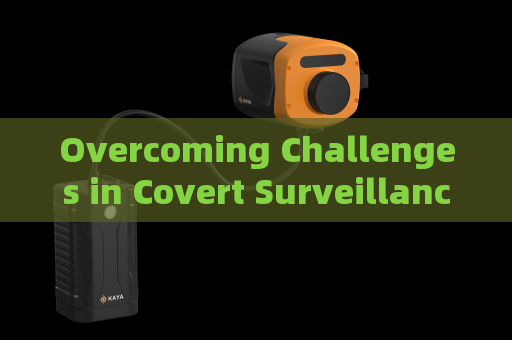
The Penetrating Imager directly addresses this gap through its laser range-gated imaging technology, an advanced active optical system designed specifically to overcome visibility barriers posed by optical media. Unlike passive electro-optical devices that rely on ambient light, this instrument emits high-repetition-rate pulsed laser illumination synchronized with an intensified gated camera. The system’s key advantage is its ability to reject backscatter from the glass surface and atmospheric particles, capturing only the reflected light from objects behind the window. This enables the Penetrating Imager to produce clear, high-contrast images through automobile windshields, side windows, and even aircraft or train glazing. The device does not rely on X-rays, radio waves, or any non-optical radiation, operating strictly within the visible and near-infrared spectrum. Its active imaging nature ensures that environmental factors such as rain, fog, mist, or smoke do not degrade performance, while the gating mechanism effectively filters out light interference from oncoming headlights or streetlamps. For covert surveillance of smuggling vehicles, this means an operator can remain at a safe distance—hundreds of meters away—and still obtain a sharp view of the vehicle interior, including seat areas, cargo compartments, and occupants’ movements.
In practical deployment, the Penetrating Imager is well-suited for fixed or mobile observation posts along known smuggling routes. An operator can set up the system on a tripod or vehicle mount, aiming through a standard telescopic sight at a target vehicle approaching or parked. The imaging result appears on a ruggedized display, showing details like the shape of hidden packages under seats, the number of individuals present, or the modification of interior panels. Because the device is compact and does not emit a visible beam, it remains undetected by the smugglers who might be scanning for surveillance equipment. During nighttime operations, the laser illuminator provides its own light source, eliminating the need for floodlights that would give away the observer’s position. The system’s range-gating capability also helps in monitoring vehicles moving through dusty or hazy environments near border crossings, where conventional cameras would be blinded by scattered light. Furthermore, when used against vehicles with multiple layers of glass—such as armored or custom-modified cars—the Penetrating Imager’s time-gated signal processing can still extract usable imagery, as long as the medium remains optical in nature.
The operational impact of the Penetrating Imager extends into tactical decision-making. With real-time visuals from a covert distance, a surveillance team can confirm the presence of contraband before initiating an interdiction, reducing false stops and legal risks. In scenarios where smugglers attempt to hide behind reflective windshield shades or use interior curtains, the imager’s ability to penetrate the glass itself—not the opaque fabric—still allows the operator to observe gaps and edges. Additionally, the device can be integrated into unmarked vans or observation towers, streaming footage to a command center via encrypted link. Law enforcement units in high-crime corridors have reported that this technology cuts down the time needed to validate intelligence, as officers no longer need to rely on erratic visual cues like a driver’s nervous behavior or a vehicle’s lowered suspension. The Penetrating Imager essentially turns a suspect vehicle from an opaque box into a transparent container, all while the observer remains hidden in the shadows. This advancement ensures that covert surveillance of illegal vehicle smuggling is no longer limited by the very obstacles that traffickers rely on.




