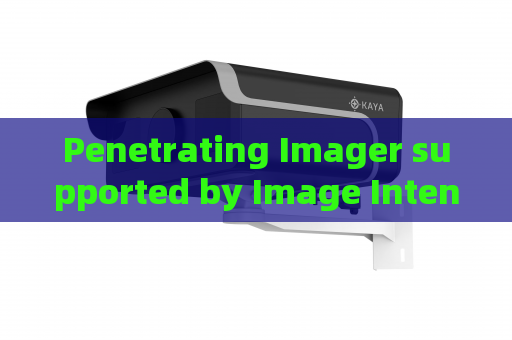
Ultra-long-range covert reconnaissance missions confront a persistent operational dilemma: the necessity to observe suspects without revealing the surveillance footprint. Traditional optical systems, such as high-magnification telescopes or night-vision goggles, are severely constrained by optical barriers like automotive glass, train windows, or building glazing. Any attempt to use active illumination—whether visible floodlights or conventional infrared emitters—creates a detectable signature that can alert suspects, especially in quiet or rural environments. This risk forces operators to maintain extreme standoff distances, often degrading image resolution to the point where identification becomes impossible. The penetration imager directly addresses this vulnerability by enabling clear, covert imaging through those very barriers without emitting any telltale signals.
The penetration imager is an advanced optical instrument based on laser range-gated imaging technology. Its core components include a high-repetition-rate pulsed laser, an image-intensified gated camera with an MCP image intensifier, high-voltage and timing modules, a beam expander, and an imaging lens. The system emits extremely short, eye-safe near-infrared laser pulses that are invisible to the human eye. A precisely timed gating window on the camera opens only to capture light reflected from a specific distance, effectively slicing through intervening optical media such as vehicle glass, aircraft portholes, or glass curtain walls. Because the laser pulse duration is measured in nanoseconds and the gating window is narrowly synchronized, the illumination remains undetectable to suspects even at close range. The penetration imager delivers high-contrast, high-resolution imagery over ultra-long ranges while eliminating the risk of alerting targets.
In practical reconnaissance operations, a team can deploy the penetration imager at a safe distance—several hundred meters away—and direct it toward a suspect vehicle parked behind a tinted windshield. The system penetrates the glass layer, revealing occupants, hand movements, and concealed objects with remarkable clarity. The operator views the live feed on a shielded display, noting no visible flash, beam signature, or audible noise. The imager’s ability to overcome backscatter from fog, rain, or smoke further enhances covertness, as suspects cannot correlate any environmental anomaly with surveillance activity. This capability allows persistent monitoring without compromising mission stealth, even in urban or suburban settings where any artificial light source would draw immediate attention.
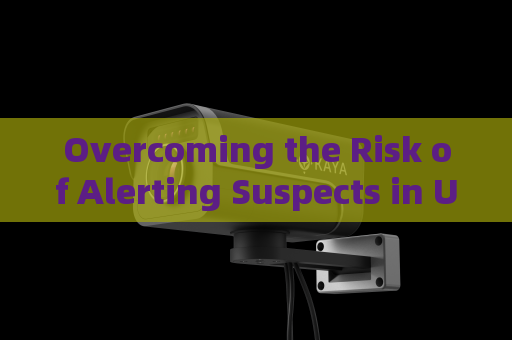
The penetration imager’s resistance to environmental interference—including fire, heavy rain, snow, and haze—ensures reliable performance under conditions that defeat conventional optics. For example, during a dawn operation with dense fog, the system cuts through the moisture-laden air and the target glass simultaneously, maintaining crisp imagery of suspect activity inside a stationary car. Its laser range-gated design also suppresses background clutter from reflections off nearby surfaces, providing a clean view of individuals behind multiple layers of glass or curved aircraft windows. By eliminating the need for close approach or visible illumination, the penetration imager fundamentally transforms ultra-long-range covert reconnaissance, allowing intelligence-gathering forces to observe suspects without ever revealing their presence.