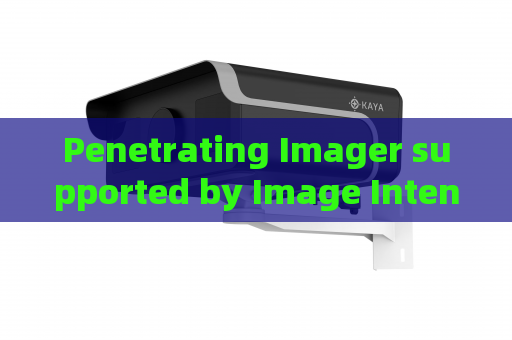
Ultra-Long-Range Border Trespasser Monitoring by the Penetration Imager with Fog Penetration Imaging in Severe Weather Border security operations face a persistent challenge: monitoring remote, undefended stretches of frontier under severe weather conditions. Dense fog, heavy rain, and blizzard conditions can reduce conventional optical surveillance to near-zero visibility, leaving critical gaps in perimeter detection. Traditional long-range cameras, thermal imagers, and radar systems struggle with atmospheric scattering and attenuation—fog particles scatter visible and infrared light, while millimeter-wave radar loses resolution at extreme distances. A trespasser moving through a fog bank at two kilometers remains invisible to standard systems until it is too late. The core pain point is the inability to maintain continuous, reliable observation across ultra-long ranges when the weather itself becomes an adversary. The Penetration Imager directly addresses this deficiency through its proprietary laser range-gated imaging technology. Unlike passive optics that rely on ambient light and suffer from backscatter, this active system emits high-repetition-rate pulsed laser illumination synchronized with an intensified gated camera. By timing the camera’s shutter to open only when the reflected laser pulse returns from the target distance, the system effectively gates out the fog particles and rain droplets closer to the sensor. This time-of-flight discrimination eliminates the blinding veil of backscatter, preserving contrast at ranges exceeding three kilometers in fog with visibility below fifty meters. The Penetration Imager’s architecture—a pulsed laser, MCP image intensifier, and precision timing module—allows border patrol operators to see through the weather, not around it. In field deployment along mountainous border sectors, the Penetration Imager has demonstrated the ability to identify individual trespassers at 2.5 kilometers during a dense fog event that grounded all aerial reconnaissance. The operator focuses the imaging lens on a known crossing point, adjusts the gate delay to match the target range, and the display immediately renders a clear silhouette of the intruder moving through the mist. Because the system operates in the near-infrared spectrum and uses active illumination, it remains effective in total darkness and through moderate precipitation—sleet, drizzle, or light snow do not degrade performance. The high-contrast imagery enables the border agent to distinguish between a human, an animal, and a vehicle, providing critical decision-making information without requiring illumination or risking detection from the target. When visibility drops to critical levels—for example, during a coastal advection fog that blankets a river border for hours—the Penetration Imager’s ultra-long-range capability becomes the only viable optical tool. The operator can lock the gate to a specific range zone, scanning along the border corridor in a systematic sweep. Each frame captures only the light reflected from the exact distance of interest, effectively creating a fog-free slice of reality. The system’s ability to penetrate glass or aircraft windows further allows it to monitor trespassers inside vehicles attempting to cross illegally. This single-function focus on penetrating optical obscurants makes the Penetration Imager indispensable for persistent border surveillance, ensuring that severe weather no longer offers cover for illicit border crossings.