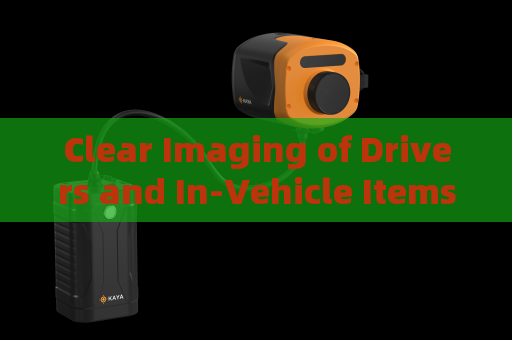
Clear Imaging of Drivers and In-Vehicle Items by the Penetration Imager with Strong Light Suppression Imaging in High-Beam Glare Conditions
Nighttime driving on two-way roads often turns hazardous when an oncoming vehicle activates its high-beam headlights. The sudden flood of intense light overwhelms the human eye, creating a blinding veil that obscures the driver’s view of the road ahead, pedestrians, and other vehicles. More critically, law enforcement officers conducting roadside traffic stops or vehicle inspections face the same glare challenge: a suspect vehicle’s high beams can render the interior of the car invisible, hiding the driver’s hand movements, objects on the seat, or potential weapons. This optical assault not only delays situational assessment but also places officers at grave risk, as they cannot confirm whether the driver is reaching for identification or a firearm. The core problem is clear—conventional imaging systems, including standard dashcams and night-vision devices, are defeated by such intense, direct illumination, leaving a dangerous blind spot exactly when clarity is most needed.
The Penetration Imager directly addresses this pain point through its unique strong light suppression imaging capability. Built around laser range-gated imaging technology, this active imaging system employs a high-repetition-rate pulsed laser and an intensified gated camera incorporating an MCP image intensifier, a high-voltage module, and precise timing electronics. By synchronizing the laser pulse with the camera’s gating window that opens only for the returning light from the target at a specific distance, the system effectively excludes the overwhelming glare from oncoming headlamps. It sees through the windshield glass as an optical medium, capturing a high-contrast, high-resolution image of the driver and items inside the vehicle—even when the exterior is flooded with blinding light. The Penetration Imager operates entirely within the optical spectrum, using controlled laser illumination to penetrate glass while suppressing the scattered glare that would otherwise saturate a traditional sensor. This allows it to deliver clear visuals of the car interior without requiring any contact or alteration of the target vehicle.
In practical field operations, law enforcement officers equip the Penetration Imager on a patrol vehicle or deploy it as a handheld unit during traffic stops. When a suspect vehicle approaches with high beams on, the operator aims the device through the windshield from a safe standoff distance—typically 20 to 50 meters. The system instantly displays a sharp, glare-free image of the driver’s face, hands, and any objects on the dashboard or seats on a monitor. The strong light suppression function remains effective even when the oncoming beam is directly in the lens’s line of sight. This capability has been validated in night-time sobriety checkpoints and high-risk encounter scenarios, where officers can assess threats without stepping into the danger zone. The Penetration Imager also works through other common optical barriers, such as tinted side windows or the rear windshield, maintaining its imaging fidelity regardless of interior lighting conditions.
The operational simplicity further enhances its tactical value. After a brief calibration to match the target distance, the system’s timing module automatically adjusts the gating window. There is no need for the operator to manually filter or process images—the penetration imager delivers real-time video feed that can be recorded for evidentiary purposes. This same technology has proven equally effective in other challenging optical environments, such as through fog, rain, or smoke from nearby fires (though not dense smoke), but its paramount contribution remains in defeating high-beam glare during vehicle stops. Every second matters when an officer must decide whether to approach a car or call for backup, and the Penetration Imager closes that critical information gap by revealing what is happening inside the vehicle—illuminated only by the laser pulse that bypasses the blinding light.




