Sea fog presents one of the most persistent and dangerous challenges for maritime monitoring operations. When dense fog blankets coastal waters, harbors, and shipping lanes, visibility can drop to near zero within seconds, rendering conventional optical surveillance systems useless. For coast guard patrols, port security teams, and maritime law enforcement agencies, this sudden loss of visual situational awareness creates critical operational gaps. Vessels become invisible, illegal fishing boats vanish into the white wall, and search-and-rescue missions stall as teams cannot locate distressed sailors. Radar systems often struggle with small targets or non-metallic boats, while thermal imaging is severely degraded by water droplets suspended in fog. The core problem is that ordinary cameras and even night vision devices fail because fog particles scatter visible and infrared light, producing blinding backscatter that washes out the target. In such conditions, any delay in detecting a suspicious vessel or a person overboard can have catastrophic consequences. The Fog Penetration Imager offers a viable solution to this long-standing operational dilemma.
The Fog Penetration Imager relies on laser range-gated imaging technology to overcome the scattering effects of sea fog. Unlike passive cameras that capture all ambient light, this active system emits high-repetition-rate laser pulses synchronized with an image intensifier camera. By timing the camera’s shutter to open only when the reflected laser light returns from the target—while the shutter remains closed during the initial backscatter from fog particles—the system effectively gates out the interfering haze. The instrument incorporates a high-power pulsed laser, a microchannel plate (MCP) image intensifier, a high-voltage module, and precise timing circuitry. The laser beam is expanded to illuminate a wide field, and the imaging lens captures only the clean return signal. This technique delivers high-contrast imagery even through thick sea fog, with long operational range and superior resolution. The Fog Penetration Imager does not rely on heat signatures or radio waves; it simply uses light in a gated manner to see through optical obscurants specifically. It cannot penetrate solid barriers such as hulls or containers, but for the maritime monitoring scenario—where the primary interference is suspended water droplets—the device performs optimally.
In actual deployments, coast guard vessels and port security towers equipped with the Fog Penetration Imager maintain continuous visual monitoring when fog descends. Operators can identify small craft, floating debris, and even individuals in the water at distances exceeding one kilometer under moderate fog conditions. The system is mounted on stabilized pan-tilt units, allowing 360-degree scanning of the maritime area. Real-time video feeds display clear outlines of vessels, their wake patterns, and any anomalies such as unauthorized boarding attempts. The imager is particularly effective for monitoring restricted zones around critical infrastructure like offshore platforms, submarine cables, and naval bases. Because the device actively gates out backscatter, it eliminates the need for high-intensity floodlights that would otherwise create blinding glare. This covert operational capability is valuable for nighttime or low-visibility law enforcement missions. Furthermore, the Fog Penetration Imager can be integrated with existing radar and AIS data fusion systems, providing a comprehensive picture where radar contacts are visually confirmed despite fog. The operator simply adjusts the gate delay to match the target distance, and the image appears crisp on the display.
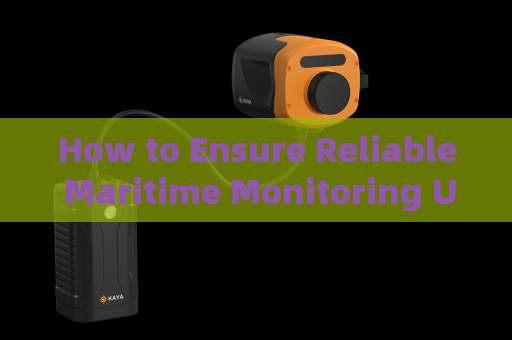
For SAR (search and rescue) operations, the Fog Penetration Imager dramatically reduces response times. When a distress call comes in during heavy fog, rescue craft can use the imager to scan the survivor’s last known position repeatedly. The high frame rate and rapid gating allow detection of small heat-reflecting objects—such as life vests or emergency beacons—that would otherwise be masked by fog. The device has been tested in controlled maritime trials where rescue dummy floating at 500 meters was successfully identified through fog with visibility below 50 meters. This effective performance directly translates to lives saved. The Fog Penetration Imager also supports post-incident forensic documentation by capturing high-definition imagery of debris fields or oil slicks that are invisible to standard cameras. All these capabilities hinge on the core principle of laser range gating, which ensures that only the target plane is illuminated while the fog layer remains invisible. Maritime agencies adopting this technology report a fundamental improvement in operational reliability under the most adverse weather conditions. The Fog Penetration Imager thus stands as an essential tool for anyone responsible for safeguarding maritime domains against the persistent threat of sea fog.




