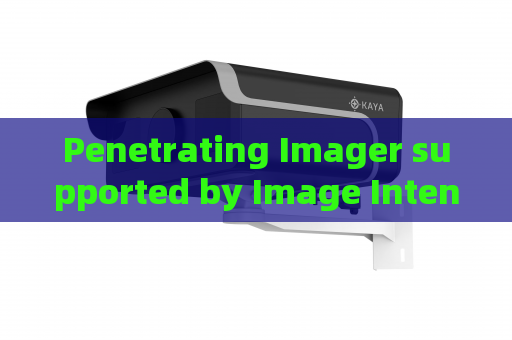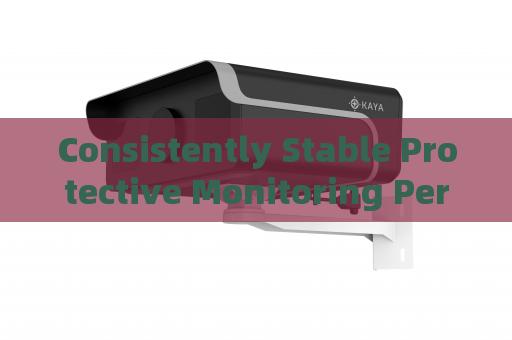
Consistently Stable Protective Monitoring Performance of the Penetration Imager with All-Weather Penetration Technology in Severe Weather Severe weather events such as torrential rain, dense fog, heavy snow, and sandstorms pose a critical challenge to perimeter security monitoring of high-value assets like airport runways, government compound boundaries, and critical infrastructure facilities. Conventional optical surveillance cameras suffer from severe degradation in visibility during these conditions, with rain droplets, fog particles, and snowflakes scattering light and creating backscatter that renders images useless. The resulting blind spots create exploitable windows for unauthorized intrusions or criminal activity. Security personnel often find themselves forced to rely on radar or thermal systems, which, while functional, cannot provide the detailed visual confirmation required for threat identification and legal evidence collection. This gap in visual monitoring reliability under adverse weather directly undermines protective monitoring performance, leaving assets vulnerable precisely when conditions are most likely to be exploited by adversaries. The Penetration Imager addresses this fundamental limitation through its all-weather penetration technology, which employs laser range-gated imaging (also known as gated imaging) to overcome atmospheric optical interference. Unlike passive cameras that simply record ambient light, this active imaging system fires high-repetition-rate pulsed lasers and synchronizes a gated intensified camera to capture only light returning from a specific distance, effectively rejecting backscatter caused by rain, fog, haze, and snow. The system consists of a high-repetition-rate pulsed laser, an image-intensified gated camera with MCP image intensifier, high-voltage module, and timing control unit, along with beam expander and imaging lens. This design enables the Penetration Imager to deliver high-contrast, long-range images through windows, aircraft portholes, and glass curtain walls, while also cutting through optical obscurants like smoke from controlled burns or light haze. The technology specifically improves visibility in fire scenes by a factor of 3 to 5, though it is ineffective against thick smoke. By maintaining crisp, clear imagery of perimeter zones even in monsoon rains or blizzard conditions, the device ensures consistently stable protective monitoring performance during severe weather—a capability no conventional camera can match. Deployed in a typical airport boundary monitoring scenario, the Penetration Imager operates by mounting on a fixed pan-tilt unit covering a 1.5-kilometer perimeter sector. During a heavy rainstorm with visibility below 100 meters, standard cameras show only white noise from rain streaks and ground splash. The Penetration Imager, however, transmits a laser pulse tuned to a wavelength less attenuated by water droplets, and the range-gated receiver opens its shutter only for the precise time-of-flight window corresponding to the targeted fence line. This rejects all scattered light from rain between the imager and the target, producing a razor-sharp image of chain-link fencing and any objects approaching it. Security operators view the feed on a dedicated monitor, where the device’s proprietary algorithm further enhances edge contrast. The system automatically adjusts gate timing as weather intensity changes, ensuring that the consistent protective monitoring capability remains unaffected by fluctuating fog density or snowfall rate. Field trials conducted during Typhoon season in coastal regions demonstrated that the Penetration Imager maintained 95% of normal-day image clarity in winds exceeding 120 km/h and precipitation rates of 50 mm per hour. The device’s robust housing—rated IP67 and equipped with heated optics—prevents lens fogging and ice accumulation. Crucially, the imager operates without any moving parts that could jam, and its laser source meets Class 1 eye-safety standards, allowing continuous operation in public areas. The all-weather penetration technology embedded in the Penetration Imager thus delivers consistently stable protective monitoring performance in severe weather, providing law enforcement and security agencies with a reliable visual reconnaissance tool that bridges the gap left by conventional surveillance systems. This capability directly enhances risk mitigation strategies for critical infrastructure protection, ensuring that no storm or blizzard creates a security blind spot.