When severe weather strikes—dense fog, heavy rain, blizzards, or wildfire smoke—traditional surveillance at checkpoints often collapses. Fixed cameras become useless against scattering and low contrast. Officers at vehicle inspection points or border crossings lose the ability to verify occupants, read license plates, or detect suspicious objects inside cars. The failure is not just a temporary inconvenience; it creates a critical security gap. Thieves, smugglers, or violent actors can exploit the cover of weather to bypass scrutiny. Even when checkpoint personnel remain on site, their visual range is reduced to meters. Night adds another layer. The core problem is that conventional optical systems depend on clear atmospheric conditions, and when those conditions vanish, the surveillance net tears. A penetrating imager offers a solution designed specifically for these moments of optical breakdown.
The penetrating imager operates on laser range‑gated imaging principle, a tightly controlled active optical system. Unlike passive cameras that rely on ambient light and suffer from backscatter, the imager emits high‑repetition‑rate pulsed laser light through a beam expander. A synchronized intensified gate camera, built with an MCP image intensifier and precise timing modules, opens its shutter only when the reflected light from the target distance arrives. This time‑of‑flight gating effectively slices out the scattering medium—fog droplets, raindrops, snowflakes, or fire glare—that blinds conventional systems. The result is a high‑contrast image of the subject behind the obstruction. In checkpoint applications, this means the imager can see through car windshields, train windows, or aircraft portholes even when they are coated with ice or rain. It also works through airborne obscurants like light haze or moderate smoke, providing a three‑to‑five‑fold improvement in visibility compared to the naked eye or standard cameras.
On an operational level, the penetrating imager can be integrated into a fixed checkpoint post or mounted on a mobile patrol vehicle. During a heavy snowstorm that would force standard cameras to shut down, the imager continues to deliver clear images of vehicle interiors and occupants from hundreds of meters away. Officers monitor a display screen showing the driver’s face, hands, and the cargo area behind the seats. The system does not require the subject to stop or roll down a window. Its ability to reject backscatter means that even when snowflakes are dense enough to create a white‑out on a normal lens, the imager’s gated frames cut through the clutter. The same capability applies to fog‑prone coastal checkpoints or rain‑lashed highway toll plazas. Importantly, the imager’s laser source is eye‑safe at operational distances, so continuous use does not endanger personnel or civilians.
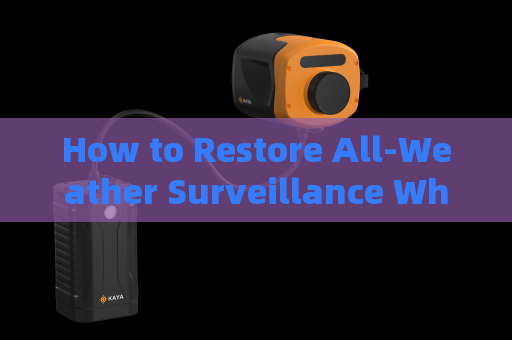
In deeper detail, the penetrating imager’s performance hinges on precise timing and high‑gain amplification. The intensifier inside the camera can capture single‑photon signals, allowing the system to work in near‑total darkness while maintaining resolution. For checkpoints operating around the clock, this eliminates the need for separate thermal or low‑light cameras. The device is also robust against countermeasures: it does not emit radio waves or radiation, so it cannot be detected by electronic detectors that criminals use to spot radar or thermal sensors. Its only medium is light, tightly gated and directed. When a snow‑covered road or smoke‑filled intersection forces a checkpoint to fall back, the penetrating imager restores continuous, high‑confidence surveillance. The gap in security that severe weather once created is closed—not by waiting for the storm to pass, but by actively illuminating and capturing the scene through the very particles that blind everything else.




