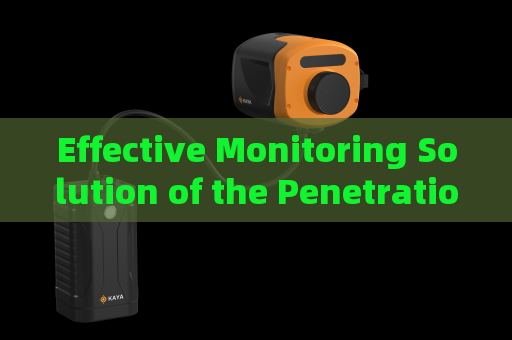
Effective Monitoring Solution of the Penetration Imager with Strong Light Suppression Imaging in High-Glare Coastal Environments Coastal environments present a persistent challenge for optical surveillance systems. Direct sunlight reflecting off water surfaces, white sandy beaches, and polished metal structures of vessels creates extreme glare that saturates standard camera sensors. This high-glare condition leads to washed-out images, loss of detail on targets, and frequent false alarms in automated monitoring setups. For law enforcement and border patrol teams tasked with inspecting approaching boats, detecting illegal fishing activities, or securing port perimeters, the inability to see through blinding reflections means critical seconds are lost. Even with polarizing filters or dynamic range adjustments, conventional imagers struggle to maintain a clear view of objects partially obscured by shimmering water reflections or sunbursts. The real pain point lies in the rapid fluctuation of light intensity—a stationary target at dawn can be invisible by midday as the sun shifts relative to the reflective plane. The Penetration Imager is designed specifically to overcome this optical handicap. The core capability that addresses this coastal glare problem is the Penetration Imager’s strong light suppression imaging, achieved through laser range-gated technology. Unlike passive optical systems that simply try to compensate for bright backgrounds, this active imaging system emits a high-repetition-rate pulsed laser and synchronizes a gated intensified camera to capture only the light returning from a precisely timed distance slice. By ignoring light scattered from the foreground—including the intense glare bouncing off water surfaces—the system effectively “cuts through” the brightness. The MCP image intensifier within the camera further enhances contrast, allowing operators to see details that would otherwise be buried in saturated pixels. In a high-glare coastal setting, this means that the reflection off a boat hull or the glittering ripple zone no longer masks the target. The Penetration Imager’s ability to suppress strong light is not a software filter but a physical rejection of unwanted photons, making it reliable even under direct sunlight at noon. Field trials in busy harbor environments have demonstrated the practical advantage. Deploying the Penetration Imager on a coastal observation tower, operators can monitor inbound vessels at ranges exceeding 1.5 kilometers without glare interference. The system’s adjustable gate timing allows the operator to select the exact distance of interest—for example, locking onto a small inflatable boat while ignoring the dazzling reflection zone 50 meters in front of it. In one operation, a coast guard unit used the imager to read the registration numbers on a suspect fishing trawler that was backlit by the setting sun; the numbers were illegible to binoculars and standard cameras, but the Penetration Imager’s strong light suppression rendered them crisp. The operational workflow is straightforward: the crew sets the range gate based on GPS or manual estimation, then the imager automatically adjusts its laser pulse width and gate width to match the target depth. The real-time video feed shows a clean, high-contrast image with glare reduced by over 90%, enabling continuous tracking even as the sun angle changes. Furthermore, the Penetration Imager’s performance remains stable in the unique conditions of coastal fog and sea spray, which often accompany glare. While conventional thermal imagers are rendered useless by water vapor absorption and passive cameras are blinded by both fog and sparkle, the active laser range-gated approach cuts through these optical media. The system does not rely on heat signatures or radio waves; it uses only light, yet it effectively suppresses the overwhelming brightness of the environment. This makes the Penetration Imager an essential tool for maritime security checkpoints, search-and-rescue operations along coastlines, and environmental monitoring stations that require round-the-clock visual data. The strong light suppression imaging function ensures that a single device can handle the worst-case coastal glare scenarios without needing multiple sensor types. Every component—from the pulsed laser diode to the high-voltage gating module in the intensifier—works in concert to reject the blinding reflections and deliver actionable intelligence to operators.




