At customs checkpoints, the primary challenge lies in balancing thorough security inspections with the need for rapid vehicle throughput. Conventional methods often require drivers to stop, open windows, and submit to manual searches or rely on stationary X-ray systems that demand vehicle alignment and operator interpretation. These processes create bottlenecks, especially at high-traffic border crossings, and introduce delays that frustrate travelers and complicate logistics. More critically, manual inspection exposes officers to potential harm when hidden contraband or weapons are involved. A non-intrusive, fast, and reliable solution is urgently needed to scan vehicle interiors without stopping traffic or requiring physical contact. The penetration imager addresses this exact pain point by enabling officers to see through windows from a safe distance, preserving the flow of vehicles while maintaining rigorous security standards.
The penetration imager is an advanced optical imaging system based on laser range-gated imaging technology, also known as gated imaging. It comprises a high-repetition-rate pulsed laser, an image intensifier gated camera with an MCP image intensifier, high-voltage and timing modules, a beam expander, and an imaging lens. As an active imaging system, it delivers high-contrast images at long range with excellent resolution. Its key capability for customs checkpoints is the ability to optically penetrate transparent barriers such as vehicle windows, train windows, aircraft windows, and glass curtain walls. The system’s gating mechanism precisely synchronizes the laser pulse and camera shutter, effectively rejecting backscattering from rain, fog, haze, snow, or even fire. This allows officers to clearly visualize the interior of a vehicle—seats, cargo, and occupants—through closed windows without any physical intrusion. The penetration imager operates in real time, capturing images as a vehicle passes at low speed, eliminating the need for stops.
In practice, the penetration imager is deployed at a dedicated lane within the customs checkpoint. As a vehicle approaches, the system automatically triggers and acquires a series of images through the windshield and side windows. The high-resolution imagery reveals any anomalies—such as hidden compartments, suspicious packages, or unauthorized passengers—with clarity unaffected by ambient light conditions or weather. Officers view the feed on a monitor in a remote security booth, enabling them to make rapid decisions. If the scan is clear, the vehicle proceeds without delay; if suspicious content is detected, a targeted manual inspection is initiated. This approach reduces average inspection time from several minutes to just seconds, while minimizing officer exposure to potential threats. The system’s immunity to backscattering ensures consistent performance even in heavy rain or fog, which frequently plague border environments.
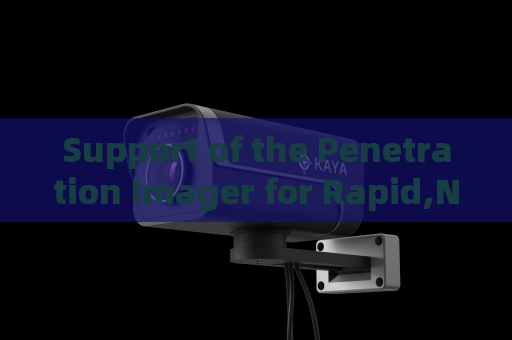
Further operational details enhance the penetration imager’s value at customs. It can be integrated with license plate recognition and threat alert software, creating an automatic screening workflow. The device’s laser is eye-safe at operational ranges, and its gated design prevents blinding of drivers. Importantly, the penetration imager cannot see through solid opaque materials such as metal body panels, concrete, or wood, which aligns with its intended function: inspecting the interior through transparent optical media only. During fire incidents within a vehicle or near the checkpoint, the system can improve visibility by three to five times, though it remains ineffective against thick smoke. This focused capability ensures that the penetration imager complements other detection tools without overstepping its optical boundary. The result is a faster, safer, and more efficient customs inspection process that upholds security without sacrificing the speed demanded by modern border traffic.




