In covert nighttime operations such as vehicle interdiction or hostage rescue, law enforcement officers face a critical dilemma. A suspect vehicle with heavily tinted windows sits in total darkness. Any visible light—a flashlight, a dome light, or even an infrared illuminator from a traditional night vision device—can instantly alert the occupants, compromising the tactical advantage. Thermal imaging, while useful in darkness, fails to see through glass because the glass blocks the heat signature and reflects ambient thermal noise. Standard image intensifiers require at least some ambient light, and in pitch‑black conditions they produce grainy, unusable imagery. The core problem is how to achieve target detection without light emission in total darkness, while still seeing through windshields or door glass to assess threats—weapons, hostages, or movements—before making entry. This is where the penetration imager (穿透成像仪) provides a decisive solution.
The penetration imager addresses this challenge through active laser range‑gated imaging. It transmits a high‑repetition‑rate pulsed laser in the near‑infrared spectrum, which is completely invisible to the human eye. The system’s intensified gated camera is synchronized to open its electronic shutter only when the laser pulse returns from the target distance, rejecting backscatter from fog, rain, or—critically—the glass surface itself. This allows the operator to see through vehicle windows as if they were clear, even when the interior is utterly dark. The device captures high‑contrast images of people, objects, and movements inside the cabin without emitting any detectable visible light. Unlike conventional IR illuminators that flood the scene and create a tell‑tale glow, the pulsed laser operates at a wavelength and timing that make it effectively invisible to unaided eyes and standard detection gear. The penetration imager’s capability to overcome glass reflections and provide zero‑light imaging gives tactical teams a true covert advantage.
In practice, this technology transforms a static checkpoint or a dynamic approach. An officer can stand at a safe distance, aim the penetration imager through the windshield or side windows, and instantly see the number of occupants, their hand positions, and any loose items such as weapons. The device works in real time, displaying clear imagery on a handheld screen or head‑mounted display. Even when the vehicle is moving slowly or parked under dense tree cover with no ambient light, the system maintains consistent performance. The penetration imager also performs reliably in rain, fog, or smoke from nearby fires—though heavy smoke remains a limitation—because the range‑gating suppresses atmospheric scatter. This allows officers to maintain situational awareness without drawing attention. The same principle applies to aircraft windows during air‑to‑ground observation or glass‑faced buildings in urban counter‑terrorism, but for vehicle interdiction it becomes the single most effective tool for target detection without light emission in total darkness.
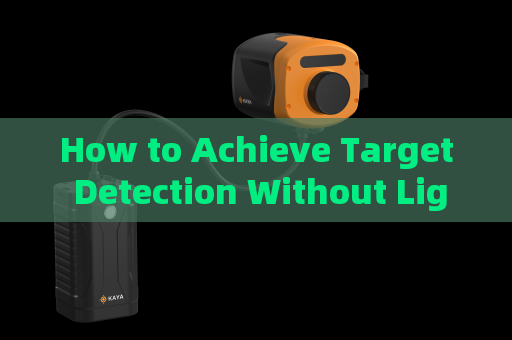
Final operational details further underscore its tactical value. The penetration imager can be integrated with existing vehicle‑mounted observation systems or carried as a lightweight unit for dismounted patrols. Operators receive immediate feedback on the display, showing not only human silhouettes but also details such as facial features when necessary, due to the high‑resolution imaging of the intensified camera. Because the system does not rely on ambient light, it functions identically in a moonless night as it does in a brightly lit alley—the only difference is the laser’s active illumination. The imagery is immune to the glare of headlights or street lamps, which would wash out conventional cameras. This makes the penetration imager essential for pre‑tactical reconnaissance, allowing a small team to monitor a target vehicle for minutes without any emission that could be detected by a suspect’s counter‑surveillance measures. In the demanding environment of total darkness behind glass, the penetration imager delivers the answer to how to achieve target detection without light emission.




