Heavy fog, torrential rain, blizzards, and dense haze create severe visual obstructions that render conventional optical surveillance systems nearly useless. At highway checkpoints, border crossings, or airports, security personnel rely on real-time visual confirmation to identify suspicious behaviors such as concealed contraband transfers, unauthorized movements, or vehicle tampering. When a sudden downpour or thick fog rolls in, standard cameras fail to penetrate the scattering media, leaving large blind spots. Officers are forced to rely on intuition or delayed reports, allowing perpetrators to exploit these gaps. The core problem is not merely reduced visibility—it is the systematic breakdown of target detection at the critical moment when concealment is most effective. This vulnerability directly undermines the proactive deterrence that modern security operations demand. The need for a technology that can actively penetrate such optical obstructions without sacrificing image quality or operational distance has become urgent. Such a solution is found in the 穿透成像仪, an advanced optical imaging instrument that leverages laser range‑gated imaging to overcome these very failures.
The 穿透成像仪 operates as an active imaging system, emitting high‑repetition‑rate laser pulses synchronized with an intensified gated camera. Its core component—a microchannel plate (MCP) image intensifier paired with precise timing modules—enables range‑gated imaging that selectively captures reflected light from a narrow depth of field while rejecting backscatter from fog droplets, rain, or snow. This capability directly addresses the detection failure scenario: when a suspicious vehicle is parked behind a curtain of heavy rain or fog, the system can be set to gate the camera shutter to only receive photons returned from the target distance, effectively “cutting through” the intervening scattering medium. Unlike passive cameras or thermal imagers that struggle with rain‑soaked surfaces or uniform temperatures, the 穿透成像仪 delivers high‑contrast, resolution‑rich image frames at distances that exceed those of conventional optical systems. Additionally, the unit can peer through glass windows, aircraft portholes, or train cabin glass without glare or reflection, making it uniquely suited for observing occupants or activities inside vehicles when external weather conditions are adverse.
In practical field operations, a single officer can deploy the handheld 穿透成像仪 from a fixed position or mount it on a tripod at a checkpoint. During a heavy rainstorm that would normally blind CCTV cameras, the operator views a real‑time, clear image of a suspect vehicle’s interior through the rain curtain. The system’s built‑in laser illuminator ensures consistent illumination even in total darkness, while the gating mechanism suppresses the bright glare of headlights or street lamps reflected off wet surfaces. For example, at a border inspection station experiencing a sudden fog event, the device allows inspectors to detect unusual cargo shapes or furtive hand movements inside a truck cabin without requiring the vehicle to stop under a canopy or be physically searched first. This preserves the element of surprise and maintains traffic flow. The operational process is straightforward: point, focus via the optical zoom, adjust the gate delay to match the target range, and observe the live feed on a ruggedized display. No complex calibration or manual computation is required, enabling rapid deployment in dynamic weather conditions.
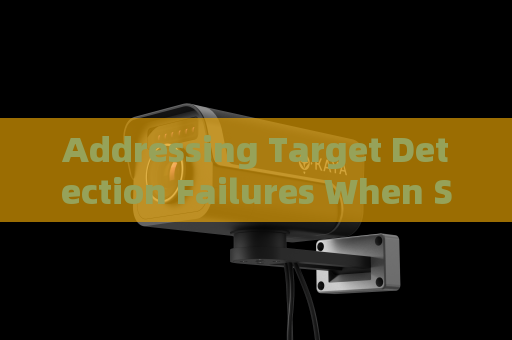
Further enhancing its utility, the 穿透成像仪 can be integrated into fixed perimeter surveillance systems when extreme weather is forecasted. At an airport security checkpoint where heavy snowfall often obscures views of approaching vehicles on the tarmac, the device’s ability to penetrate snow flurries and maintain high‑resolution imaging ensures that security teams never lose visual contact with potential threats. The same gate‑delay adjustment that compensates for varying distances also mitigates the effects of drifting snow or blowing rain by continuously filtering out the near‑field scatter. Moreover, the laser wavelength and pulse energy are designed to be eye‑safe at all operational ranges, eliminating safety concerns for both officers and subjects. By providing a direct, unambiguous view of suspicious activities concealed by severe weather, the 穿透成像仪 transforms a routine vulnerability into a controllable variable. Law enforcement and emergency response units gain a decisive tactical advantage—the ability to see through the obscuring veil of nature itself.




