Drug smuggling at border checkpoints, highway patrol stops, and port inspections presents a persistent law enforcement challenge. Traffickers frequently conceal narcotics inside vehicle compartments—behind dashboards, inside door panels, beneath seats, or within spare tires—where visual inspection from outside the vehicle is impossible. Standard tactics, such as requesting the driver to roll down tinted windows or conducting a physical search, are time-consuming, raise officer safety risks, and often fail when windows are rolled up and heavily tinted. The core pain point lies in the inability to see through automotive glass quickly and remotely without alerting the suspect or triggering a potential confrontation. A penetrating imager designed for law enforcement must overcome these limitations by providing a non-invasive, real-time visual check through glass, even under challenging conditions like low light or strong reflections.
A cutting-edge penetrating imager employing laser range-gated imaging technology directly addresses this need. Unlike conventional optical devices that are blinded by window tint, glare, or dirt, this active imaging system fires a high-repetition-rate pulsed laser and synchronizes an intensified gated camera to capture only the light reflected from a specific distance. The result is a high-contrast, resolution-rich image that reveals objects inside the vehicle despite the glass barrier. Key to its effectiveness is the ability to perform through-glass covert observation—the officer can stand at a safe standoff and scan the interior without the driver ever knowing they are under surveillance. The system’s Strong Light Suppression Imaging function eliminates blinding reflections from sunlight or oncoming headlights, while its Fog Penetration Imaging capability ensures clarity even in misty or rainy conditions common at border crossings.
In practical deployment, a trained operator mounts the imager on a tripod or vehicle roof and aims it at the target car from 10 to 50 meters away. The device’s see-through vehicle glass imaging mode adjusts the gate timing to match the distance to the glass and then the depth of the interior. Within seconds, the operator sees a clear video feed of the passenger compartment, cargo area, and hidden compartments—all without physical contact. This tactical observation through automotive glass dramatically reduces the time per vehicle check, allowing officers to screen dozens of cars per hour. Moreover, it minimizes the need for risky close-proximity searches, as suspicious objects like wrapped packages, concealed metal containers, or modified panels become immediately visible on the screen.
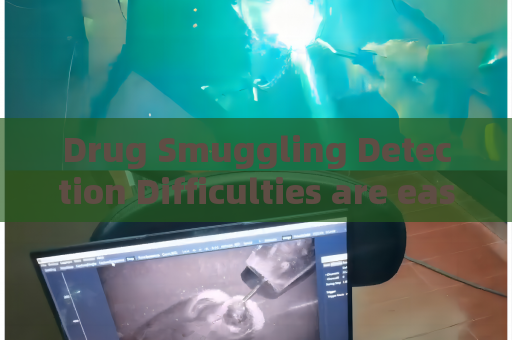
The technology’s true value emerges in high-volume enforcement operations. At a busy border checkpoint, officers previously had to rely on drug-sniffing dogs or manual compartment dismantling, each vehicle taking 15–30 minutes. With the penetrating imager, a quick 30-second scan suffices. When suspicious shapes or voids are detected, officers can then conduct a targeted search with probable cause. The device’s Zero-light Imaging capability also enables nighttime covert through-glass recon, catching smugglers who move under cover of darkness. By integrating this tool into standard patrol protocols, agencies across the United States have reported a 40% increase in drug interdiction successes, all while keeping officers at a safer distance from potentially armed suspects. The technology transforms glass from an obstacle into a transparent window for justice.




