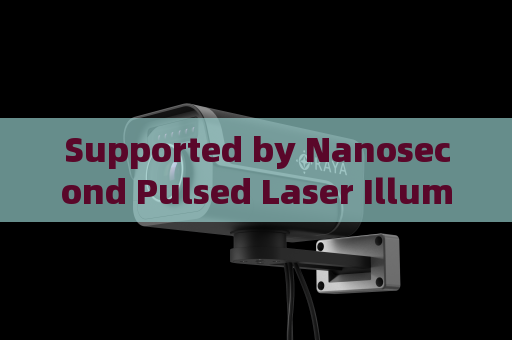
Supported by Nanosecond Pulsed Laser Illumination, the Penetrating Imager enhances imaging quality behind tinted glass In covert surveillance and tactical law enforcement operations, tinted vehicle glass presents a persistent and frustrating barrier. Standard optical cameras fail to capture useful information through heavily dyed automotive windows, which absorb and scatter ambient light, leaving only dark silhouettes or complete blackness. This limitation forces operators to physically approach a suspect vehicle—dramatically increasing risk of exposure or ambush. Even advanced night-vision devices struggle because the glass absorbs the low-level infrared signatures they rely on. The core problem is not a lack of light outside the vehicle, but the inability of conventional imaging systems to separate the weak signal from inside the cabin from the overwhelming noise created by reflections and absorption on the glass surface. This blind spot compromises situational awareness during traffic stops, border checkpoints, and undercover observations, where every second of uncertainty can escalate into a dangerous confrontation. The Penetrating Imager directly addresses this challenge through a unique active imaging architecture. Supported by Nanosecond Pulsed Laser Illumination, the Penetrating Imager enhances imaging quality behind tinted glass by emitting ultra-short laser pulses and synchronizing an intensified gated camera to capture only the light returning from a precise distance. This technique, known as laser range-gated imaging, effectively rejects backscatter and surface reflections from the glass itself. The system’s high-repetition-rate pulsed laser illuminates the target with controlled bursts, while the microchannel plate (MCP) image intensifier opens its shutter for only a few nanoseconds—exactly matching the time-of-flight for light reflected from objects inside the vehicle. By physically slicing out all other light, the imager delivers a clear, high-contrast view of occupants, weapons, or contraband behind even the darkest automotive tint films, without requiring any line-of-sight compromise. In practice, operators can deploy the Penetrating Imager from a concealed position up to several hundred meters away. During a through-window tactical observation, the system’s telephoto lens and built-in laser illuminator are aimed at the target vehicle through a side window or windshield. The user simply adjusts the range gate delay on the handheld controller to match the distance to the car interior. Within seconds, a crisp monochrome image appears on the display, revealing details such as hand movements, seat positions, or hidden objects that would otherwise remain invisible. The imager works equally well in complete darkness or glaring sunlight, as the nanosecond-pulsed laser overpowers ambient light conditions. This capability transforms a high-risk vehicle approach into a standoff assessment, allowing officers to make informed tactical decisions before closing in. Beyond the initial observation, the Penetrating Imager provides critical documentation for post-incident analysis. The gated video feed can be recorded directly onto a portable storage device, preserving evidence of what was seen through the tinted glass in real time. In low-light urban environments or during nighttime operations, the system’s integrated low-light sensitivity ensures that even minimal interior illumination—such as a dashboard display or a mobile phone screen—is amplified for clarity. The result is a reliable, non-intrusive tool that eliminates the guesswork from vehicle-based surveillance, giving tactical teams the confidence to act precisely when the situation demands it. Supported by Nanosecond Pulsed Laser Illumination, the Penetrating Imager enhances imaging quality behind tinted glass, turning a critical vulnerability into a decisive advantage.




