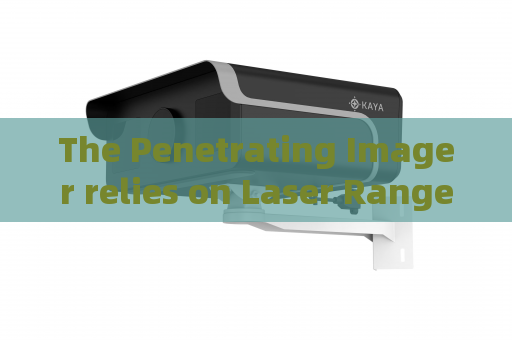
The Penetrating Imager relies on Laser Range-Gated Imaging to avoid ambient light interference in field tactical reconnaissance. In field tactical reconnaissance, the most persistent adversary is not the target itself, but the ambient light that floods the optical path. Daylight glare, low-angle sunlight, and scattered reflections from urban infrastructure or vehicle windshields create a chaotic visual environment. Conventional optical scopes or standard night-vision devices become nearly useless when stray photons from streetlights, headlights, or the setting sun wash out the contrast between a subject and its background. For a spotter or a sniper team attempting to identify a person-of-interest through a car windshield at dusk, the sun’s oblique rays can turn the glass into a mirror, hiding every detail behind a sheet of blinding reflection. This is not merely a nuisance; it is a tactical failure point. The operator loses the ability to verify a target’s identity, distinguish a weapon from a tool, or read subtle body language—all crucial cues in high-stakes decisions. The core problem is that passive imaging, even with advanced filters, cannot dynamically reject ambient light that enters from the same optical axis as the intended signal. The Penetrating Imager solves this fundamental limitation by employing Laser Range-Gated Imaging. This technology functions as an optical time-gate: a pulsed laser emits a short burst of light, and the camera’s intensifier tube opens only for a precise window that matches the round-trip time of that pulse to the target distance. Ambient light—whether from the sun, vehicle headlights, or distant lamps—arrives continuously and randomly, falling outside that narrow temporal gate. The system rejects it by design, not by filtering. In the specific scenario of through-window tactical observation, the pulsed laser beam travels through glass and reflects off the target behind it; the gate opens only long enough to capture that reflected signal, while the glass surface’ own scattered ambient glow is blocked because it arrives earlier or later than the target return. This active gating effect simultaneously overcomes backscatter from rain, mist, or dust particles in the air, which would otherwise mimic a false target. The Penetrating Imager does not rely on passive amplification of existing light; it creates its own illumination that is immune to interference from any external source. In practical deployment, this capability transforms the tactical reconnaissance workflow. During a covert surveillance operation at a roadside checkpoint, an operator positions the imager behind a natural screen—a bush or a low wall—and aims at a stationary sedan 80 meters away. The vehicle’s windshield is tinted and partially covered with dust; the sun is low behind the operator, casting long shadows directly into the glass. With a standard long-range camera, the interior occupants are invisible. The Penetrating Imager operator adjusts the gate delay to match the 80-meter round-trip distance (approximately 533 nanoseconds). The first laser pulse illuminates the windshield surface, but the gate remains closed. Only the pulse that travels through the glass, reflects off the passenger’s face and torso, and returns is captured. The resulting image shows high-contrast details: the individual’s clothing, the outline of a smartphone held near the ear, and even the slight movement of lips during speech. The ambient sunlight, which would have caused flare, is completely absent from the frame. This allows the reconnaissance team to positively identify the subject without any risk of being detected by reflected glare. The true tactical depth of this capability becomes clear in multi-agent coordination. Suppose a forward observer locates a target vehicle in a parking lot surrounded by streetlights and moving headlights. The observer communicates the estimated range to a separate team operating the Penetrating Imager at a different angle. The imager operator fine-tunes the gate width to 10 nanoseconds—just enough to freeze motion—and activates the laser at a wavelength that is invisible to the naked eye but well-matched to the camera’s photocathode. Over the next several minutes, the team captures a sequence of frames showing the target adjusting a weapon, speaking on a radio, and eventually leaving the vehicle. Each frame is free from the strobe effect of passing car lights and the wash-out from overhead sodium lamps. The commander on-site can then make a confirmed call: the subject is hostile, and the vehicle contains contraband. The Penetrating Imager, by rejecting ambient light at the physical level, turns a normally compromised observation window into a reliable intelligence-gathering aperture. No filter, no algorithm, and no post-processing can match the raw temporal immunity that laser range-gating provides in the field.




