Hostage rescue operations present one of the most demanding scenarios for law enforcement tactical teams. A critical obstacle lies in obtaining reliable visual intelligence through vehicle windows or building glass without compromising the element of surprise. Standard optical devices—binoculars, spotting scopes, or high-magnification cameras—struggle severely when confronted with tinted automotive glass, reflective coatings, dirt, or condensation. These surface conditions scatter ambient light and create blinding glare, rendering the interior completely opaque to conventional optics. Worse, rain or fog further degrades the image, forcing operators to move dangerously close to the target vehicle or rely on thermal signatures that cannot distinguish a hostage’s posture from a weapon silhouette. This gap in covert situational awareness often determines the difference between a clean resolution and a catastrophic failure. The through-window tactical observation capability promised by advanced imaging technology directly addresses this operational blind spot.
The Penetrating Imager, built on laser range‑gated imaging (gated‑viewing technology), solves this specific problem by actively illuminating the scene with a high‑repetition‑rate pulsed laser while synchronizing an image‑intensified gated camera. This architecture allows the system to selectively capture photons returning from a precise distance—typically a few meters behind the glass surface—while rejecting backscatter from the glass itself, dust particles, or atmospheric haze. Unlike passive optics, the Penetrating Imager actively gates out the reflections that obscure vision through vehicle windows, aircraft portholes, or glass curtain walls. It operates entirely within the optical domain, using a combination of a pulsed laser, a microchannel plate (MCP) image intensifier, and precise timing modules. The result is a high‑contrast, high‑resolution image that cuts through fog, rain, smoke, and fire‑induced turbulence, delivering a clear view of the interior environment without requiring physical proximity or breaking the glass.
Field deployment of the Penetrating Imager during hostage rescue drills demonstrates immediate tactical value. Operators can position themselves at a safe standoff distance—often 50 to 150 meters from the target vehicle or room—and conduct covert reconnaissance through the glass. The system’s ability to overcome tinted windows and low‑light conditions means a suspect’s position, hand movements, or hidden weapon can be identified without alerting the hostage‑taker. The imager feeds real‑time video to a command post, enabling precise planning of entry points, distraction timing, and lethal or less‑lethal engagement decisions. Because the technology is entirely optical and passive in emission (the laser is eye‑safe and invisible to the naked eye), it leaves no electronic signature that could be detected by a suspect scanning for laser pointers or thermal cameras. This stealth factor is critical when the objective is to gather intelligence without triggering a violent reaction.
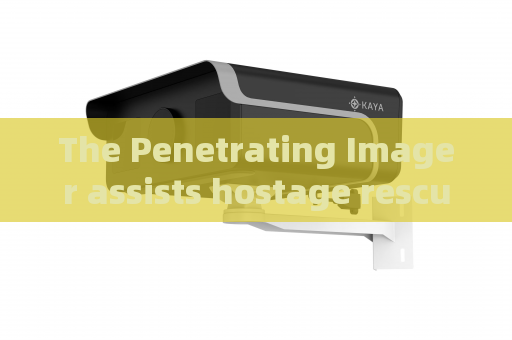
The practical handling of the Penetrating Imager aligns with standard tactical gear. The unit, roughly the size of a compact binocular system, mounts on a tripod or vehicle‑mounted gimbal. The operator simply selects the distance range using a calibrated dial, and the system automatically adjusts the gate timing to match the window’s depth. In rainy or foggy conditions, the imager’s built‑in fog penetration mode maintains clarity that would otherwise be lost. This operational simplicity ensures that a tactical observer can focus on interpreting the scene rather than wrestling with equipment. The Penetrating Imager thus transforms a previously impenetrable barrier—ordinary glass—into a window of opportunity, giving hostage rescue teams the visual edge needed to save lives.




