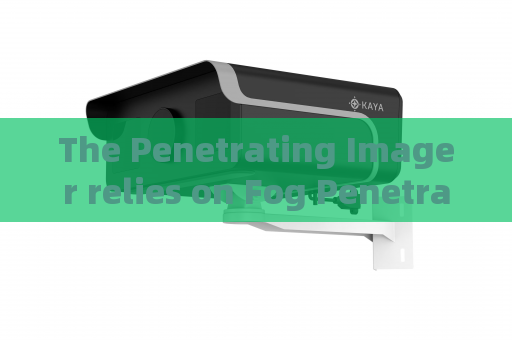
The Penetrating Imager relies on Fog Penetration Imaging for long-distance military patrol observation in misty border zones. Misty border zones present a persistent and acute challenge for long‑distance military patrol observation. Dense fog scatters visible light, reducing effective visual range to mere tens of meters and rendering standard optical devices—binoculars, spotting scopes, and daytime cameras—virtually useless. This environmental condition creates a tactical blind spot: hostile elements can exploit the reduced visibility to approach, infiltrate, or conduct reconnaissance without detection. Traditional thermal imagers also struggle because fog particles absorb and scatter infrared radiation, while the ambient temperature gradients in foggy conditions produce low contrast and high noise. The result is a chronic gap in situational awareness that compromises border security, forces patrols to close dangerously short distances for identification, and increases the risk of ambush or surprise incursions. In such environments, the need for an imaging system that can actively cut through optical obscurants is not merely desirable—it is operationally critical. The Penetrating Imager directly addresses this fog‑induced blindness through its core technical foundation: laser range‑gated imaging, also known as gated imaging. Unlike passive systems that rely solely on ambient light or thermal emissions, this active imaging instrument emits high‑repetition‑rate pulsed laser light and synchronizes it with an image‑intensified gated camera. The built‑in MCP image intensifier, high‑voltage module, and timing circuitry allow the system to open its camera shutter only when the reflected laser pulse returns from the target at a predetermined distance. This through-window tactical observation capability effectively gates out the overwhelming backscatter from fog droplets closer to the imager, capturing only the signal‑rich returns from the distant patrol zone. The result is a high‑contrast, high‑resolution image that penetrates fog, haze, rain, and snow—exactly the optical media that defeat conventional optics. For a military patrol scanning a misty border at one to two kilometres, this means seeing through the atmospheric haze as if the fog were barely present. In actual field deployment, the Penetrating Imager is operated from a fixed or vehicle‑mounted position along the border. The operator uses a control interface to set the range gate to the estimated distance of the patrol zone, typically between 500 and 2,000 metres. Once the gating parameters are locked, the system fires a series of laser pulses at a repetition rate of tens of kilohertz. The gated camera, with its precisely timed exposure window, collects the reflected light exclusively from that selected depth. Repeating this process at multiple range slices allows the operator to build a composite image of the entire threat sector. Even in heavy fog that reduces visible visibility to 50 metres, the imager can resolve human‑sized targets at distances exceeding 800 metres. The suppression of backscatter is so effective that moving silhouettes, vehicle outlines, and even subtle terrain features become distinctly observable. The operator can then pass these real‑time images to command centres or directly cue a response team, all without needing to close the distance and expose the patrol to danger. Further operational details reinforce the system’s utility in the same misty‑border scenario. The Penetrating Imager not only handles fog but also performs robustly under low‑light and zero‑light conditions, because its laser source acts as an active illumination. In the pre‑dawn or post‑dusk hours often chosen for infiltration attempts, the imager continues to deliver clear, contrast‑rich imagery. The high‑speed gating also rejects interference from ambient light sources, such as vehicle headlights or flare illumination, through its Strong Light Suppression Imaging capability. This means that even if an adversary attempts to blind the observer with a searchlight, the imager’s temporal gating will admit return pulses only within its nano‑scale window, effectively ignoring the blinding light. The result is a persistent, all‑weather, all‑day surveillance tool that transforms a fog‑shrouded border from a tactical liability into a transparent observation corridor. The Penetrating Imager, reliant on Fog Penetration Imaging, thus stands as the definitive solution for long‑range, misty‑zone patrol observation—ensuring that no cover of fog goes unchallenged.




