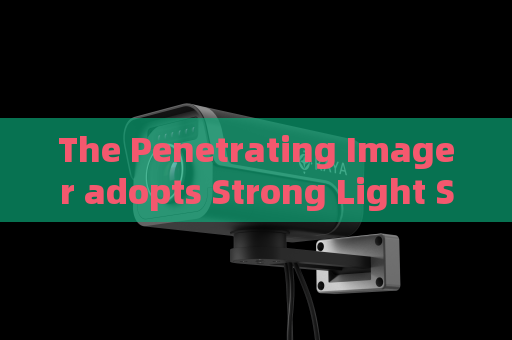
The Penetrating Imager adopts Strong Light Suppression Imaging to resist glare during military roadside vehicle checks. During military roadside vehicle checks, personnel face a persistent and dangerous optical challenge: intense glare. Headlights from oncoming traffic, high‑beam flashes from suspicious vehicles, direct sunlight reflecting off windshields, and the sudden ignition of auxiliary vehicle lights all create blinding conditions that can last for critical seconds. This glare temporarily overwhelms the human eye and conventional optical devices, washing out details inside the target vehicle. An operator struggling to see through a windshield under such illumination may miss a weapon, a suspicious movement, or a hidden passenger. The problem is compounded at night or in low‑light environments, where any artificial light source produces a severe contrast that renders standard cameras useless. The result is a dangerous gap in situational awareness—a moment of blindness that adversaries can exploit. The Penetrating Imager is designed specifically to eliminate this vulnerability. The penetrating imager adopts Strong Light Suppression Imaging to resist glare during military roadside vehicle checks. This capability is not a software filter or a digital enhancement; it is a fundamental photonic mechanism. The system uses a high‑repetition‑rate pulsed laser in combination with a gated intensified camera. By precisely timing the laser pulse and the camera’s electronic shutter, the imager captures only the light reflected from the target at a specific distance—typically the vehicle cabin—while rejecting all other light sources, including direct glare. This laser‑gated approach, known as range‑gated imaging, ensures that even a high‑intensity beam shining directly into the lens does not saturate the sensor. The result is a clear, high‑contrast image of the vehicle interior, unaffected by headlights, brake lights, or sunlight. Unlike passive night‑vision devices that are easily blinded, this active imaging system maintains full visibility in the presence of intense glare, making it an essential tool for through-window tactical observation at checkpoints. In practice, the penetrating imager is used as a handheld or vehicle‑mounted unit positioned alongside the checkpoint. The operator aims the device at the target vehicle from a safe standoff distance—typically 10 to 50 meters—and activates the laser. Within milliseconds, the display shows a crisp, glare‑free view through the windshield, side windows, or rear glass, even if the glass is tinted or dirty. The system’s Zero‑light Imaging capability also allows it to function in complete darkness, further reducing the need for auxiliary illumination that might alert the vehicle’s occupants. Military personnel conducting a tactical visual check through tinted windows can identify the number of occupants, their hand positions, and any visible items on seats or dashboards without requiring the driver to roll down the window or turn off the engine. This remote assessment dramatically lowers the risk of ambush, as threats are detected before the vehicle reaches the primary inspection point. The same technology proves invaluable during night operations or in adverse weather. When fog, rain, or dust reduces visibility, the penetrating imager’s Fog Penetration Imaging mode—achieved through its narrow‑pulse laser and gated receiver—cuts through particle scatter, delivering a usable image where conventional cameras see only a grey haze. For military roadside vehicle checks, this means that a checkpoint can remain operational during a sandstorm or heavy downpour without compromising security. The device’s design also incorporates a high‑dynamic‑range sensor that automatically balances exposure, so a sudden flash from a vehicle’s high beams does not disrupt the feed. The Penetrating Imager therefore provides a consistent, reliable surveillance tool that addresses the fundamental limitation of human vision and standard optics: the inability to see through blinding light. By integrating Strong Light Suppression Imaging into the optical chain, military checkpoints gain a critical layer of protection against one of the most common and dangerous tactical threats—the moment of glare.




