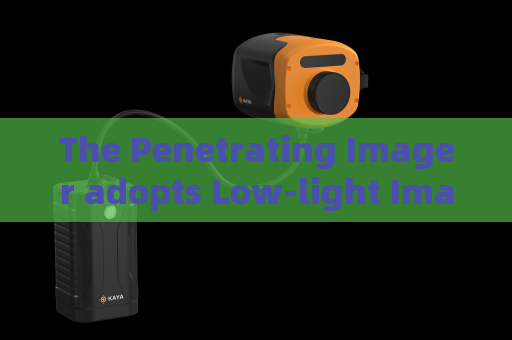
The Penetrating Imager adopts Low-light Imaging for long-distance vehicle scouting during military security alert periods. During military security alert periods, personnel tasked with remote vehicle reconnaissance face a persistent and critical challenge: obtaining clear visual intelligence of vehicle interiors from a safe standoff distance. Standard optical systems are easily defeated by tinted or reflective automotive glass, which can obscure occupants, hidden objects, or suspicious modifications. Darkness further compounds the problem, as conventional night vision relies on ambient light that may be insufficient or blocked by the vehicle’s own structure. Even under twilight or moonless conditions, the reflected glare from headlights or street lamps can wash out details. The inability to see through a vehicle’s glazing without approaching risks compromising the security posture and exposes operatives to ambush or detection. This gap in situational awareness creates a dangerous blind spot during static checkpoints, convoy security, or perimeter surveillance. The Penetrating Imager directly addresses this operational shortfall by employing Low-light Imaging based on laser range-gated technology. Unlike passive night-vision devices that struggle with low ambient levels or reflected glare, this active imaging system transmits a high-repetition-rate pulsed laser and synchronizes an intensified gate camera to capture only the light returning from the target depth. This gating mechanism effectively rejects backscatter from fog, rain, snow, or dust, while simultaneously penetrating the optical medium of vehicle windows. The imager’s ability to “see through” automotive glass—even heavily tinted or layered glazing—enables operators to resolve fine details such as facial features, hand movements, or weapon shapes inside a car. The system operates independently of external illumination, relying on its own pulsed laser to deliver high-contrast imagery at distances exceeding several hundred meters. In real-world deployment, the Penetrating Imager is mounted on a tripod or integrated into a mobile surveillance platform. An operator aligns the device’s aiming reticle at the target vehicle’s windshield or side window, then adjusts the gate delay and pulse width to match the distance. Within seconds, a crisp, high-resolution image of the interior appears on the display, revealing occupants, cargo, or hidden compartments. Because the imager emits only short-duration laser pulses, its signature remains negligible, supporting covert through-glass recon without alerting the target. This capability proves invaluable during approach phases: a security team can confirm the vehicle’s contents from a concealed position before initiating contact, reducing the risk of ambush and minimizing the need for close-in visual inspection. Further extending tactical advantage, the device maintains performance under adverse weather that would cripple conventional optics. During military security alerts, rain or fog often degrades visibility, but the Penetrating Imager’s range-gating suppresses the scattered light, delivering clear imagery through rain curtains or mist. It also incorporates strong light suppression, filtering out headlight dazzle or strobe effects that would otherwise blind traditional cameras. For through-window tactical observation, the operator can switch between different gating modes to optimize contrast for different glass types or distances. This single-scene focus—long-distance vehicle scouting during heightened alert—demonstrates how the Penetrating Imager transforms a persistent vulnerability into a reliable intelligence-gathering asset, enhancing force protection without compromising stealth or safety.




