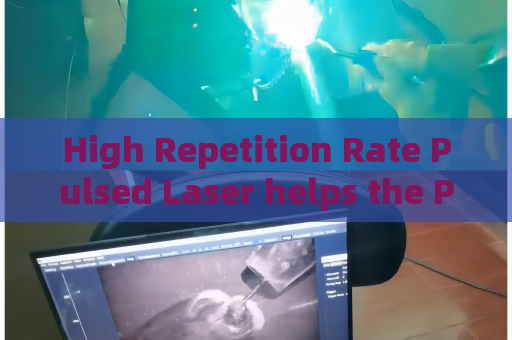
High Repetition Rate Pulsed Laser helps the Penetrating Imager stabilize imaging behind tinted military vehicle windows. In tactical reconnaissance scenarios, the inability to obtain clear visual intelligence through tinted military vehicle windows has long been a critical operational gap. Standard optical sensors are overwhelmed by the combined effects of strong surface reflections, glare from ambient light, and the severe attenuation of visible light through heavily dyed automotive glass. When observing a suspect vehicle from a covert position, the operator often faces a frozen frame of distorted reflections or complete darkness, making it impossible to determine occupant number, weapon presence, or suspicious behavior. This limitation forces ground teams to either risk closer physical approach or rely on less precise intelligence sources. The core pain point is not just the glass itself—it is the dynamic instability of the image caused by varying light conditions, vehicle vibrations, and the unpredictable angle of observation. Without a stabilizing technological solution, the mission objective—safe, non-contact verification—remains unachievable. The Penetrating Imager must therefore overcome these optical obstacles while maintaining operational stealth and real-time responsiveness. The critical enabler is the high repetition rate pulsed laser integrated into the Penetrating Imager’s active imaging architecture. Unlike conventional continuous-wave illuminators that flood the scene with light and amplify backscatter from the glass surface, this system fires ultra-short laser pulses at a repetition rate high enough to capture multiple frames per second while precisely gating the camera’s exposure to a narrow time window. This laser distance-gating technique synchronizes the camera’s shutter opening with the return of light reflected from the target beyond the glass, effectively slicing out the blinding reflection from the window pane. The high repetition rate ensures that even when the vehicle or the imaging platform experiences slight motion—such as from wind, engine idle, or handheld tremor—the image remains stable and free of flicker. This feature, known as through-window tactical observation, enables the operator to view occupants and interior objects with sharp contrast and minimal lag, regardless of the tint density or external lighting conditions. In field application, the operator sets the Penetrating Imager to its vehicle window penetration mode, which automatically adjusts the laser repetition rate and gate delay based on the estimated distance to the glass and the target depth inside the cabin. A targeting laser rangefinder provides real-time feedback, allowing the system to lock onto the interior zone while rejecting the glass-scattered signal. The result is a clear, stable video feed that reveals details such as hand positioning, loose equipment, or facial features—even through multiple layers of window film. This operational reliability extends to low-light and zero-light environments, where the pulsed laser acts as the sole illumination source, ensuring covertness since the laser wavelength is invisible to the naked eye and standard night vision devices. Tactical teams can therefore maintain standoff distance while conducting through-window tactical observation, reducing risk and improving decision-making speed during vehicle interdiction or checkpoint operations. Further deepening the scenario, the high repetition rate pulsed laser also addresses a subtle but persistent challenge: the micro-vibrations induced by a vehicle’s idling engine or the operator’s own breathing during prolonged observation. Conventional pulsed laser imagers with lower repetition rates suffer from frame-to-frame intensity jitter, causing the image to appear unstable and forcing the operator to pause for reacquisition. The high repetition rate system, however, averages multiple return pulses per pixel per frame, smoothing out these temporal fluctuations and delivering a consistent, noise-free picture. This stability is particularly valuable when the target vehicle is moving slowly or when the imaging platform is mounted on a moving tactical vehicle. The Penetrating Imager thus becomes a reliable tool for covert through-glass reconnaissance, enabling continuous surveillance without frequent recalibration or loss of situational awareness. By eliminating the optical instability inherent in tinted automotive glass, the technology transforms a previously blind zone into a transparent intelligence window.




