In the dynamic and often high-risk field of law enforcement, situational awareness is paramount. Mobile law enforcement vehicles serve as critical command, control, and reconnaissance hubs, but their effectiveness can be severely limited by environmental obscurants and structural barriers. Enter the advanced penetration imaging system—a technological leap that is fundamentally transforming vehicle-based reconnaissance capabilities. By enabling officers to "see the unseen," these systems provide a decisive tactical advantage in a wide array of operational scenarios.
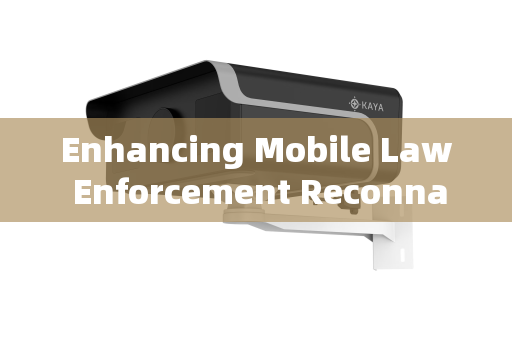
Penetration Imager Effect Images
Understanding Penetration Imaging Technology
At its core, a penetration imaging system is a sophisticated electro-optical device designed to acquire clear visual intelligence through visually obstructive conditions. It employs advanced Laser Range-Gated Imaging (LRGI) or Gated Imaging Technology. This innovative approach synergistically combines a high-repetition-rate pulsed laser with a gated intensifier camera. The system operates by emitting short, powerful laser pulses and precisely synchronizing the camera's ultra-fast electronic shutter to open only for the specific time slice corresponding to the reflected light from a desired distance range. This process, effectively "slicing" space by time delay and stacking the images, allows the system to isolate targets while rejecting backscatter from intervening particles like smoke, fog, or rain.
The key components include a pulsed laser, a gated intensifier camera (often incorporating a Microchannel Plate - MCP - for signal amplification), beam expanders, and imaging lenses. The camera's core is particularly remarkable, housing the MCP intensifier, high-voltage modules, and precision timing circuits. It achieves an optical gain exceeding 10^6, an optical shutter speed faster than 3 nanoseconds, and timing synchronization precision better than 10 picoseconds. This enables not only high-contrast imaging but also precise three-dimensional information acquisition of the target scene.
Core Advantages for Mobile Deployment
For systems mounted on law enforcement vehicles, several inherent features are crucial:
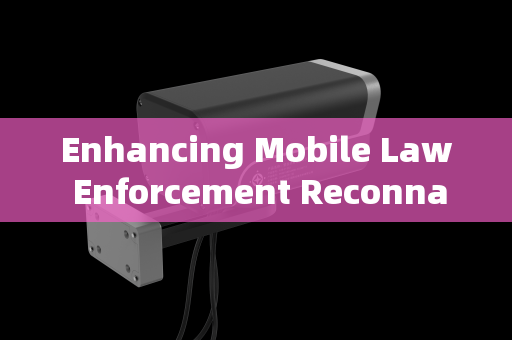
Penetration Imager Effect Images
- Extended Imaging Range & High Resolution: It provides clear imagery at distances far beyond conventional cameras, especially in low-light or no-light conditions.
- Superior Anti-Interference & Backscatter Suppression: It effectively penetrates various obscurants including fire, smoke, dense fog, haze, rain, and snow, which are common in emergency scenes.
- "Non-Intrusive" Penetration Capability: A defining feature is its ability to see through various types of glass—car windows, building curtain walls, specialized glass, train windows, and aircraft portholes—without physical contact or alerting occupants, enabling covert surveillance.
- All-Weather, Day/Night Operation: It functions independently of ambient light, ensuring 24/7 operational readiness.
Pivotal Roles in Mobile Law Enforcement Vehicle Reconnaissance
When integrated into mobile command units, SWAT trucks, or patrol vehicles, penetration imaging systems become force multipliers in the following critical areas:
-
Covert Surveillance and Tactical Reconnaissance: Officers can discretely gather intelligence on suspicious vehicles, structures, or individuals from a safe standoff distance. The ability to see through tinted windows or glass facades allows for the assessment of occupant numbers, weapon presence, or hostage situations without compromising the operation's secrecy. This is invaluable for counter-terrorism operations, stakeouts, and pre-raid intelligence gathering.
-
Enhanced Situational Awareness in Critical Incidents: During active shooter situations, barricaded subject incidents, or armed standoffs, commanders inside a mobile command vehicle can use the system to peer into buildings through windows, gaining real-time visual data on suspect movement and location. This directly informs tactical decision-making and deployment strategies, enhancing officer safety and mission success.
-
Vehicle Checkpoint and Interdiction Operations: At checkpoints or during traffic stops for narcotics interdiction, anti-smuggling, or fugitive recovery, the system can be used to screen vehicle interiors rapidly. It can help identify hidden compartments, concealed individuals (addressing overcrowding/illegal transport), or suspicious packages without the need for an immediate and potentially risky physical search.
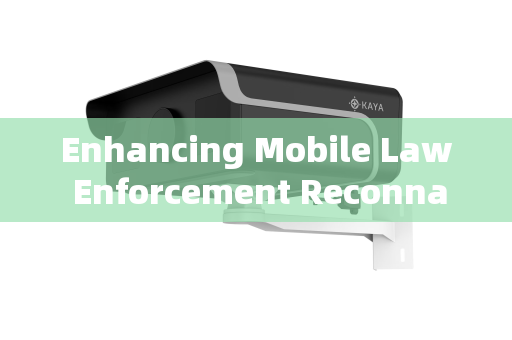
Penetration Imager Effect Images
-
Search and Rescue (SAR) Support: While prominent in firefighting, this capability extends to law enforcement-led SAR. In conditions of smoke, light fog, or darkness—such as searching for a missing person in a wooded area near a road or scanning a crashed vehicle—the system can help locate victims more quickly than traditional thermal or low-light cameras hampered by obscurants.
-
Crowd Control and Public Order Monitoring: During large-scale protests or civil disturbances, mobile units equipped with this technology can monitor crowd dynamics and identify potential agitators or the movement of weapons through visual barriers, even in challenging light or weather conditions.
-
Maritime and Border Patrol Applications: For agencies involved in coastal and border security, vehicle-mounted systems on coastal units can aid in long-range surveillance through fog and haze, assisting in monitoring vessel activity, detecting illegal border crossings, or performing strong light suppression to identify vessels at night despite their navigation lights.
Integration into Smart Policing Ecosystems
The data from penetration imaging systems can be integrated with other sensors on the vehicle and networked back to command centers. This feeds into the broader framework of Smart Cities, Smart Security, and Smart Policing initiatives, creating a more comprehensive, data-driven operational picture for coordinated responses.
Conclusion
The penetration imaging system is far more than just another camera for a law enforcement vehicle; it is a transformative reconnaissance asset. By conquering the traditional adversaries of darkness, weather, and physical barriers, it grants law enforcement agencies unprecedented visual access to critical information. This technology directly enhances officer safety, improves operational effectiveness in both overt and covert missions, and ultimately contributes to more successful resolutions of high-risk incidents. As threats evolve and operational environments become more complex, the role of such advanced imaging systems in mobile law enforcement reconnaissance will only continue to grow in indispensability.