Penetration Imaging Systems vs. Night-Vision Devices: A Technical and Operational Analysis for Emergency Response and Tactical Operations** In the domains of emergency response, law enforcement, military operations, and security, acquiring visual intelligence in challenging environments is paramount. Two critical technologies often discussed in this context are Night-Vision Devices (NVDs) and the more advanced Penetration Imaging Systems (PIS). While both aim to enhance situational awareness in low-visibility conditions, their underlying principles, capabilities, and optimal applications differ significantly. This article delineates these differences, with a focus on the groundbreaking technology and utility of Penetration Imaging Systems.
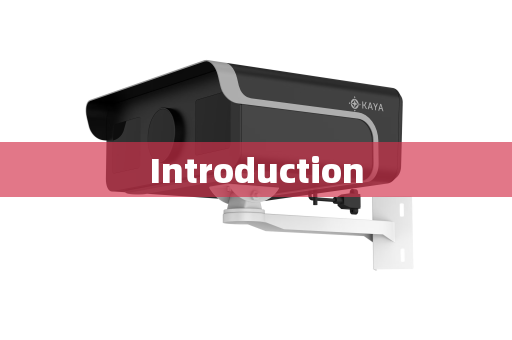
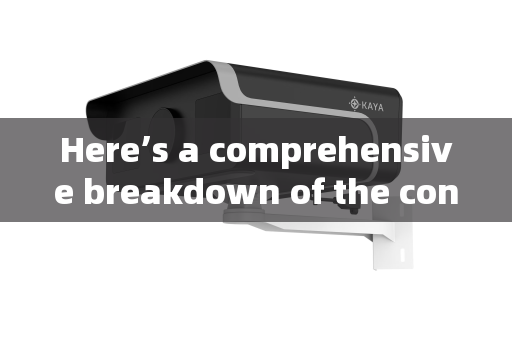
Penetration Imager Effect Images
Fundamental Operational Principles
Night-Vision Devices (NVDs): Traditional NVDs, primarily image intensifiers (I² tubes), are passive systems. They amplify existing ambient light (starlight, moonlight) from the visible and near-infrared spectrum. This amplified light strikes a photocathode, releasing electrons that are multiplied through a Microchannel Plate (MCP) and projected onto a phosphor screen, creating a recognizable green-hued image. Thermal NVDs (infrared cameras) are also passive, detecting differences in heat radiation (long-wave infrared) emitted by objects and their surroundings. Both types rely on existing light or heat signatures and their performance degrades in conditions of absolute darkness (for I²), or when thermal contrast is minimal (e.g., a target behind glass, which thermally insulates).
Penetration Imaging Systems (PIS): In stark contrast, a PIS is an active laser-gated imaging system. It innovatively combines a high-repetition-rate pulsed laser with a gated, intensified camera. The core technology is Range-Gating or Time-Gated Imaging. The system emits short, powerful pulses of laser light (often in the near-infrared or short-wave infrared band). The camera's ultra-fast optical shutter (with gating times down to <3 nanoseconds) is synchronized with nanosecond precision to open only when the laser pulses reflected from a specific, predetermined distance slice return. Light from other distances—particularly backscatter from obscurants like fog, smoke, or the surface of a window—is effectively excluded.
Key Differentiating Capabilities
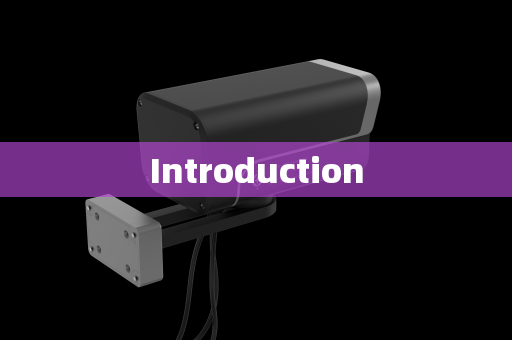
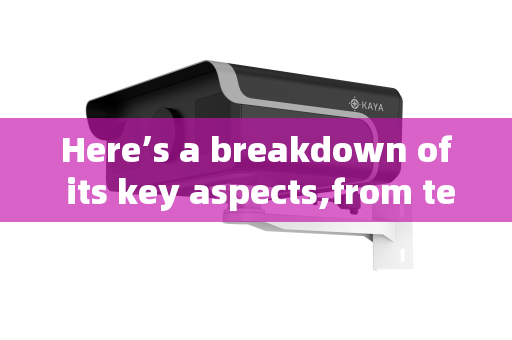
Penetration Imager Effect Images
-
Overcoming Backscatter & Seeing Through Obscurants: This is the most significant advantage of PIS. NVDs are severely hampered by particulates in the air (smoke, dust, fog, rain, snow). These particles reflect and scatter ambient or their own illumination (if an IR illuminator is used), causing "washout" or "blooming." PIS, by gating out the light returning from the obscurant layer, achieves high-contrast imaging through these media. It can effectively "see through" fire, smoke, haze, and light precipitation.
-
Penetration of Transparent Barriers: A unique capability of certain PIS configurations is non-contact, long-range "see-through" imaging of glass surfaces (car windshields, building windows, aircraft portholes, train glass). The laser pulse and precise gating can differentiate between the primary reflection from the glass surface and the much fainter return from objects behind it, allowing for detection and identification of occupants or items inside a vehicle or room from a standoff distance, a feat impossible for standard NVDs or thermal cameras.
-
Operation in Absolute Darkness & Extreme Conditions: PIS provides its own illumination, making it fully operational in total darkness. Its active, gated nature makes it highly resistant to external light interference, such as glare from streetlights or flares, and provides exceptional long-range imaging performance where passive systems fail.
-
Enhanced Range Resolution & 3D Potential: The time-slicing nature of gated imaging provides intrinsic range resolution. By stacking images from successive distance slices, the system can build a high-resolution representation of a scene and extract precise three-dimensional information about targets, valuable for navigation, mapping, and targeting.
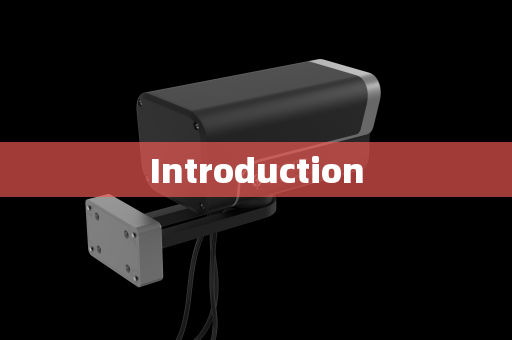
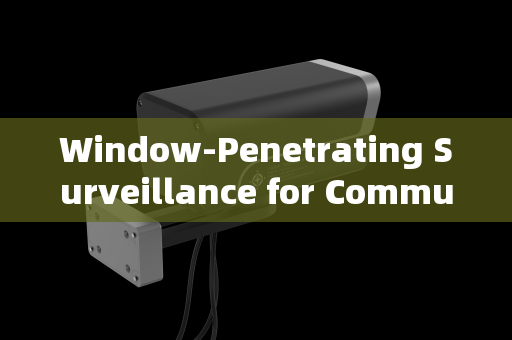
Penetration Imager Effect Images
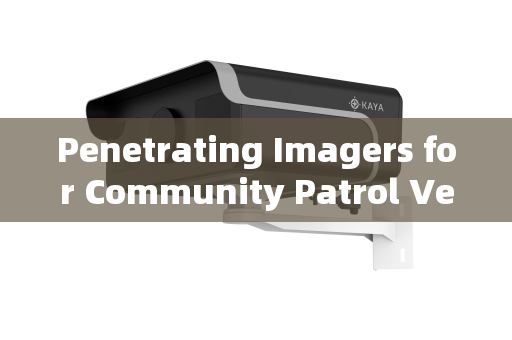
Component & Performance Overview of a PIS A typical PIS comprises:
- Pulsed Laser Illuminator: Provides high-power, short-duration NIR/SWIR pulses.
- Gated Intensified Camera: The core sensor, integrating an MCP-based intensifier (providing >10⁶ optical gain), a high-voltage module, and precision timing/gating electronics capable of <10 ps synchronization accuracy.
- Beam Expander & Imaging Lens: Shapes the laser output and collects return light.
Application Scenes: Where PIS Excels
-
Emergency & Rescue Services:
- Firefighting: For urban and wildland fire operations, enabling commanders to see through dense smoke and flame to locate victims, identify structural integrity, and navigate. Crucial for fire training facilities and high-risk infrastructure.
- Search and Rescue (SAR): In mountain, urban, maritime, and water rescue scenarios, penetrating fog, rain, and darkness to locate survivors.
-
Law Enforcement & Military Operations:
- Surveillance & Reconnaissance: Covertly monitoring through windows of vehicles or buildings for counter-terrorism, drug interdiction, hostage rescue, and evidence gathering.
- Security & Checkpoint Operations: Detecting overcrowding in vehicles or concealed items behind glass at standoff ranges.
- Border & Coastal Patrol: Providing clear, long-range imaging through haze, fog, and mist for maritime interdiction, port security, and perimeter monitoring, with superior performance in cluttered coastal environments compared to thermal imaging.
-
Smart City & Critical Infrastructure Security: Integrating into perimeter defense systems to ensure reliable intrusion detection in all weather conditions, day or night.
Conclusion While Night-Vision Devices remain invaluable tools for general low-light observation, Penetration Imaging Systems represent a paradigm shift for operations in degraded visual environments (DVE). By actively illuminating the scene and using precision time-gating to reject unwanted signal, PIS overcomes the fundamental limitations of passive sensors. Its ability to deliver high-contrast imagery through obscurants and transparent barriers provides emergency responders, law enforcement, and military personnel with a decisive intelligence, surveillance, and reconnaissance (ISR) advantage in the most demanding scenarios, ultimately enhancing operational effectiveness and safety. The choice between the technologies hinges not on superiority in general, but on the specific environmental challenges and mission requirements at hand.