Penetration Imaging System vs. Infrared Thermal Imager: A Comparative Analysis for Emergency, Law Enforcement, and Defense Applications**
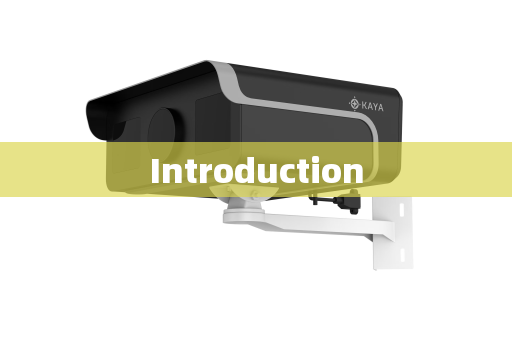
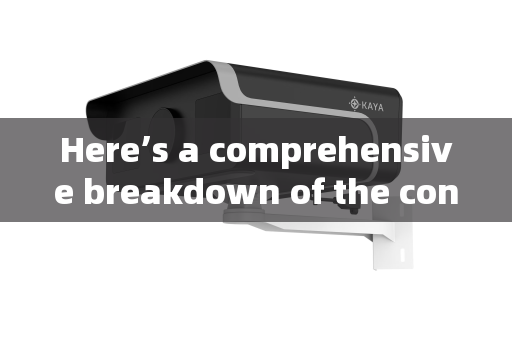
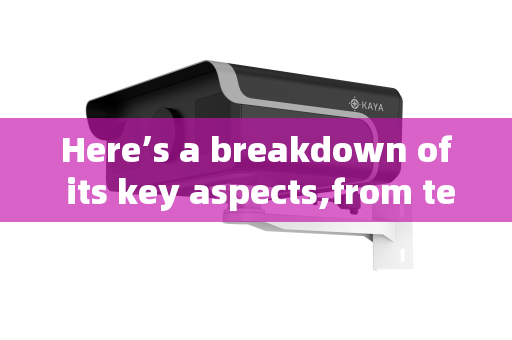
Penetration Imager Effect Images
In the realms of emergency response, law enforcement, military operations, and critical infrastructure security, advanced imaging technologies are indispensable for situational awareness, threat detection, and mission success. Two sophisticated but fundamentally distinct systems often employed are the Penetration Imaging System (PIS) and the Infrared Thermal Imager (IRI). While both enhance vision beyond human capabilities, their underlying principles, functionalities, and optimal application scenarios differ significantly. This article elucidates the key differences between these technologies, with a focus on the innovative capabilities of modern Penetration Imaging Systems.
Fundamental Principles and Core Technology
- Infrared Thermal Imager (IRI): An IRI is a passive imaging device. It detects the mid-wave (MWIR) or long-wave (LWIR) infrared radiation (heat) naturally emitted by all objects. It converts this thermal energy into a visual image, where different colors or shades represent temperature variations. Its performance is inherently tied to thermal contrast between a target and its background.
- Penetration Imaging System (PIS): Also known as a Laser Gated Imaging or Range-Gated Imaging System, a PIS is an active imaging system. It employs advanced Gated Imaging Technology, innovatively combining a High-Repetition-Rate Pulsed Laser with an Intensified Gated Camera. The core principle involves precise nanosecond-level synchronization between the laser pulse and the camera's optical shutter. By controlling the time delay (the "gate"), the system selectively captures light reflected only from a specific, narrow slice of distance, effectively "slicing" through the environment. This allows it to image through obscurants and specific transparent barriers by rejecting backscattered light from intermediate particles like smoke, fog, or glass surfaces.
Key Functional Capabilities and Performance
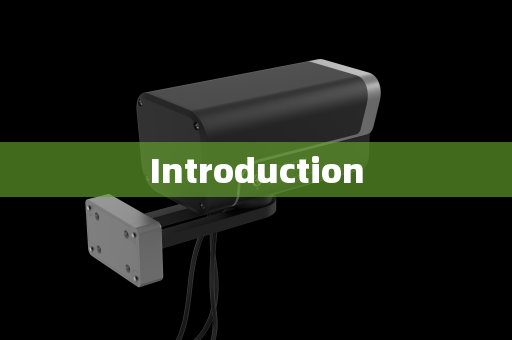
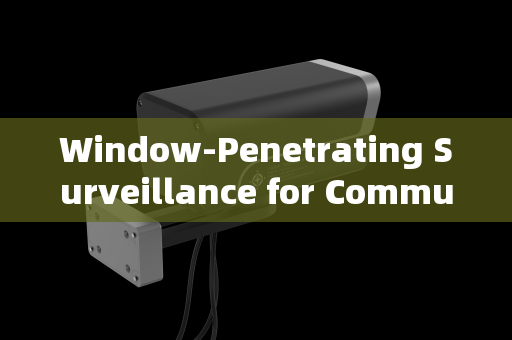
Penetration Imager Effect Images
-
IRI Capabilities:
- Heat Detection: Excels at identifying living beings, vehicles, or equipment based on their thermal signature, regardless of ambient light.
- Perimeter Security: Effective for intrusion detection in darkness.
- Condition Monitoring: Useful for spotting overheated components in electrical or mechanical systems.
- Limitations: Cannot see through transparent barriers (glass, water) as these often block or reflect thermal wavelengths. Performance degrades in environments with minimal thermal contrast (isothermal conditions) and can be blinded by intense heat sources. It provides a 2D heat map, not direct visual details or precise range data.
-
PIS Capabilities:
- "See-Through" Ability: Its defining feature is the capability to penetrate and image through various media under challenging conditions. This includes:
- Barriers: Car windshields, building windows, specialty glass (e.g., in trains, aircraft), and other transparent or semi-transparent materials.
- Obscurants: Fire, smoke, rain, snow, fog, and haze with high effectiveness.
- Underwater Imaging: Capable of providing clear imagery in aquatic environments.
- High-Contrast, Long-Range Imaging: Offers superior image contrast and longer effective range in degraded visual environments (DVE) by rejecting backscatter.
- High Distance Resolution & 3D Information: The gating mechanism provides precise distance resolution. Systems often integrate scanning or 3D processing to acquire accurate three-dimensional data of the target scene.
- Component Breakdown: A typical PIS comprises a Pulsed Laser Illuminator, an Intensified Gated Camera (featuring a Microchannel Plate - MCP - intensifier, high-voltage module, timing/gating electronics), beam expander, and imaging lens. The gated camera achieves extreme optical gain (>10^6), ultra-fast optical shuttering (<3ns), and superb timing synchronization precision (<10ps), enabling high-fidelity imaging.
- "See-Through" Ability: Its defining feature is the capability to penetrate and image through various media under challenging conditions. This includes:
Application Scenarios: A Comparative View
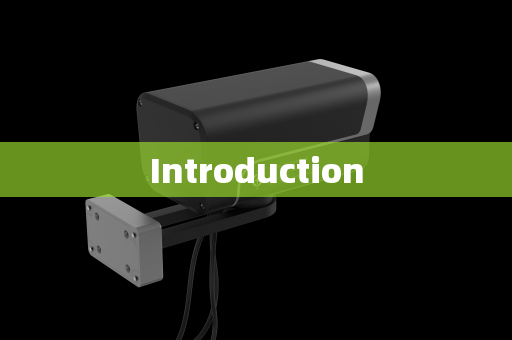
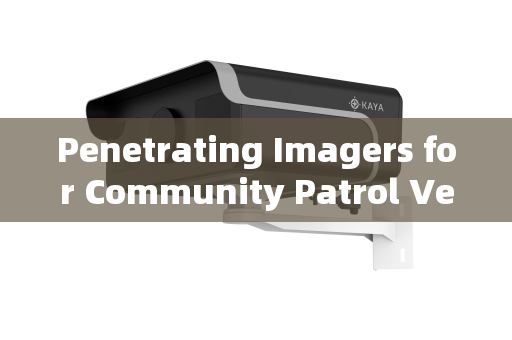
Penetration Imager Effect Images
-
Emergency & Rescue Scenarios:
- IRI: Used in firefighting to locate hotspots through smoke and identify victims via body heat. Effective in search and rescue (SAR) over open areas at night.
- PIS: Superior in urban and wildland firefighting for seeing through smoke and flames to navigate and locate objects/people inside structures or vehicles. Critical for mine, water, and technical rescue to see through water, debris, or windows. Ideal for high-fidelity training simulations in live-fire training facilities.
-
Law Enforcement & Security Scenarios:
- IRI: Used for perimeter surveillance, suspect tracking in darkness, and fugitive searches.
- PIS: Invaluable for covert surveillance and reconnaissance, allowing officers to see into vehicles or buildings from a standoff distance without being detected. Essential for counter-terrorism missions (CQB planning), evidence collection, anti-smuggling operations, and traffic enforcement (e.g., detecting overloaded vehicles). Plays a pivotal role in Smart City, Smart Policing, and Perimeter Security initiatives by providing clear visual intelligence in all weather and lighting conditions.
-
Maritime & Border Security / Defense Scenarios:
- IRI: Employed for long-range surveillance, ship detection, and identifying thermal anomalies along borders or coastlines.
- PIS: Provides a decisive advantage by enabling long-range imaging through fog and haze, and glare suppression. Ensures maritime navigation safety, port security, and the continuity of border patrol and coastal defense operations under the most severe weather conditions where thermal imagers may be limited.
Conclusion
The choice between a Penetration Imaging System and an Infrared Thermal Imager is not a matter of superiority, but of suitability for the mission. The Infrared Thermal Imager remains the tool of choice for passive heat-based detection, localization, and night vision across broad areas. In contrast, the Penetration Imaging System represents a paradigm shift for missions requiring active, high-resolution visual intelligence through obstructions. Its unique ability to "see through" glass, smoke, and atmospheric obscurants to deliver detailed, contrast-rich imagery and 3D data makes it an unparalleled asset for high-stakes operations in emergency services, law enforcement, and defense, where seeing the unseen is critical for saving lives and ensuring operational success.