In the high-stakes domain of dignitary protection and security supervision, the margin for error is virtually zero. Security details operate in dynamic, often unpredictable environments where threats can be obscured by darkness, adverse weather, or deliberate concealment. Traditional surveillance and reconnaissance tools frequently reach their operational limits under such extreme conditions. This is where advanced Penetration Imaging Systems (PIS), leveraging cutting-edge Laser Range-Gated Imaging (LRGI) or Gated Imaging Technology, emerge as a transformative force. These systems play a pivotal, multi-faceted role in enhancing the efficacy, proactivity, and overall robustness of dignitary security frameworks.
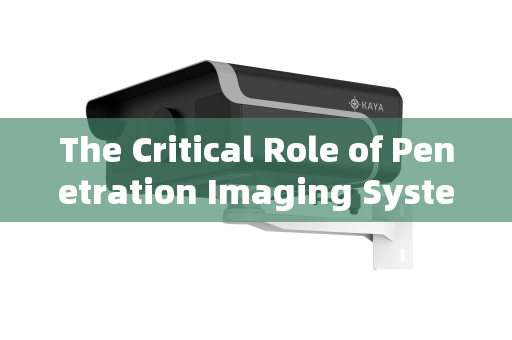
Penetration Imager Effect Images
Understanding Penetration Imaging: Technology and Core Capabilities
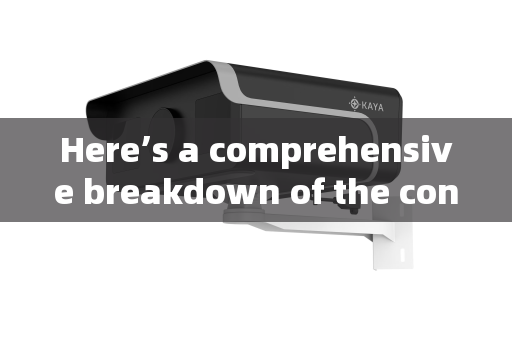
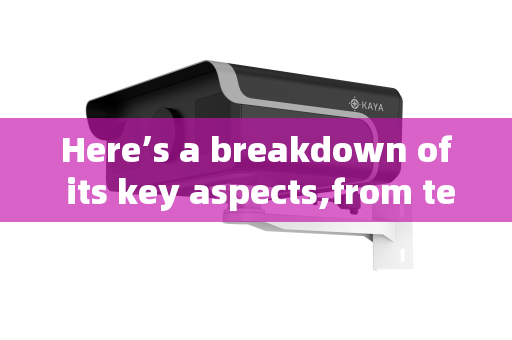
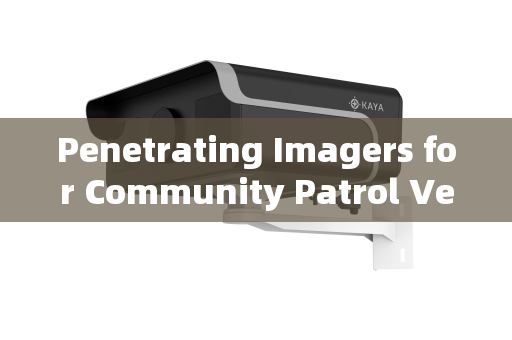
At its core, a Penetration Imaging System is a sophisticated electro-optical device engineered to "see through" visual obstructions that typically blind conventional cameras and the human eye. It innovatively integrates a high-repetition-rate pulsed laser with a gated intensifier camera. The fundamental principle involves emitting ultrashort (nanosecond) laser pulses towards a target scene. The gated camera, synchronized with picosecond precision to these pulses, acts as an ultra-fast shutter. It opens only for a precisely timed window corresponding to the time it takes for light to travel to a specific "slice" of distance and back. By progressively scanning through different range slices and stacking the images, the system constructs a high-contrast image of the target area.
This method grants PIS exceptional capabilities critical for security operations:
- Extended Imaging Range & High Resolution: Achieves clear target identification at distances far beyond passive night vision.
- Superior Anti-Interference & Backscatter Suppression: Effectively rejects light from atmospheric scatter (fog, rain, snow, haze, smoke) and overwhelming ambient light (e.g., car headlights, street lamps), which typically "wash out" standard imaging.
- "Penetration" or "See-Through" Ability: The system's key advantage is its capacity to penetrate transparent and semi-transparent barriers with minimal reflection, enabling unobtrusive reconnaissance through vehicle windows (car, high-speed rail, aircraft), glass facades, and specialized laminates. It also maintains functionality through various obscurants like fire, smoke, and mist.
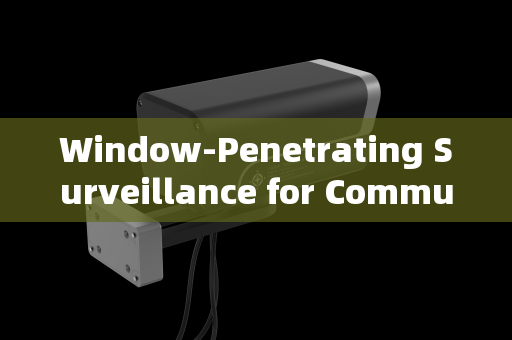
A typical system comprises a pulsed laser illuminator, a beam expander, an imaging lens, and the crucial gated intensifier camera. This camera incorporates a Microchannel Plate (MCP) image intensifier, high-voltage modules, and precision timing circuitry, enabling optical gains exceeding 10^6 and shutter speeds below 3 nanoseconds. This allows not only for detailed 2D imaging but also for precise 3D information acquisition of the target scene.
Application Scenarios: From Broad Security to Targeted Protection
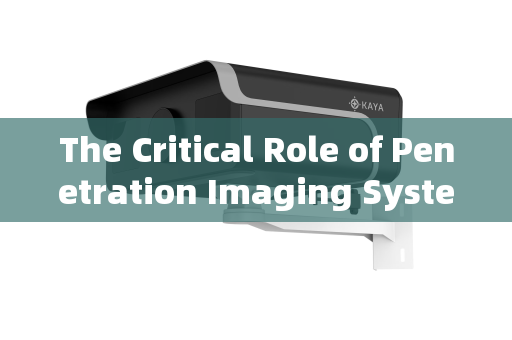
Penetration Imager Effect Images
The utility of PIS spans multiple security and emergency response disciplines, each relevant to the broader ecosystem in which dignitary protection operates.
-
Emergency & Rescue Scenarios: In incidents threatening VIP safety, such as urban fires, complex structural collapses, or attacks in confined spaces, PIS is invaluable. For urban firefighting, search and rescue (SAR), and hazardous material incidents, it allows first responders to locate individuals and assess structural integrity through dense smoke and flames. This capability directly enhances the safety of protection details and VIPs during evacuations from compromised buildings or venues. Its use in high-level fire training facilities also ensures security personnel are trained under realistic, visually degraded conditions.
-
Law Enforcement & Military Operations: This is the most direct application area for dignitary security. PIS supports:
- Counter-Surveillance & Reconnaissance: Covertly scanning buildings, vehicles, or crowds from a distance during pre-event sweeps or motorcade route analysis to detect hidden threats or suspicious activities.
- Tactical Assault & Counter-Terrorism (CT): In barricaded suspect or hostage situations, it provides clear intelligence through windows or smoke, informing breach strategies.
- Checkpoint Security & Border Control: Non-intrusive inspection of vehicles for concealed personnel, contraband, or weapons, crucial for VIP convoy security and secure perimeter access control.
- Evidence Gathering & Forensic Investigation: Documenting scenes through visual barriers without initial physical intrusion. These applications feed directly into the Intelligence Cycle of modern Smart Policing and Smart City security architectures, creating a safer overall environment for public figures.
-
Coastal & Border Defense Scenarios: For dignitaries traveling by sea, visiting ports, or stationed near borders, PIS ensures continuous security oversight. It enables long-range imaging through fog and haze and provides glare suppression against water surface reflections, securing maritime approaches, port entries, and coastal perimeters from potential aquatic or littoral threats.
Pivotal Role in Dignitary Security Supervision
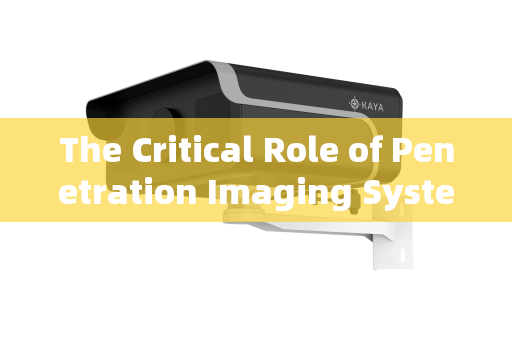
Penetration Imager Effect Images
Within the specific context of dignitary security supervision, the Penetration Imaging System transitions from a general tool to a dedicated force multiplier for the protective detail.
-
Proactive Threat Detection & Route Sanitization: Ahead of a VIP's movement, security teams can use PIS to conduct covert scans of planned routes, overlooking buildings, and stationary vehicles. The ability to penetrate glass allows operatives to identify potential snipers, improvised explosive devices (IEDs), or unauthorized individuals inside rooms or vehicles without alerting them, moving security from a reactive to a preventive posture.
-
Dynamic Mobile Protection: During motorcade movements, vehicle-mounted or operator-held PIS can continuously scan the flanks and front through various weather conditions and lighting—be it night, heavy rain, or fog. It can quickly assess parked cars or crowds at a distance, identifying anomalous heat signatures or concealed objects through windshields, thereby mitigating risks from vehicle-borne IEDs or ambushes.
-
Venue Security and Perimeter Control: For fixed-site events, PIS deployed around the perimeter can monitor approaches through visual clutter. Its ability to see through light foliage, smoke (from pyrotechnics or deliberate obscuration), and standard glass windows provides an additional, persistent layer of intrusion detection and situational awareness that complements other sensors.
-
Low-Visibility/Contested Environment Operations: In the event of an attack involving smoke grenades, fire, or a sudden loss of power, PIS grants the protective detail a significant tactical advantage. They can maintain visual contact with the principal, navigate through obscurants, and effectively engage threats while blinded adversaries are rendered ineffective.
-
Enhanced Maritime & Aviation Security: During seaborne activities or air travel, PIS safeguards the approaches to the dignitary's vessel or aircraft, detecting small, fast-approaching craft or individuals in the water, day or night, and in poor weather.
In conclusion, the Penetration Imaging System is far more than just an advanced camera. It is a critical enabler for intelligence-led, proactive dignitary protection. By granting security personnel the unparalleled ability to conduct long-range, high-resolution, unobtrusive surveillance through a multitude of visual barriers and adverse conditions, it dramatically closes operational gaps that adversaries might exploit. Its integration into the security apparatus for heads of state, diplomats, and high-profile individuals represents a significant leap forward in risk mitigation, ensuring that protective details are not just reactive guardians but empowered, foresighted supervisors of their charge's safety environment. As threats evolve in complexity, the role of such penetrating vision technology will only become more central to the art and science of dignitary security.