In the complex and dynamic landscape of modern urban security, checkpoint reconnaissance is a critical frontline activity. It demands the ability to detect, identify, and assess potential threats swiftly and accurately, often under challenging environmental conditions or through obscuring media. Here, the penetration imaging system emerges as a game-changing technology, fundamentally enhancing the capabilities of military, law enforcement, and emergency response units in urban operations.
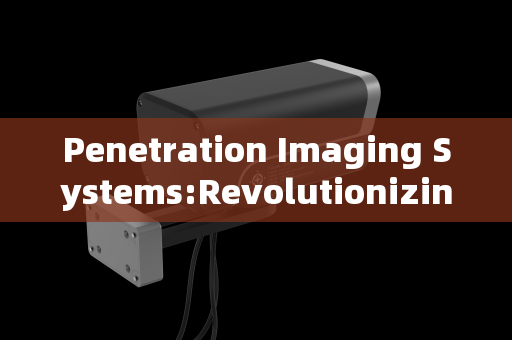
Penetration Imager Effect Images
Understanding Penetration Imaging Technology
A penetration imaging system is an advanced electro-optical device designed to "see" through visually obstructive materials and conditions. Its core is built upon Laser Range-Gated Imaging (LRGI) or Gated Imaging Technology. This innovative approach synergizes a high-repetition-rate pulsed laser with a gated intensifier camera. The system operates by emitting nanosecond laser pulses toward a target area. The gated camera, synchronized with exquisite temporal precision (with synchronization accuracy often better than 10 picoseconds), opens its "shutter" only for the precise moment when the laser light reflected from a specific distance slice returns. By sequentially adjusting this time delay, the system scans and stacks "slices" of the scene at different ranges.
This method delivers several decisive advantages:
- Extended Imaging Range & High Contrast: It achieves clear imaging at long distances by eliminating backscatter from atmospheric particles (fog, smoke, rain, snow, haze) and other interposing media.
- Superior Range Resolution: It can resolve details at specific distances with high precision.
- Exceptional Anti-Interference Capability: It effectively counters ambient light pollution and other sources of optical noise.
- Media Penetration: Its key urban utility lies in its ability to passively and remotely penetrate various types of glass—such as vehicle windows, building curtain walls, specialty glass, train windows, and aircraft portholes—without alerting subjects inside. It can also image through flames, smoke, and water.
The system typically comprises a pulsed laser, a gated/intensified camera (incorporating a Microchannel Plate (MCP) image intensifier, high-voltage module, timing module, and gating circuitry capable of >10^6 optical gain and <3ns gating), beam expander, and imaging lenses. This enables not only high-contrast 2D imaging but also precise 3D data acquisition of targets.
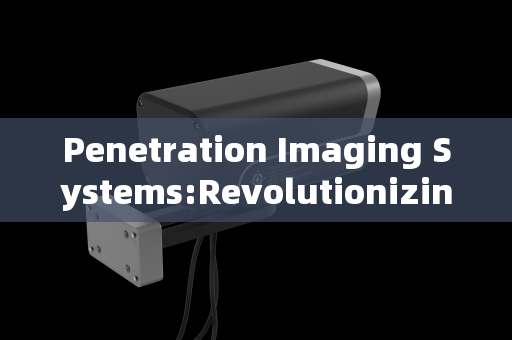
Penetration Imager Effect Images
Pivotal Role in Urban Checkpoint Reconnaissance
Urban checkpoints—whether for security screening, traffic control, perimeter defense, or counter-terrorism operations—are high-stakes environments. Adversaries often exploit concealment, darkness, or environmental clutter. The penetration imaging system plays multiple indispensable roles:
-
Covert Surveillance and Threat Identification: From a standoff position, operators can scan vehicles approaching or stationary at checkpoints. The system can see through windshield and window glass to identify the number of occupants, their movements, and potential threats like visible weapons, improvised explosive devices (IEDs), or suspicious paraphernalia, all without physical contact or alerting the occupants. This enables proactive threat assessment and informed interdiction decisions.
-
All-Weather, All-Condition Operational Capability: Urban environments present weather and pollution challenges. The system’s ability to overcome backscatter from fog, mist, rain, and smog ensures that checkpoint surveillance and reconnaissance duties continue uninterrupted 24/7, regardless of visibility conditions. This is crucial for maintaining a continuous security posture.
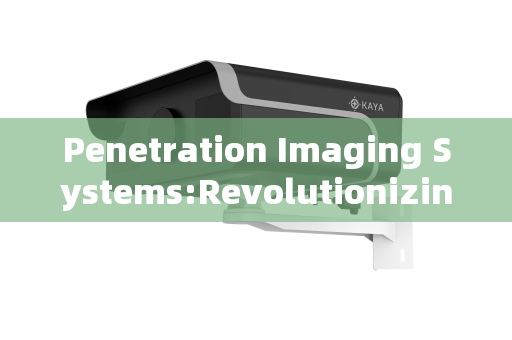
Penetration Imager Effect Images
-
Enhanced Situational Awareness in Dynamic Incidents: During an active incident at or near a checkpoint (e.g., a vehicular attack, armed confrontation, or fire), the system can peer through smoke, dust, or light flames emanating from vehicles or buildings. This provides commanders and responders with real-time visual intelligence on hostile positions, hostage situations, or trapped individuals, directly informing tactical maneuvers and rescue operations.
-
Evidence Gathering and Forensic Investigation: In the aftermath of an incident, the system can be used to safely examine the interior of suspect vehicles or rooms behind windows from a distance, preserving the scene and minimizing risk to personnel from potential secondary threats like booby traps.
-
Integration into Broader "Smart Security" Architectures: For Smart Cities, Smart Policing, and Integrated Security Platforms, these systems act as powerful sensor nodes. They feed critical visual data into networked command centers, enabling wider area monitoring, pattern analysis, and coordinated responses across urban checkpoints and critical infrastructure.
Application Synergy: Emergency Response & Military/Law Enforcement
The value of penetration imaging extends seamlessly across the urban security continuum:
- Emergency & Rescue Scenarios: For urban firefighting, it allows firefighters to locate victims through smoke and windows, assess fire spread behind glass façades, and navigate in zero-visibility conditions. It is equally vital for search and rescue (SAR) operations in collapsed structures, hazmat incidents, and high-rise fire training simulations.
- Military & Police Operations: Beyond checkpoints, it supports counter-terrorism raids (visualizing interior layouts before entry), anti-smuggling/interdiction details (inspecting vehicle/train cargo compartments), surveillance and tracking, riot control (seeing through obscurants), and maritime/coastal security (pier-side inspection, port security in fog).
In conclusion, the penetration imaging system is far more than just a camera; it is a force multiplier for urban checkpoint reconnaissance. By granting the ability to see the unseen—through darkness, weather, and concealment—it delivers a decisive information advantage. It empowers security forces to detect threats earlier, make better decisions faster, operate safely in hazardous conditions, and ultimately, secure the urban domain with greater effectiveness and precision. As threats evolve and cities become more complex, this technology will remain at the forefront of ensuring public safety and national security.