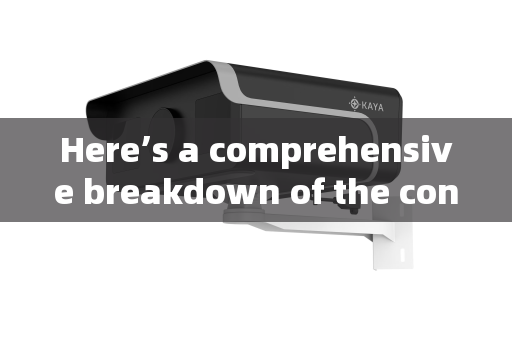
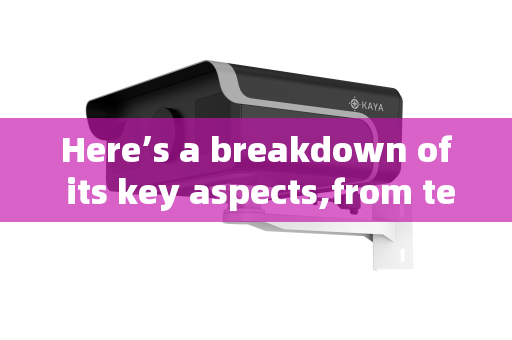
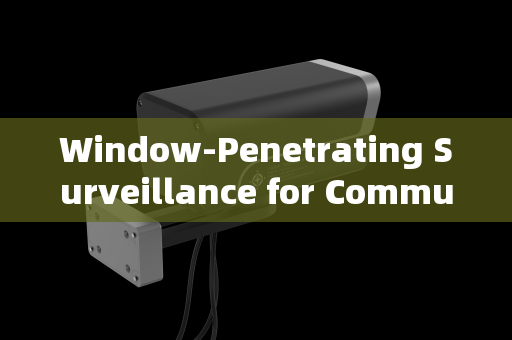
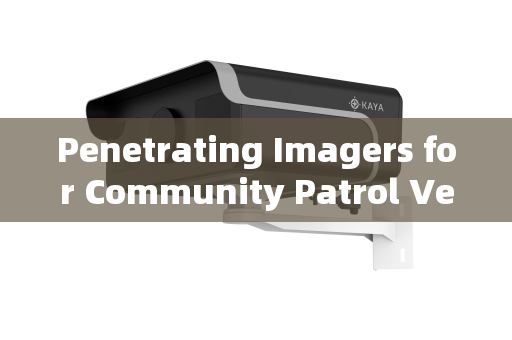
Unveiling the Unseen: The Critical Role of Penetration Imaging Systems in Port and Border Security for Vehicle and Personnel Inspections** In the complex and high-stakes arena of global security, ports and border crossings represent critical nodes where national safety, economic stability, and legal integrity converge. The constant flow of incoming vehicles and personnel presents a formidable challenge: how to conduct thorough, efficient, and non-intrusive inspections to detect concealed threats—be they contraband, weapons, or unauthorized individuals—without causing debilitating delays. Traditional inspection methods, while valuable, often reach their limits in adverse conditions or when confronted with shielded compartments. This is where advanced penetration imaging systems, leveraging cutting-edge laser range-gated imaging technology, are revolutionizing security protocols, acting as a force multiplier for authorities worldwide.
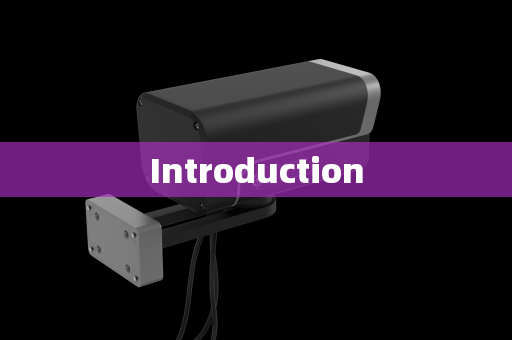
Penetration Imager Effect Images
Understanding Penetration Imaging Technology At its core, a penetration imaging system is a sophisticated electro-optical device designed to "see through" visual obstructions that baffle conventional cameras and the human eye. It innovatively combines a high-repetition-frequency pulsed laser with a gated, intensified camera. The system's genius lies in its precise, nanosecond-level time synchronization. The laser illuminates the scene with short, powerful pulses. The camera's ultrafast "gate" or shutter opens only for a specific, delayed period corresponding to the time it takes for light to travel to a desired "slice" of space and back. By systematically scanning through different time delays (and thus distances), the system constructs a high-contrast image of objects within that specific range slice.
This Laser Range-Gated (LRG) or Gated Imaging approach confers exceptional capabilities:
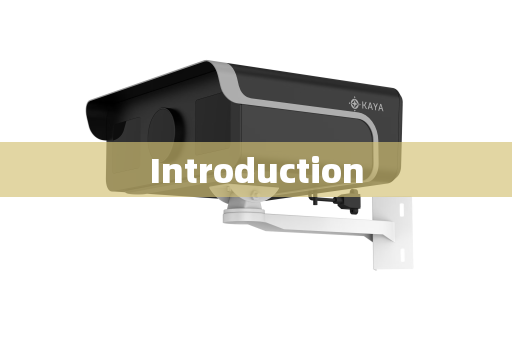
Penetration Imager Effect Images
- Superior Penetration: It can effectively "see through" various glazing materials like vehicle windows (car, train, aircraft), architectural glass, and specialized laminates. It also mitigates the obscuring effects of multiple atmospheric and particulate mediums including fire, smoke, rain, snow, fog, and haze.
- Extended Range & High Resolution: It operates at long distances with high spatial and range resolution, crucial for stand-off inspection.
- Backscatter Suppression: By rejecting light scattered from foreground particles (like fog droplets or smoke), it provides clear imagery of the target behind the obstruction.
- Low-Light to Zero-Light Operation: It functions independently of ambient light, enabling 24/7 surveillance and inspection.
The system typically comprises a pulsed laser, a beam expander, an imaging lens, and the key component—the gated intensifier camera. This camera integrates a Microchannel Plate (MCP) image intensifier, high-voltage modules, and precision timing circuits. It achieves an optical gain exceeding 10^6, an optical shutter speed faster than 3 nanoseconds, and timing synchronization precision better than 10 picoseconds, enabling the capture of high-fidelity two-dimensional and three-dimensional data of inspected targets.
Application in Port and Border Security: Vehicle Inspection For incoming vehicles at cargo terminals, crossing points, or ferry disembarkations, penetration imaging systems play a transformative role.
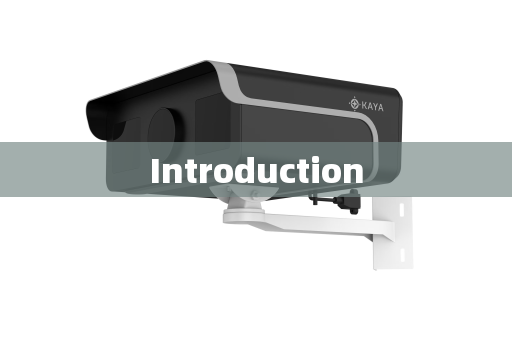
Penetration Imager Effect Images
- Cargo Container & Cabin Inspection: Officers can scan the cabs of trucks and containers from a safe stand-off distance. The system can detect anomalies behind tinted windows, within fogged-up compartments, or even identify thermal signatures of hidden individuals amidst cargo, all without physical contact or forcing drivers to disembark in potentially dangerous situations. This is vital for combating human trafficking, smuggling (drugs, weapons, illicit goods), and stowaway attempts.
- Overcrowding & Concealment Detection: In passenger vehicle lanes, the technology can quickly verify the number of occupants and check for persons concealed in trunks or footwells, addressing issues of overcrowding and unauthorized entry.
- All-Weather, All-Condition Reliability: Unlike standard optical or thermal cameras whose performance degrades in fog, heavy rain, or at night, penetration imaging maintains clarity. This ensures uninterrupted inspection regimes regardless of environmental challenges, a common occurrence in many port and border regions.
Application in Port and Border Security: Personnel and Facility Monitoring While vehicle inspection is a primary focus, the systems also enhance personnel and perimeter security.
- Covert Surveillance & Threat Assessment: Deployed at a distance, these systems allow for discreet observation of behavior patterns and activities in areas like docking bays, holding zones, or administrative buildings, even through windows. This supports counter-terrorism intelligence, pre-attack surveillance, and evidence gathering.
- Search and Rescue (SAR) in Port Emergencies: In the event of a fire, collision, or hazardous material release within the port area, penetration imaging is invaluable for firefighting and urban search and rescue (USAR). Firefighters can navigate thick smoke to locate casualties, and rescue teams can assess structural integrity or find individuals trapped in obscured areas, directly enhancing fireground operational efficiency and reducing casualties.
- Wide-Area Maritime & Coastal Awareness: Integrated into coastal surveillance networks, these systems provide long-range imaging through fog and haze and offer strong light suppression against glare from water or port lights. This aids in monitoring vessel approaches, identifying suspicious watercraft activities, and ensuring safe navigation during maritime security operations, vessel docking, and coastal border patrols.
Integration into Broader Security Ecosystems The true power of penetration imaging is realized when integrated with broader Smart City, Smart Security, and Smart Policing infrastructures. Data from these systems can feed into automated alert platforms, fusion centers, and command-and-control systems. When coupled with analytics, they can help identify patterns, trigger investigations based on anomalous vehicle modifications, or coordinate responses between law enforcement, military units, and emergency services for incidents ranging from armed interdiction and counter-assault operations to disaster response.
Conclusion The penetration imaging system is far more than just a camera; it is a pivotal sensory enhancement for modern border and port security forces. By granting the ability to peer through visual barriers and environmental clutter, it addresses critical vulnerabilities in the inspection chain. Its role in enabling non-invasive, long-range, all-condition inspection of vehicles and personnel directly contributes to thwarting transnational crime, preventing terrorism, ensuring regulatory compliance, and saving lives in emergency scenarios. As threats evolve and traffic volumes increase, the adoption of such persistent surveillance and inspection technology will continue to be a cornerstone of robust, proactive, and intelligent national security frameworks.