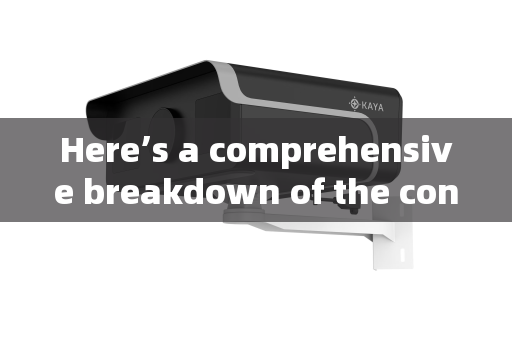
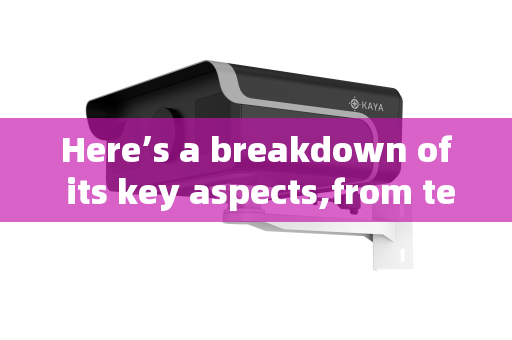
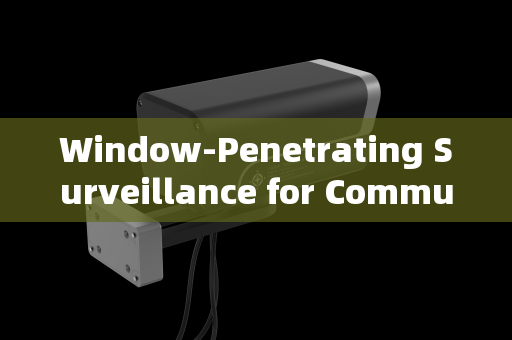
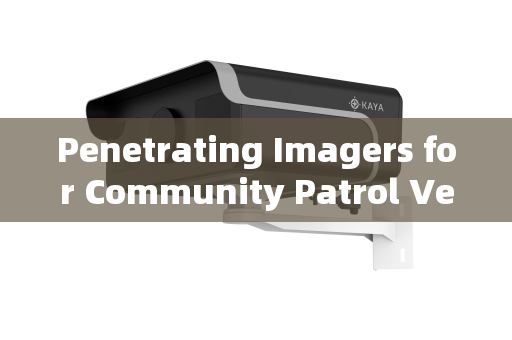
In the relentless pursuit of public safety and national security, the ability to detect, identify, and assess potential threats before they materialize is paramount. The screening and tracking of dangerous criminals, especially those attempting to use concealment, darkness, or environmental obstructions to their advantage, present a persistent challenge for law enforcement and security agencies worldwide. A technological breakthrough addressing this challenge head-on is the advanced Penetration Imaging System. Leveraging cutting-edge Laser Range-Gated Imaging (LRG) technology, these systems are redefining the capabilities of modern surveillance, reconnaissance, and threat assessment in high-stakes scenarios.
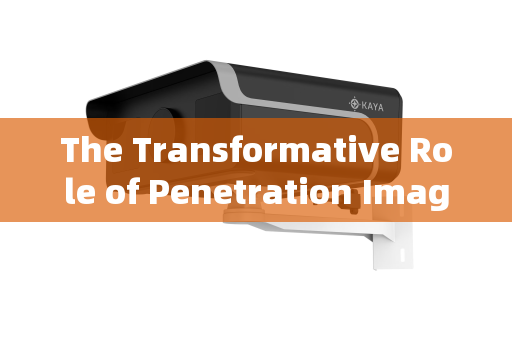
Penetration Imager Effect Images
Understanding the Penetration Imaging System
At its core, a Penetration Imaging System is a sophisticated electro-optical device designed to acquire clear visual intelligence under extreme conditions where conventional cameras and the human eye fail. Its operational principle is an innovative marriage of high-repetition-rate pulsed lasers and gated/intensified cameras. The system works by emitting short, nanosecond-duration laser pulses toward a target area. A highly sensitive camera, synchronized with pinpoint temporal precision (often with better than 10-picosecond accuracy), opens its "gate" or shutter only for the precise moment when the reflected laser light from a specific "slice" of space returns. By sequentially gating different time delays, the system electronically "slices" and stacks images of various distance segments.
This time-slicing methodology grants the system its remarkable capabilities:
- Suppression of Backscatter: It effectively ignores light scattered by obscurants like fog, smoke, rain, or snow close to the observer, which normally washes out an image.
- Long-Range, High-Contrast Imaging: It enables high-resolution imaging at distances far beyond passive night vision, even in total darkness.
- Media Penetration: A key revolutionary feature is its ability to "see through" various transparent and semi-transparent media with minimal reflection loss. This includes car windshields, building glass幕墙,特种玻璃, train and aircraft windows, enabling observation of occupants or objects inside without physical intrusion.
The system's hardware typically comprises a pulsed laser illuminator, a beam expander, an imaging lens, and a gated/intensified camera. The camera itself integrates critical components like a Microchannel Plate (MCP) image intensifier (providing over 10^6 optical gain), a high-voltage module, and precise timing/gating circuits, forming the heart of its high-sensitivity, high-speed operation.
Penetration Imager Effect Images
Pivotal Role in Screening Dangerous Criminals
In the domain of law enforcement and counter-terrorism, the Penetration Imaging System transitions from a technological marvel to a force multiplier, playing several critical roles in the screening paradigm for dangerous individuals:
-
Covert Surveillance and Reconnaissance: The system's ability to operate in pitch darkness and penetrate windows allows for discreet, long-range observation of suspects. Law enforcement can monitor safe houses, meeting points, or vehicles from a concealed position hundreds of meters away, gathering crucial intelligence on activities, occupant numbers, and potential weapons without alerting the targets. This is invaluable for intelligence-led policing and building cases against organized crime or terrorist cells.
-
Vehicle-Borne Threat Assessment: A common tactic for criminals is to use vehicles as shields or mobile operation points. Traditional screening at checkpoints or during mobile surveillance is limited. Penetration imaging can be deployed to scan approaching or stationary vehicles from a distance, identifying the number of occupants, detecting obscured weapons, or observing suspicious behavior inside the cabin, all without the subjects' knowledge. This enhances officer safety during traffic stops, checkpoint operations, and high-risk vehicle interdictions (e.g., counter-terrorism operations,缉毒缉私).
Penetration Imager Effect Images
-
Counter-Sniper and Counter-Obscurant Operations: In hostage rescue, active shooter, or counter-sniper scenarios, perpetrators often use smoke, darkness, or concealment behind windows. This system can "see through" these visual barriers, providing tactical teams with real-time intelligence on perpetrator location, posture, and armament, enabling more precise and effective tactical responses and military strikes.
-
Enhanced Forensic Search and Evidence Gathering: During post-incident investigations or searches of large, complex, or hazardous environments (e.g., smoke-filled buildings post-arson, foggy outdoor areas), these systems can help locate discarded weapons, hidden contraband, or even fleeing suspects trying to use environmental conditions as cover, aiding in crime scene investigation and evidence collection.
-
Broad-Area Security for Critical Infrastructure: Integrated into the smart city, smart security, and smart policing frameworks, these systems can be deployed to protect high-value targets like government buildings, landmarks, transportation hubs, and power plants. Their all-weather, day-night capability ensures continuous perimeter monitoring and threat detection, even in dense fog or heavy rain, contributing to comprehensive border and coastal defense, port security, and critical infrastructure protection.
Conclusion
The Penetration Imaging System is far more than just an advanced camera; it is a paradigm-shifting tool for persistent surveillance and proactive threat negation. By mastering the physics of light and time, it strips away the natural and man-made cloaks that dangerous criminals rely on—darkness, weather, distance, and glass. Its role in screening is transformative, moving from reactive identification to proactive, intelligence-driven detection and assessment. As this technology becomes more integrated into law enforcement and homeland security arsenals, it significantly augments operational capabilities, enhances officer and public safety, and creates a formidable deterrent against those who would seek to exploit environmental and technological limitations for malicious purposes. It stands as a cornerstone technology for the next generation of public safety, national security, and emergency response solutions.