In the realm of tactical and emergency response, seeing the unseen is a critical advantage. Two pivotal technologies that grant this capability are penetration imaging systems and night-vision devices (NVDs). While both are designed to extend human perception beyond normal visual limits, their underlying principles, applications, and outputs are fundamentally distinct. Understanding the difference between a penetration imaging system and a night-vision device is crucial for selecting the right tool for missions ranging from search and rescue to covert surveillance.
Penetration Imager Effect Images
Core Operating Principles: Energy Detection vs. Light Amplification
The fundamental difference between a penetration imaging system and a night-vision device lies in their core technology. Night-vision devices primarily operate on the principle of light amplification. They collect tiny amounts of ambient light (from stars, moonlight, or urban glow) through an objective lens, convert photons to electrons via a photocathode, amplify these electrons dramatically, and then project the intensified image onto a phosphor screen, creating the characteristic green-hued view. Their effectiveness is directly tied to the availability of some ambient light; in pitch-black conditions, most NVDs require an infrared (IR) illuminator.
Penetration Imager Effect Images
In stark contrast, penetration imaging systems, most commonly exemplified by thermal imagers, are passive sensors that detect thermal radiation or infrared energy emitted by all objects based on their temperature. They do not require any ambient light whatsoever. These systems create an image by mapping the temperature differences between objects and their background. This allows them to see through visual obstructions like smoke, dust, fog, and light foliage—a true "penetration" capability that NVDs lack.
Comparative Analysis: Strengths and Operational Limitations
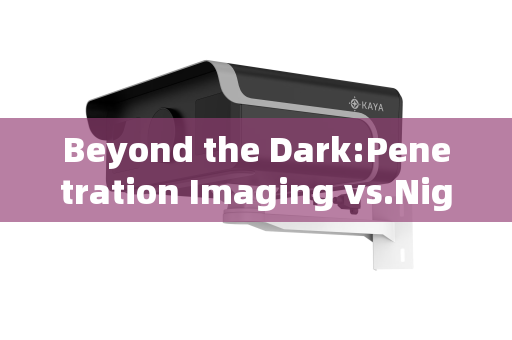
Penetration Imager Effect Images
A direct comparison highlights their complementary roles. Night-vision devices provide high-resolution, detail-oriented imagery that preserves the natural contours and familiarity of a scene, which is vital for navigation and target identification in low-light conditions. However, they cannot see through obscurants and can be blinded by bright lights.
Penetration imaging systems, particularly thermal cameras, excel in total darkness and adverse weather. Their ability to detect heat signatures makes them unparalleled for locating living beings, overheated machinery, or recently used vehicles. They provide superior situational awareness in smoke-filled environments for firefighters or in dense vegetation for border patrol. The trade-off is that thermal images often lack fine detail and can make specific identification challenging, as they display a heat map rather than a true optical image.
Strategic Deployment in Emergency and Law Enforcement Contexts
The choice between these technologies is mission-dependent. For law enforcement conducting covert surveillance at night, a night-vision device might be preferred for recognizing faces or reading license plates with supplemental IR light. For a SWAT team making entry into a smoke-obscured building, a handheld thermal imager is indispensable for locating suspects and victims through the haze.
Modern operational planning often involves fusion or layered deployment. Many advanced platforms now combine both technologies, overlaying thermal data onto an intensified image to provide comprehensive awareness. Whether used separately or in tandem, clarifying the difference between a penetration imaging system and a night-vision device enables commanders to deploy assets effectively, ensuring that personnel have the right "eyes" for the environment, ultimately enhancing safety and mission success.