Excellent question. It highlights two fundamentally different ways of "seeing" what is invisible to the human eye. The key difference is that infrared thermal imagers detect emitted radiation (heat), while penetration imaging systems detect reflected or transmitted signals that have passed through a material.
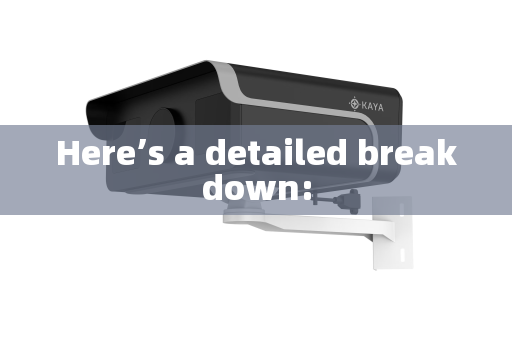
Penetration Imager Effect Images
Penetration Imager Effect Images
Infrared Thermal Imager
- What it does: Measures the surface temperature of an object by detecting the infrared radiation (heat) it naturally emits.
- Principle: All objects above absolute zero emit infrared radiation. The imager's sensors detect this radiation and convert it into a visible image (thermogram), where different colors represent different temperatures.
- What it "sees": Surface heat patterns. It cannot see through solid objects. For example, it can see the heat from a person behind a thin curtain because the heat radiates through, but it cannot see the person's shape through a solid wall.
- Primary Applications:
- Building inspections (heat leaks, moisture).
- Electrical & mechanical maintenance (overheating components).
- Medical diagnostics (inflammation).
- Security & surveillance (seeing people or animals in the dark based on body heat).
- Firefighting (seeing through smoke, locating hot spots).
Penetration Imaging System
- What it does: Uses active energy waves (like radio waves or microwaves) to penetrate certain materials and create an image based on the reflected or transmitted signals.
- Principle: The system sends out a signal (e.g., millimeter-wave or X-ray). This signal passes through some materials (like clothing, drywall, plastics) but reflects off others (like metal, skin, water). The system then analyzes the reflected signals to construct a detailed image or detect specific objects.
- What it "sees": The internal structure, composition, or hidden objects within or behind another material.
- Primary Applications:
- Security Screening: Full-body scanners at airports (millimeter-wave) that see concealed objects under clothing.
- Ground Penetrating Radar (GPR): Imaging subsurface structures, pipes, or archaeological features.
- Non-Destructive Testing (NDT): Inspecting composite materials for voids or delamination.
- Through-Wall Imaging (limited): Using ultra-wideband radar to sense motion or rough outlines behind walls.
Key Differences at a Glance
| Feature | Infrared Thermal Imager | Penetration Imaging System |
|---|---|---|
| Primary Signal | Passive: Detects emitted infrared (heat) radiation. | Active: Emits its own signal (radio/microwave/mm-wave) and listens for reflections. |
| What it Images | Surface temperature distribution. A 2D map of heat. | Internal structure and hidden objects. A 2D or 3D map of density/dielectric properties. |
| Penetration Ability | Very low. Cannot penetrate solids. Sees through only certain gases and very thin films. | High for specific materials. Can penetrate clothing, walls, soil, plastics, etc., depending on the wavelength. |
| Output | Thermogram (color-coded temperature map). | Reflectivity/attenuation map (often looks like a fuzzy X-ray or radar plot). |
| Influenced By | Emissivity of the surface, ambient temperature, wind. | Dielectric constant of materials, moisture content, signal frequency. |
| Example Use Case | Finding where insulation is missing in a house. | Finding a plastic pipe buried in your lawn. |
A Simple Analogy
- Thermal Imager: Like a non-contact thermometer that can paint a picture. It tells you how hot everything on the surface is.
- Penetration Imager: Like sonar or radar for solids. It sends out "pings" and builds an image from the echoes to reveal what's inside or behind something.
Important Caveat
The term "penetration imaging" is broad. In security contexts, it often refers to millimeter-wave scanners. In geophysics, it's Ground Penetrating Radar (GPR). They share the same core "active transmission-reflection" principle but operate at different frequencies for different purposes.
In summary: Use a thermal imager to visualize heat and energy loss. Use a penetration imaging system to discover hidden objects or internal structures.
Penetration Imager Effect Images