Penetration imaging systems (which use various wavelengths of electromagnetic radiation or particles to see inside or through objects) have a wide range of applications across numerous fields. Here are the primary areas of application:
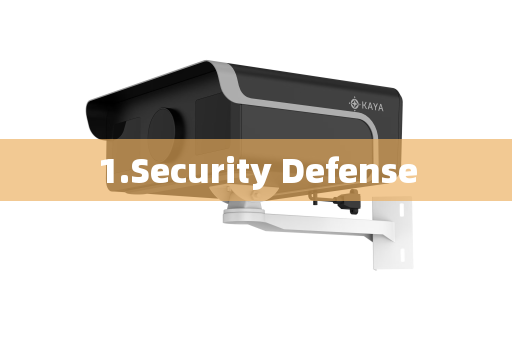
Penetration Imager Effect Images

Penetration Imager Effect Images
- Aviation & Transportation Security: X-ray and CT scanners for baggage, cargo, and air freight inspection to detect explosives, weapons, and contraband.
- Border & Port Security: Scanning shipping containers, trucks, and vehicles for illicit goods, stowaways, or nuclear materials.
- Critical Infrastructure Protection: Inspecting walls, vehicles, and packages for threats at secure facilities.
- Military & Battlefield: Through-wall radar (TWR) for urban warfare to detect personnel behind walls; imaging of concealed weapons.
Medical & Healthcare
- Diagnostic Radiology: X-ray imaging for bones, teeth (dentistry), and chests.
- Computed Tomography (CT): Detailed cross-sectional imaging of organs, tissues, and blood vessels.
- Mammography: Specialized X-ray for breast cancer screening.
- Interventional Radiology: Guiding catheters and instruments during minimally invasive procedures.
Industrial & Manufacturing
- Non-Destructive Testing (NDT): Inspecting welds, castings, aerospace components, pipelines, and composite materials for internal flaws (cracks, voids, corrosion) without damaging the part.
- Quality Control & Assurance: Checking internal assembly of electronics (PCBs), batteries, food products, and packaged goods for integrity and foreign objects.
- Reverse Engineering & Metrology: Analyzing the internal dimensions and structure of complex objects.
Scientific Research
- Materials Science: Studying the internal microstructure, porosity, and failure mechanisms of advanced materials (alloys, ceramics, polymers).
- Geology & Geophysics: Micro-CT scanning of rock cores to analyze pore networks, fluid flow, and fossil inclusions.
- Archaeology & Paleontology: Examining fossils, mummies, artifacts, and geological samples without physical excavation or damage.
- Biology: Synchrotron-based imaging to study the internal 3D structure of small organisms, tissues, and plants.
Civil Engineering & Infrastructure
- Bridge & Building Inspection: Assessing the condition of concrete (rebar corrosion, voids), cables, and structural elements.
- Pipeline & Welding Inspection: Detecting corrosion, cracks, and blockages in oil/gas/water pipelines.
- Road & Railway Inspection: Evaluating the sub-surface layers of roads and railbeds.
Agriculture & Food Industry
- Food Safety & Quality: Detecting foreign bodies (metal, glass, stone, plastic) in packaged food. Assessing internal defects in fruits and vegetables (e.g., water core in apples).
- Grain & Seed Inspection: Analyzing internal infestations or voids.
Cultural Heritage & Art Restoration
- Art Analysis: Examining paintings (underdrawings, pentimenti), sculptures, and historical artifacts to understand construction techniques, authenticity, and previous restorations.
- Manuscript & Document Recovery: Reading sealed or damaged historical documents without physically opening them.
Space & Astronomy
- Planetary Science: Using penetrating radar (e.g., on Mars rovers) to map subsurface geological layers and search for water ice.
- Spacecraft Inspection: Potential for NDT of components in manufacturing and on-orbit.
Key Technologies Involved: The specific technology used depends on the required penetration depth and material:
- X-ray & Gamma-ray Imaging: High energy for dense materials (metals, human tissue).
- Terahertz Imaging: For non-conductive materials like plastics, fabrics, paper (security, art analysis).
- Microwave & Radar Imaging: For deep penetration into low-density materials (walls, soil, ice).
- Neutron Imaging: Unique sensitivity to light elements (water, explosives, organic materials), complementing X-rays.
- Ultrasound: Primarily for medical imaging and some specialized NDT (thickness gauging).
In summary, penetration imaging is a foundational tool wherever there is a need to see inside an object non-invasively, driving innovation in safety, healthcare, industry, and science.
Penetration Imager Effect Images