Introduction: Enhancing Interception Safety with Advanced Screening In the high-stakes realm of law enforcement and border security, the interception of high-risk vehicles presents a formidable challenge. Officers face the dual imperative of neutralizing threats while preserving their own safety. Traditional manual approaches to vehicle inspection are not only time-consuming but perilously expose personnel to concealed dangers. This is where the penetration imaging system emerges as a game-changer. By providing a non-invasive, rapid, and detailed view of a vehicle’s contents, such systems play an indispensable role in pre-inspection during high-risk vehicle interception, transforming threat assessment from a guessing game into a data-driven process.
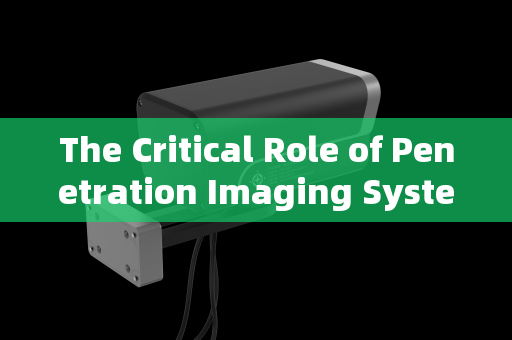
Penetration Imager Effect Images
Technical Capabilities and Operational Workflow A penetration imaging system, often utilizing advanced X-ray backscatter or gamma-ray technology, serves as a force multiplier for interdiction teams. Its primary role is to conduct a comprehensive external scan before any officer approaches the suspect vehicle. These systems can be vehicle-mounted or deployed as mobile drive-through portals. During pre-inspection, the system emits controlled radiation beams that penetrate the vehicle’s shell. The returning signals are processed to generate high-resolution images, revealing anomalies such as hidden compartments, weapons, explosives, or stowaways. This capability allows a Command Center to conduct a thorough risk assessment in real-time, identifying potential threats without triggering them.
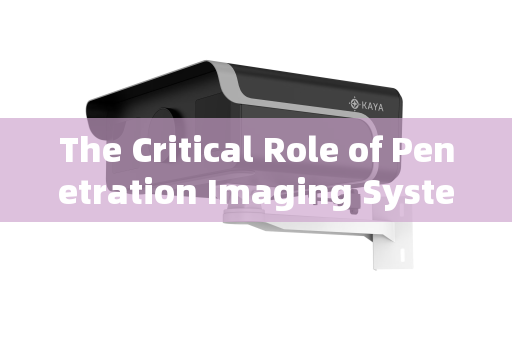
Penetration Imager Effect Images
Transforming Tactical Decision-Making The intelligence garnered from a penetration imaging system directly informs and shapes the tactical response. In the critical phase of pre-inspection during high-risk vehicle interception, commanders can distinguish between a legitimate cargo shipment and a vehicle rigged with explosives. This pre-emptive knowledge dictates the subsequent interception protocol. For instance, if the scan shows no significant threats, officers may proceed with a lower-risk, routine stop. Conversely, if images indicate hidden occupants or suspicious packages, commanders can escalate to a contained, high-risk takedown, deploying EOD teams and negotiators from the outset. This system essentially shifts the operational advantage from the suspect to the authorities, enabling a precision response.
Conclusion: An Indispensable Tool for Modern Security Operations In conclusion, the integration of penetration imaging systems into standard operating procedures marks a significant leap forward in operational safety and efficacy. Their pivotal role in pre-inspection during high-risk vehicle interception cannot be overstated. By delivering critical visual intelligence before physical contact, these systems safeguard first responder lives, enhance contraband interdiction rates, and streamline the entire interception process. As threats evolve in sophistication, continued reliance on and advancement of such non-invasive screening technologies will remain fundamental to successful and secure high-risk vehicle interception missions worldwide.
(Images suggested for inclusion: 1. A tactical vehicle-mounted system scanning a sedan at a checkpoint. 2. A comparative image showing a normal car scan vs. one with hidden compartments highlighted. 3. An operator console displaying clear imaging results in a command vehicle. 4. A flow diagram illustrating the pre-inspection decision-making process.)
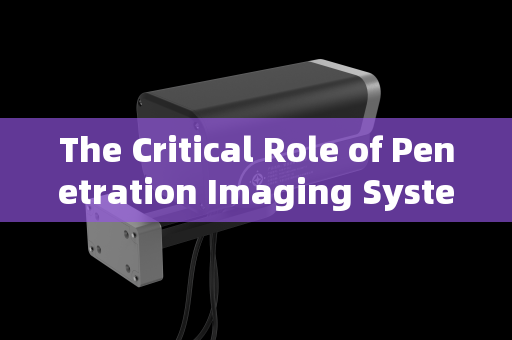
Penetration Imager Effect Images