Excellent question. Penetrating imaging through smoke is a critical technology for firefighters, military personnel, and industrial inspectors. It relies on shifting from visible light to wavelengths that interact less with smoke particles.
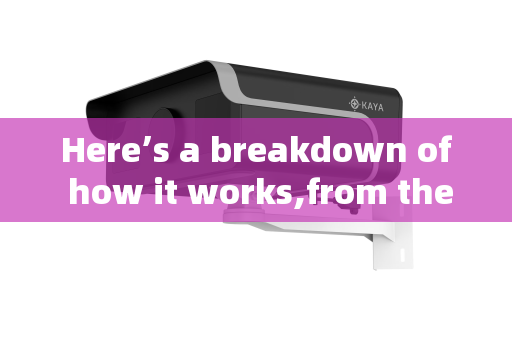
Penetration Imager Effect Images
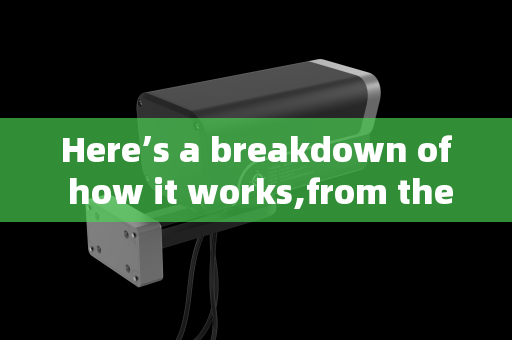
Penetration Imager Effect Images
The Core Principle: Wavelength Matters
- Visible Light (400-700 nm) is easily scattered by smoke particles. Smoke particles are often similar in size to visible light wavelengths, causing light to bounce off in all directions, creating an opaque, obscuring cloud.
- Infrared (IR) Light (700 nm and beyond) has longer wavelengths. For many types of smoke (especially from burning organic materials like wood), the particles are smaller than the IR wavelengths. Longer waves tend to scatter less and can pass through the aerosol more effectively. Think of how a large ocean wave passes over a small rock with little disturbance, while a small ripple would be broken up.
There are two primary technological approaches that exploit this principle:
Primary Technologies for Imaging Through Smoke
A. Active Near-Infrared (NIR) / Short-Wave Infrared (SWIR) Imaging
- How it works: These systems use their own light source (a laser or LED) that emits near-infrared light (typically 0.7µm - 1.7µm). This invisible "torchlight" illuminates the scene. A special camera, sensitive to these same NIR/SWIR wavelengths, captures the reflected light.
- Why it penetrates smoke: The NIR light scatters less than visible light. It can travel through the smoke, reflect off objects (walls, people, furniture), and travel back to the camera, creating a recognizable image.
- Analogy: It's like using a powerful flashlight in thick fog; some light gets through and reflects back, giving you a better view than with ambient visible light alone.
- Result: Provides high-resolution, reflective imagery that looks similar to a black-and-white video, showing edges and details clearly. It works best with smoke that is not overly dense.
B. Passive Thermal Imaging (Long-Wave Infrared - LWIR)
- How it works: This is the most common technology used by firefighters. Thermal cameras do not need an external light source. Instead, they detect the heat (infrared radiation) naturally emitted by all objects. They typically operate in the long-wave infrared spectrum (8µm - 14µm).
- Why it penetrates smoke: LWIR radiation, being even longer in wavelength, is even less susceptible to scattering by small smoke particles. The thermal energy from objects (like a human body, a fire hotspot, or a warm appliance) passes through the smoke and is detected by the camera's microbolometer sensor array.
- Result: Provides a heat map image (thermogram). Hotter objects appear brighter (white/yellow), cooler objects appear darker (purple/black). This is exceptionally good for locating people (body heat), the seat of a fire, and overheating electrical components regardless of total darkness or smoke obscuration.
Comparison & Practical Use
| Feature | Active NIR/SWIR Imaging | Passive Thermal Imaging (LWIR) |
|---|---|---|
| Light Source | Active (own laser/LED) | Passive (detects emitted heat) |
| Image Type | Reflective, high-detail | Emissive, heat-based |
| Penetration | Good for moderate smoke | Excellent for thick, dense smoke |
| Primary Use | Military, surveillance, some industrial | Firefighting, search & rescue, building inspection |
| Sees Through? | Smoke, light fog, some dust | Smoke, darkness, some light materials |
Key Limitations
- Smoke Density & Composition: Extremely thick, black, oily smoke (from burning plastics or petroleum) contains larger soot particles and can absorb or block even infrared radiation, reducing effectiveness.
- Temperature Saturation: In an extremely hot environment (like a fully developed room fire), everything may be hot, reducing contrast in a thermal image.
- Interpretation: Thermal images show temperature differences, not optical details. Recognizing a specific object (e.g., a tool vs. a weapon) can be harder than with NIR.
In Summary:
Penetrating imagers achieve imaging through smoke by using infrared wavelengths (NIR, SWIR, or LWIR) that scatter less on small smoke particles than visible light does. Active systems use their own infrared light to see reflective details, while passive thermal systems detect the inherent heat signatures of objects, making them particularly robust for firefighting and rescue in zero-visibility conditions.
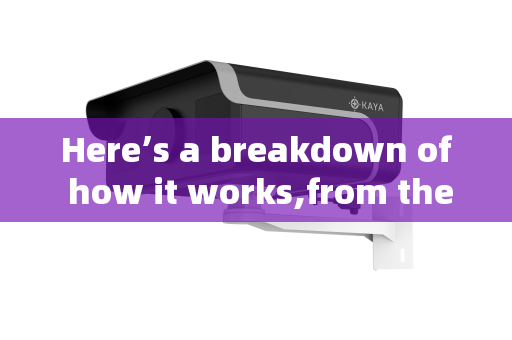
Penetration Imager Effect Images