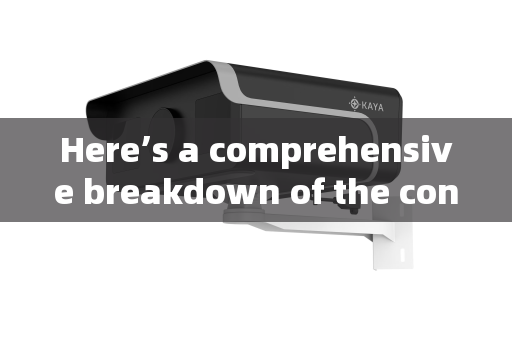
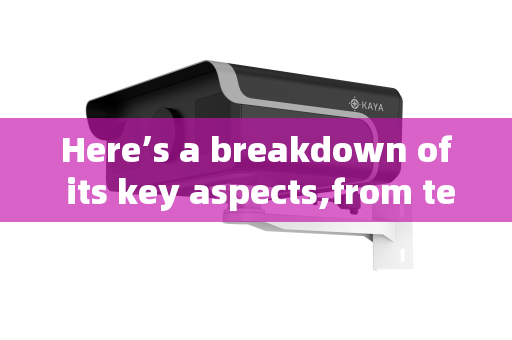
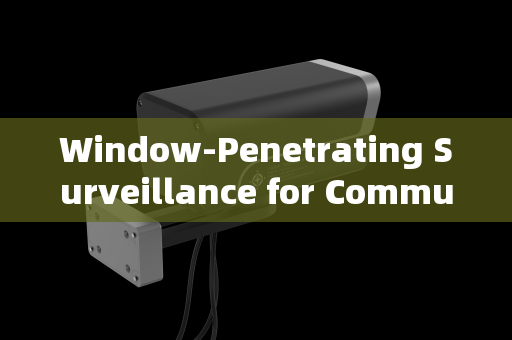
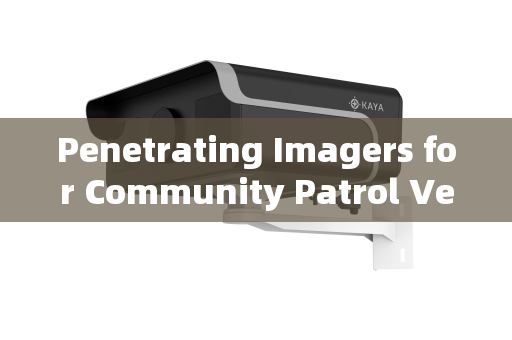
Optical Penetration Technology refers to a suite of advanced optical, imaging, and sensing systems designed to allow law enforcement officers to "see through" visual obstructions from a moving or stationary patrol vehicle. These technologies significantly enhance situational awareness, officer safety, and operational effectiveness.
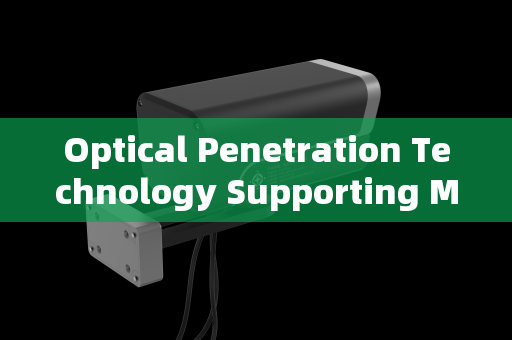
Penetration Imager Effect Images
Core Technologies & Systems
Thermal Imaging (Infrared) Cameras:
- Function: Detects heat signatures (infrared radiation) emitted by objects and individuals, creating an image based on temperature differences.
- Vehicle Applications:
- Suspect Apprehension: Locating suspects hiding in dense foliage, darkness, or behind light obstructions.
- Search & Rescue: Finding lost persons or missing children in large, rugged areas at night.
- Vehicle Pursuit: Tracking a fleeing vehicle's heat signature if it turns off headlights or leaves the roadway.
- Building Scan: Identifying unusual heat sources in buildings (e.g., indoor grow operations, potential occupants during a barricade situation).
Millimeter-Wave Radar (MMWR) / Through-the-Wall Sensors (Vehicle-Mounted Variants):
- Function: Emits low-power radio waves in the millimeter-wave spectrum that can penetrate non-metallic walls, fabrics, and obscurants (like smoke or light fog) to detect motion and, in some advanced systems, form crude images.
- Vehicle Applications:
- Standoff Surveillance: Assessing a building or structure for human presence before officers make a tactical approach.
- Vehicle Checkpoints: Screening vehicles for hidden occupants (e.g., in cargo areas) at a safe distance.
LiDAR (Light Detection and Ranging):
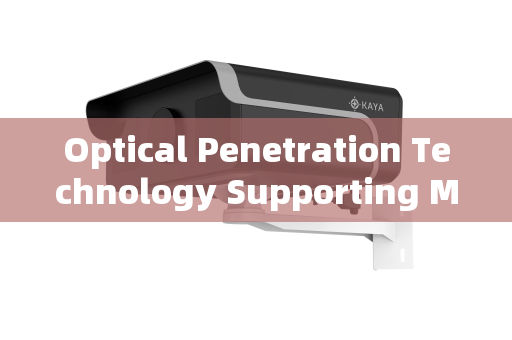
Penetration Imager Effect Images
- Function: Uses laser pulses to create high-resolution 3D point-cloud maps of environments. While not "see-through" in the traditional sense, it can penetrate some foliage (Foliage Penetration LiDAR) to reveal structures or objects underneath.
- Vehicle Applications:
- Crime Scene & Accident Reconstruction: Rapidly capturing a 3D model of a scene from the vehicle for investigation.
- Strategic Mapping: Generating detailed maps of an area for tactical planning.
- Obstacle Detection: In autonomous or assisted-driving police vehicles.
Long-Wave Infrared (LWIR) & Mid-Wave Infrared (MWIR) Systems:
- Function: Specialized thermal cameras optimized for long-range detection or superior imaging through atmospheric haze.
- Vehicle Applications: Integrated into rooftop turrets or mast systems on specialized units (SWAT, mobile command) for long-range surveillance and threat assessment.
Fusion Systems:
- Function: The most advanced capability, combining data from multiple sensors (e.g., visible light camera, thermal, radar) into a single, augmented reality-style display.
- Vehicle Applications: Presents the operator with a composite view that, for example, overlays the thermal signature of a person behind a wooden fence onto a standard video feed, providing intuitive "X-ray vision."
Operational Support for Mobile Law Enforcement
A. Enhanced Officer Safety & Situational Awareness:
Penetration Imager Effect Images
- Approach to Scenes: Officers can assess a potentially dangerous location (dark alley, wooded area, building exterior) from the safety of their vehicle before exiting.
- Covert Surveillance: Monitoring a location with reduced risk of detection compared to visible light.
B. Pursuit and Tracking:
- Vehicle Tracking: Continuing a pursuit when a suspect vehicle disables its lights or flees into off-road areas.
- Suspect Tracking: Following a suspect who has fled on foot into challenging environments, guiding ground units or K-9 teams.
C. Search Operations:
- Large-Area Searches: Dramatically increasing the speed and effectiveness of searches for missing persons or escaped suspects in parks, rural areas, or industrial complexes.
- Vehicle Inspections: Non-invasive inspection of commercial vehicles or containers for human cargo (e.g., trafficking).
D. Tactical Operations:
- SWAT & Crisis Response: Providing real-time intelligence on movement inside structures during hostage or barricade scenarios. Mobile platforms can perform an initial scan before deploying handheld units.
- Pre-Mission Planning: Using LiDAR and thermal scans to generate detailed models of a target location.
E. Investigation & Evidence Gathering:
- Crime Scene Preservation: Documenting a scene in 3D from the vehicle perimeter without contaminating evidence.
- Detection of Recent Activity: Thermal cameras can reveal disturbed ground (different heat retention) or recently driven vehicles.
Integration & Challenges
- Vehicle Integration: Systems are integrated into light bars, rooftop turrets, or retractable masts. They feed into ruggedized consoles inside the vehicle.
- Data & Connectivity: Real-time streaming to command centers or other units is critical, requiring robust, secure data links.
- Training: Requires significant training for proper interpretation of images (e.g., distinguishing between an animal and a human in thermal) and legal protocols.
- Cost & Maintenance: High-end systems are expensive and require specialized maintenance.
- Legal & Privacy Considerations: Use, especially in residential areas or for general surveillance, is subject to legal scrutiny regarding the Fourth Amendment (unreasonable search). Clear policies and judicial oversight are often required.
Future Directions
- AI & Automated Alerts: Artificial Intelligence to analyze feeds in real-time, automatically flagging potential threats (e.g., "human-shaped heat signature detected").
- Smaller, Cheaper, More Powerful Sensors: Democratizing the technology for wider deployment in standard patrol vehicles.
- Augmented Reality (AR) Windshields: Projecting fused sensor data directly onto the vehicle windshield for the driver.
- UAV Integration: Coordinating sensor data from police drones with the mobile vehicle command station.
Conclusion:
Optical Penetration Technology transforms the law enforcement vehicle from a mere transport unit into a powerful mobile sensing and command platform. By allowing officers to perceive threats and gather critical intelligence through obstructions and in total darkness, it creates a decisive operational advantage, fundamentally enhancing both public and officer safety while expanding the capabilities of modern policing. Its implementation must be carefully balanced with ongoing training, clear legal frameworks, and respect for civil liberties.